
一种用于研究横向机械加载对骨骼肌影响的离体动物模型。
An ex vivo animal model to study the effect of transverse mechanical loading on skeletal muscle.
机构信息
Department of Biomedical Engineering, University of Strathclyde, Glasgow, United Kingdom.
Department of Pure and Applied Chemistry, Technology and Innovation Centre, University of Strathclyde, Glasgow, United Kingdom.
出版信息
Commun Biol. 2024 Mar 9;7(1):302. doi: 10.1038/s42003-024-05994-0.
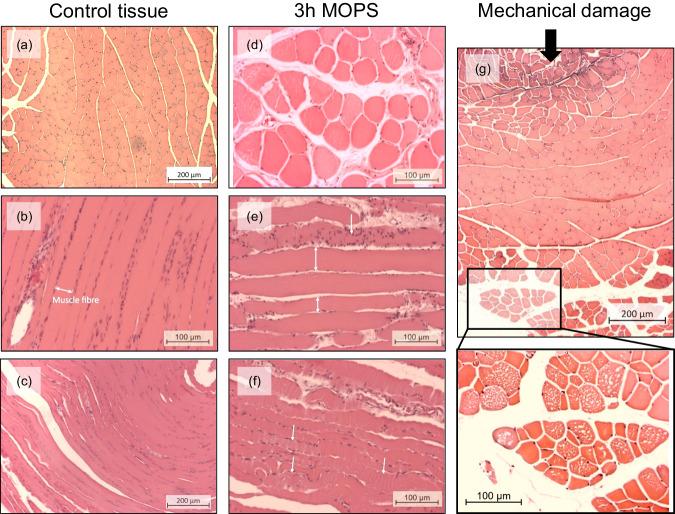
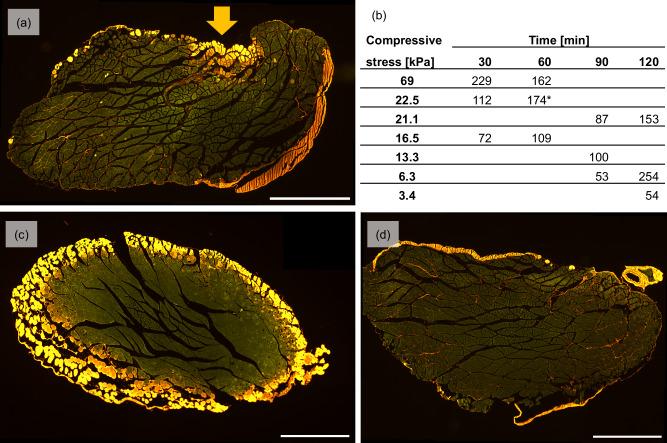
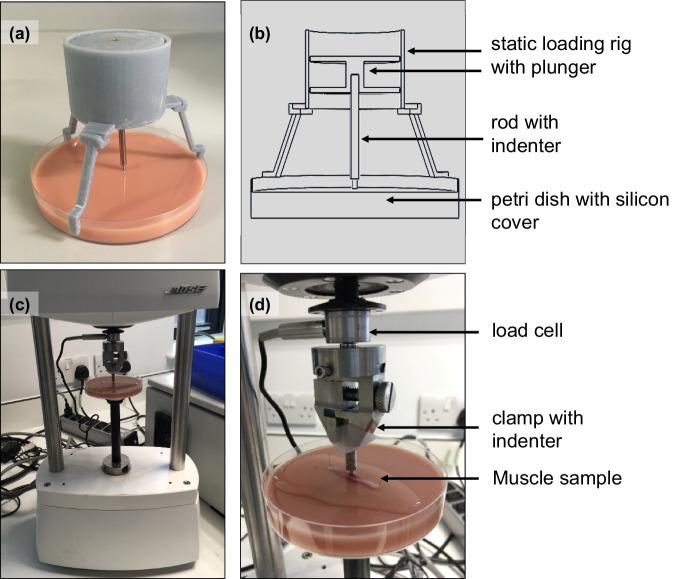
In many populations like wheelchair and prosthetic users, the soft tissue is subject to excessive or repetitive loading, making it prone to Deep Tissue Injury (DTI). To study the skeletal muscle response to physical stress, numerous in vitro and in vivo models exist. Yet, accuracy, variability, and ethical considerations pose significant trade-offs. Here, we present an ex vivo approach to address these limitations and offer additional quantitative information on cellular damage. In this study, skeletal muscle tissue from Sprague Dawley rats was isolated and transversely loaded. Histological analysis and fluorescence staining demonstrated that the setup was suitable to keep the tissue alive throughout the experimental procedure. Mechanically induced cell damage was readily distinguishable through morphological changes and uptake of a membrane impermeable dye. Our comparably simple experimental setup can be adapted to different loading conditions and tissues to assess the cell response to mechanical loading in future studies.
在许多人群中,如轮椅和假肢使用者,软组织会受到过度或重复的负荷,使他们容易患上深部组织损伤(DTI)。为了研究骨骼肌肉对物理应激的反应,存在许多体外和体内模型。然而,准确性、可变性和伦理考虑存在显著的权衡。在这里,我们提出了一种离体方法来解决这些限制,并提供有关细胞损伤的额外定量信息。在这项研究中,从 Sprague Dawley 大鼠中分离出骨骼肌组织并进行横向加载。组织学分析和荧光染色表明,该设置适合在整个实验过程中使组织保持存活。通过形态变化和不透膜染料的摄取,很容易区分机械诱导的细胞损伤。我们相对简单的实验设置可以适应不同的加载条件和组织,以在未来的研究中评估细胞对机械加载的反应。
 Zotero 插件