
2-羟基-4-甲氧基苯甲醛是一种比香草醛及其衍生物对[某种真菌]更有效的抗真菌香气物质,它会破坏细胞膜,抑制脱氧雪腐镰刀菌烯醇(DON)的生物合成,并对小麦籽粒具有良好的抗真菌效果。
2-Hydroxy-4-methoxybenzaldehyde, a more effective antifungal aroma than vanillin and its derivatives against , destroys cell membranes, inhibits DON biosynthesis, and performs a promising antifungal effect on wheat grains.
作者信息
Li Qian, Wang Chong, Xiao Hongying, Zhang Yiming, Xie Yanli
机构信息
Grain, Oil and Food Engineering Technology Research Center of the State Grain and Reserves Administration/Key Laboratory of Henan Province, Henan University of Technology, Zhengzhou, Henan, China.
Henan Key laboratory of Cereal and Oil Food Safety and Nutrition, College of Food Science and Engineering, Henan University of Technology, Zhengzhou, Henan, China.
出版信息
Front Microbiol. 2024 Feb 26;15:1359947. doi: 10.3389/fmicb.2024.1359947. eCollection 2024.
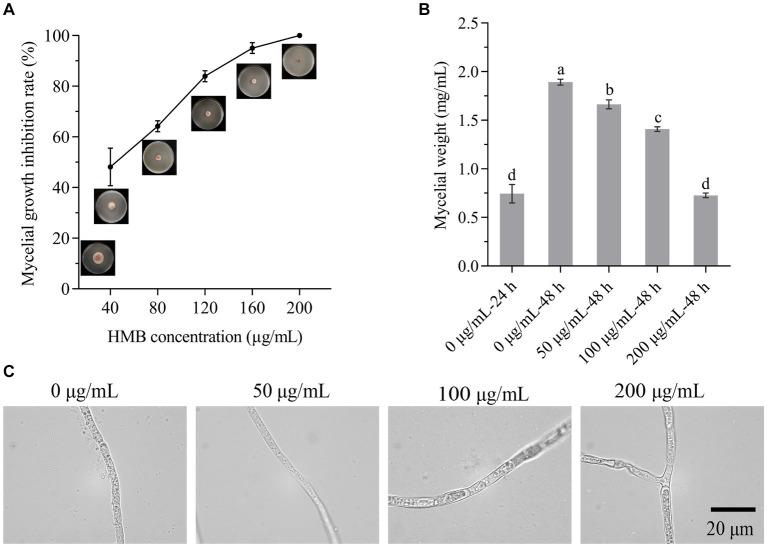
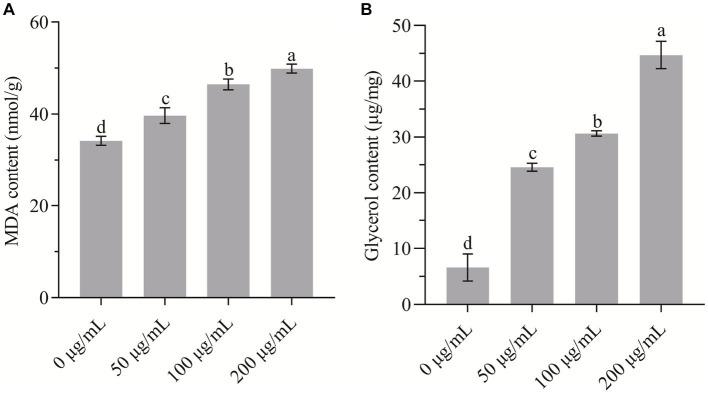
() is a severe pathogen threatening the safety of agriculture and food. This study aimed to explore the antifungal efficacies of several plant-derived natural compounds (vanillin and its derivatives) against the growth of and investigate the antifungal mechanism of 2-hydroxy-4-methoxybenzaldehyde (HMB), the strongest one. The minimum inhibitory concentration (MIC) of HMB in inhibiting mycelial growth was 200 μg/mL. HMB at MIC damaged cell membranes by increasing the permeability by about 6-fold ( < 0.05) as evidenced by propidium iodide (PI) staining. Meanwhile, the content of malondialdehyde (MDA) and glycerol was increased by 45.91 and 576.19% by HMB treatment at MIC, respectively, indicating that lipid oxidation and osmotic stress occurred in the cell membrane. Furthermore, HMB exerted a strong antitoxigenic role as the content of deoxynivalenol (DON) was remarkably reduced by 93.59% at MIC on 7th day. At last, the antifungal effect of HMB against was also confirmed on wheat grains. These results not only revealed the antifungal mechanism of HMB but also suggested that HMB could be applied as a promising antifungal agent in the preservation of agricultural products.
()是一种严重威胁农业和食品安全的病原体。本研究旨在探究几种植物源天然化合物(香草醛及其衍生物)对()生长的抗真菌效果,并研究最强效的2-羟基-4-甲氧基苯甲醛(HMB)的抗真菌机制。HMB抑制菌丝体生长的最低抑菌浓度(MIC)为200μg/mL。如碘化丙啶(PI)染色所示,MIC浓度的HMB使细胞膜通透性增加约6倍(P<0.05),从而破坏细胞膜。同时,MIC浓度的HMB处理使丙二醛(MDA)和甘油含量分别增加了45.91%和576.19%,表明细胞膜发生了脂质氧化和渗透胁迫。此外,HMB具有很强的抗产毒作用,在第7天MIC浓度下脱氧雪腐镰刀菌烯醇(DON)含量显著降低了93.59%。最后,HMB对()在小麦籽粒上的抗真菌效果也得到了证实。这些结果不仅揭示了HMB的抗真菌机制,还表明HMB有望作为一种抗真菌剂应用于农产品保鲜。





 Zotero 插件