
- 意大利疫情防控管理。
- Italian outbreak management.
作者信息
Gotta Paola, Ciampitti Mariangela, Cavagna Beniamino, Bosio Giovanni, Gilioli Gianni, Alma Alberto, Battisti Andrea, Mori Nicola, Mazza Giuseppe, Torrini Giulia, Paoli Francesco, Santoiemma Giacomo, Simonetto Anna, Lessio Federico, Sperandio Giorgio, Giacometto Emanuela, Bianchi Alessandro, Roversi Pio Federico, Marianelli Leonardo
机构信息
Settore Fitosanitario e servizi tecnico-scientifici - Piedmont Region, Turin, Italy.
Directorate General (DG) Agricoltura Servizio Fitosanitario Regionale, Lombardy Region, Milan, Italy.
出版信息
Front Insect Sci. 2023 May 18;3:1175138. doi: 10.3389/finsc.2023.1175138. eCollection 2023.
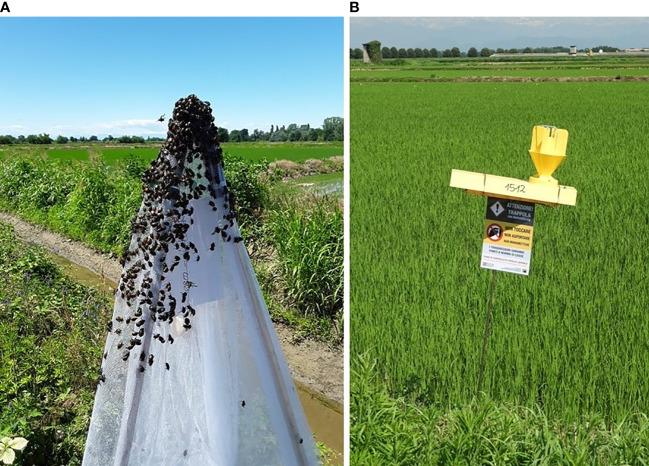
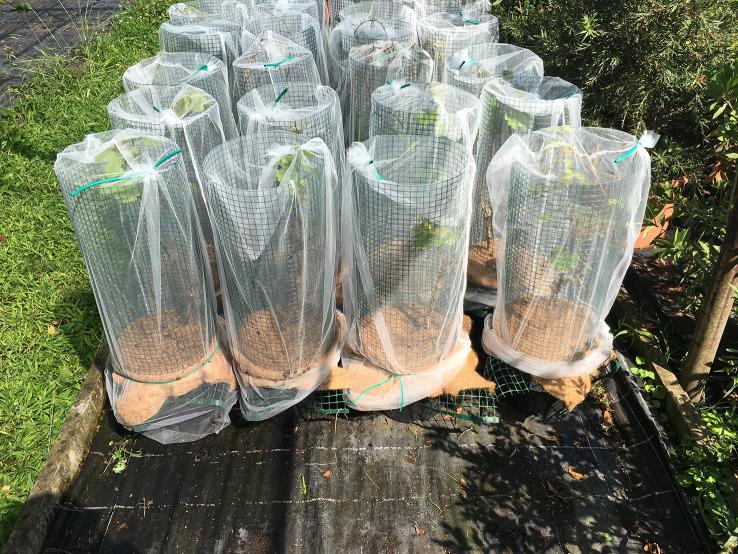
, a priority pest for the EU, was first detected in Northern Italy in 2014. Since its discovery, the outbreak extended over an area of more than 16,000 square kilometers in Northern Italy and Southern Switzerland. In this review, we summarize the state-of-the-art of research conducted in Italy on both the spreading capacity and control measures of Chemical, physical, and biological control measures deployed since its detection are presented, by highlighting their strengths and weaknesses. An in-depth study of the ecosystems invaded by disclosed the presence and pathogenicity of natural strains of entomopathogenic fungi and nematodes, some of which have shown to be particularly aggressive towards the larvae of this pest under laboratory conditions. The Plant Health authorities of the Lombardy and Piedmont regions, with the support of several research institutions, played a crucial role in the initial eradication attempt and subsequently in containing the spread of . Control measures were performed in the infested area to suppress adult populations of by installing several traps (e.g., for mass trapping, for auto-dissemination of the fungus , and "attract & kill"). For larval control, the infested fields were treated with commercial strains of the entomopathogenic fungus and nematode . Future studies will aim at integrating phenological and spread models developed with the most effective control measures, within an ecologically sustainable approach.
是欧盟的重点有害生物,于2014年首次在意大利北部被发现。自发现以来,疫情已蔓延至意大利北部和瑞士南部超过16000平方公里的区域。在本综述中,我们总结了意大利在该有害生物传播能力和控制措施方面的最新研究情况。介绍了自发现以来所采用的化学、物理和生物控制措施,并突出了它们的优缺点。对被该有害生物入侵的生态系统进行的深入研究揭示了昆虫病原真菌和线虫自然菌株的存在及其致病性,其中一些在实验室条件下对该害虫的幼虫表现出特别强的攻击性。伦巴第和皮埃蒙特地区的植物卫生当局在几家研究机构的支持下,在最初的根除尝试以及随后控制该有害生物的传播方面发挥了关键作用。在受灾地区采取了控制措施,通过设置多个诱捕器(例如用于大量诱捕、用于真菌自动传播以及“诱捕并杀灭”)来抑制该有害生物的成虫数量。对于幼虫控制,在受灾田地中使用昆虫病原真菌和线虫的商业菌株进行处理。未来的研究将旨在以生态可持续的方式,将所开发的物候和传播模型与最有效的控制措施相结合。



 Zotero 插件