
不同类型太极拳练习对预防老年人跌倒的影响:一项系统评价和网状Meta分析
The effects of different types of Tai Chi exercises on preventing falls in older adults: a systematic review and network meta-analysis.
作者信息
Lin Jiaqi, Ning Shuaiqi, Lyu Shaowei, Gao Hainan, Shao Xinxin, Tan Zili, Zhu Xiangyu, Chen Ying
机构信息
School of Acupuncture-Moxibustion and Tuina, Beijing University of Chinese Medicine, Beijing, China.
Department of Encephalopathy, Beijing Dongzhimen Hospital, Beijing University of Chinese Medicine, Beijing, China.
出版信息
Aging Clin Exp Res. 2024 Mar 13;36(1):65. doi: 10.1007/s40520-023-02674-7.
OBJECTIVES
Few studies comparing the effects of different types of Tai Chi exercises on preventing falls in older adults. We compared the effects for finding an optimal intervention.
METHODS
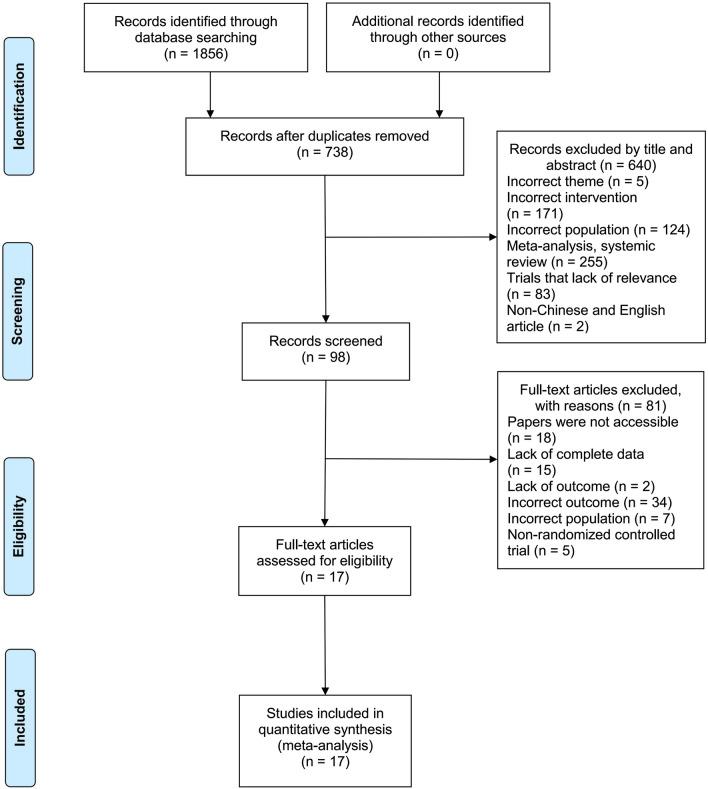
We searched 12 databases, including PubMed, EMBASE, Cochrane Library, Chinese National Knowledge Infrastructure (CNKI) and so on, from their inception to January 13, 2023. Randomized controlled trials incorporating different types of Tai Chi for preventing falls in older adults were included. The outcome measures were the incidence of falls and Berg Balance Scale (BBS). Network meta-analysis (NMA) was conducted using Stata 15.1 based on a frequentist framework.
RESULTS
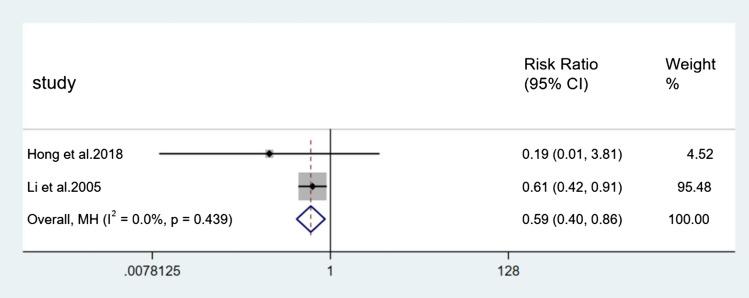
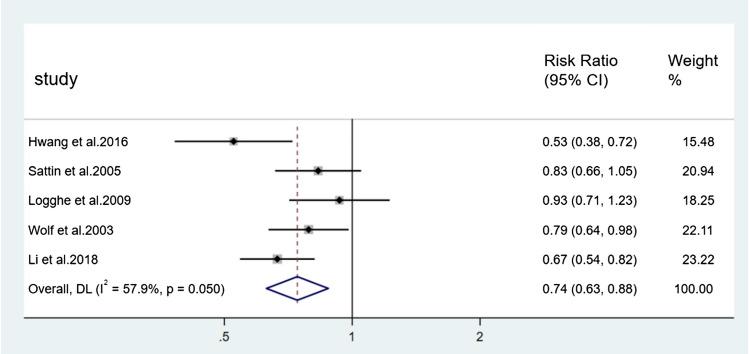
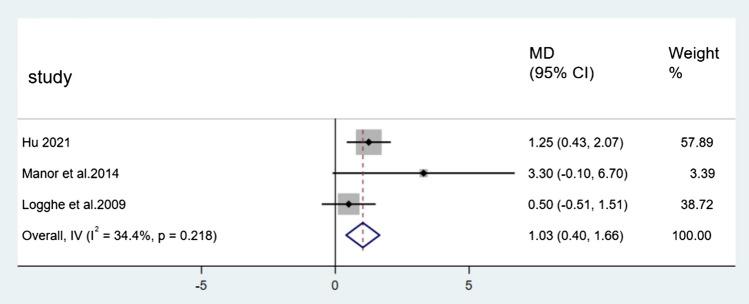
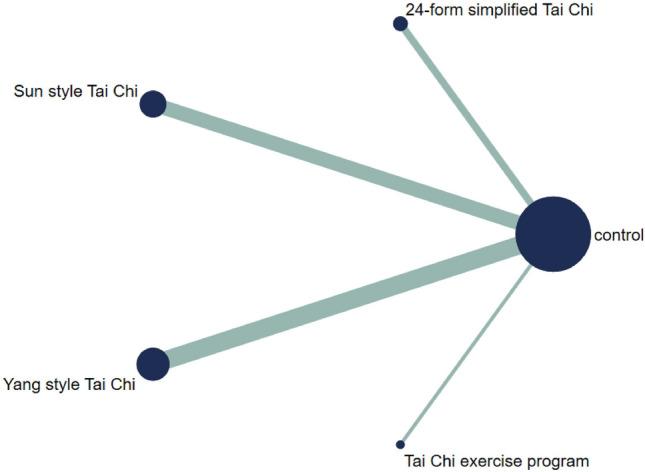
Seventeen trials were eligible, including 3470 participants and four types of Tai Chi. They were 24-form simplified Tai Chi (24-form), Yang style Tai Chi (Yang style), Sun style Tai Chi (Sun style) and Tai Chi exercise program (TCEP). In paired meta-analysis, for incidence of falls, 24-form (Relative Risk (RR) = 0.59, 95% confidence interval (CI) [0.40, 0.86]) was more efficient than the control group. For BBS outcome, 24-form (MD (mean difference) = 2.32, 95% CI [1.42, 3.22]) was better than the control group. In the NMA, the results of incidence of falls were as follows: 24-form > Yang style > Sun style > control > TCEP. The rank probability of BBS was as follows: 24-form > TCEP > Yang style > control.
CONCLUSION
Among the four types of Tai Chi studied, the 24-form simplified Tai Chi has shown better efficacy than other types.
目的
比较不同类型太极拳练习对预防老年人跌倒效果的研究较少。我们比较这些效果以找到最佳干预措施。
方法
我们检索了12个数据库,包括PubMed、EMBASE、Cochrane图书馆、中国知网(CNKI)等,检索时间从各数据库建库至2023年1月13日。纳入了采用不同类型太极拳预防老年人跌倒的随机对照试验。结局指标为跌倒发生率和伯格平衡量表(BBS)。基于频率学派框架,使用Stata 15.1进行网络荟萃分析(NMA)。
结果
17项试验符合纳入标准,包括3470名参与者和四种类型的太极拳。它们分别是24式简化太极拳(24式)、杨式太极拳(杨式)、孙式太极拳(孙式)和太极拳锻炼计划(TCEP)。在配对荟萃分析中,对于跌倒发生率,24式(相对危险度(RR)=0.59,95%置信区间(CI)[0.40,0.86])比对照组更有效。对于BBS结局,24式(平均差(MD)=2.32,95%CI[1.42,3.22])优于对照组。在NMA中,跌倒发生率的结果如下:24式>杨式>孙式>对照组>TCEP。BBS的排序概率如下:24式>TCEP>杨式>对照组。
结论
在所研究的四种太极拳类型中,24式简化太极拳显示出比其他类型更好的疗效。








 Zotero 插件