
氧化应激与脑血管张力:活性氧和氮物种的作用
Oxidative Stress and Cerebral Vascular Tone: The Role of Reactive Oxygen and Nitrogen Species.
作者信息
Salvagno Michele, Sterchele Elda Diletta, Zaccarelli Mario, Mrakic-Sposta Simona, Welsby Ian James, Balestra Costantino, Taccone Fabio Silvio
机构信息
Department of Intensive Care, Hôpital Universitaire de Bruxelles (HUB), 1000 Brussels, Belgium.
Institute of Clinical Physiology-National Research Council (CNR-IFC), 20133 Milan, Italy.
出版信息
Int J Mol Sci. 2024 Mar 5;25(5):3007. doi: 10.3390/ijms25053007.
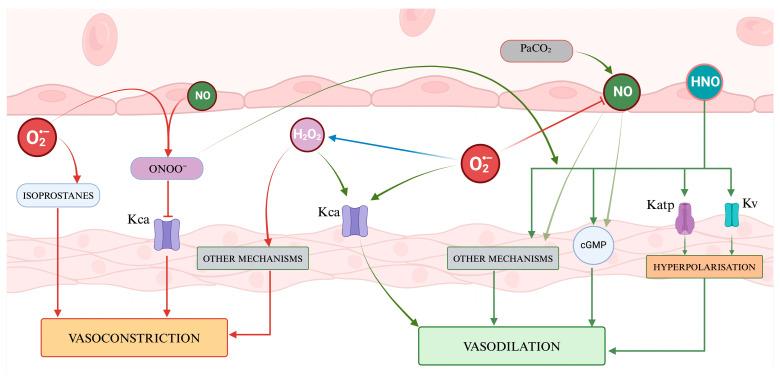
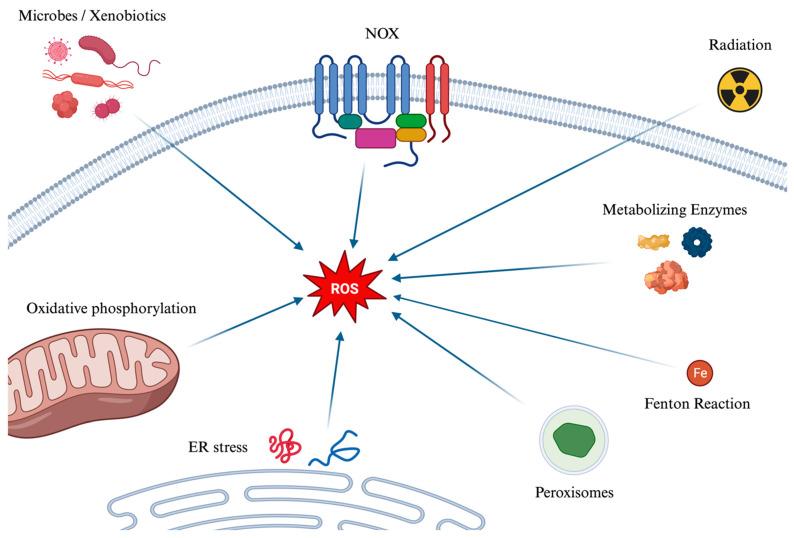
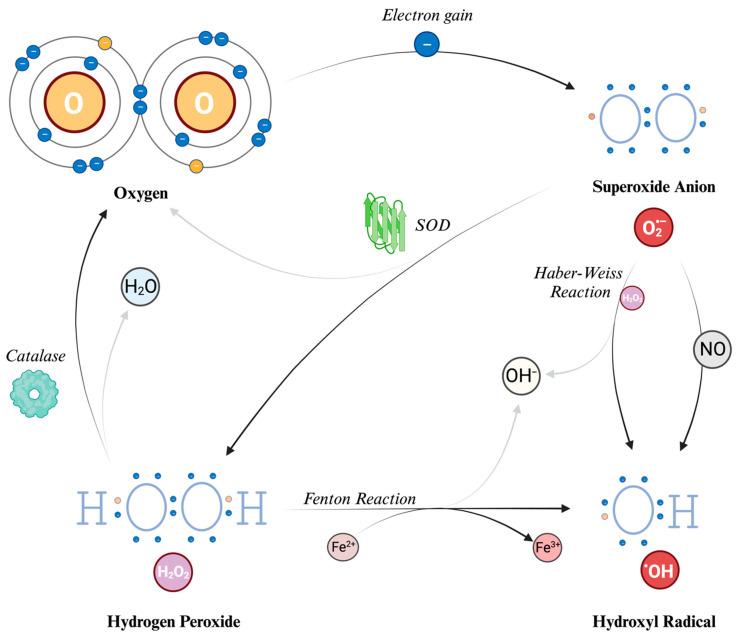
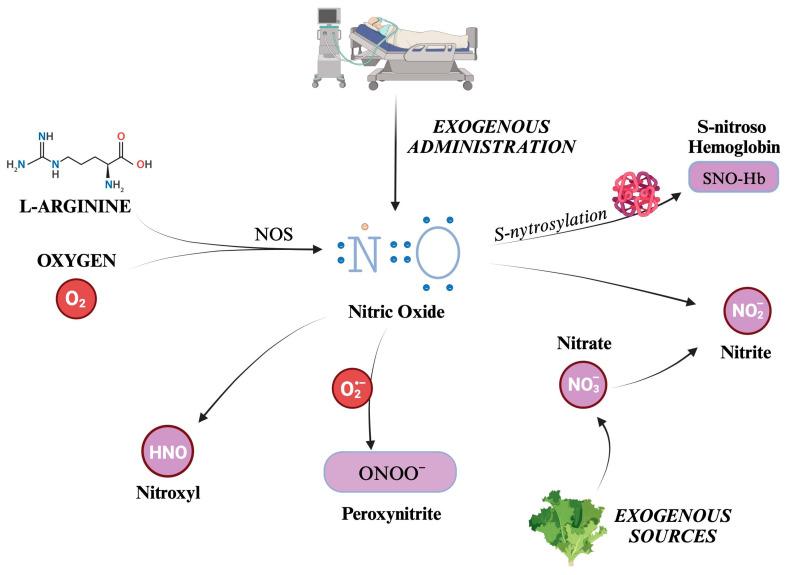
The brain's unique characteristics make it exceptionally susceptible to oxidative stress, which arises from an imbalance between reactive oxygen species (ROS) production, reactive nitrogen species (RNS) production, and antioxidant defense mechanisms. This review explores the factors contributing to the brain's vascular tone's vulnerability in the presence of oxidative damage, which can be of clinical interest in critically ill patients or those presenting acute brain injuries. The brain's high metabolic rate and inefficient electron transport chain in mitochondria lead to significant ROS generation. Moreover, non-replicating neuronal cells and low repair capacity increase susceptibility to oxidative insult. ROS can influence cerebral vascular tone and permeability, potentially impacting cerebral autoregulation. Different ROS species, including superoxide and hydrogen peroxide, exhibit vasodilatory or vasoconstrictive effects on cerebral blood vessels. RNS, particularly NO and peroxynitrite, also exert vasoactive effects. This review further investigates the neuroprotective effects of antioxidants, including superoxide dismutase (SOD), vitamin C, vitamin E, and the glutathione redox system. Various studies suggest that these antioxidants could be used as adjunct therapies to protect the cerebral vascular tone under conditions of high oxidative stress. Nevertheless, more extensive research is required to comprehensively grasp the relationship between oxidative stress and cerebrovascular tone, and explore the potential benefits of antioxidants as adjunctive therapies in critical illnesses and acute brain injuries.
大脑独特的特性使其极易受到氧化应激的影响,氧化应激源于活性氧(ROS)生成、活性氮(RNS)生成与抗氧化防御机制之间的失衡。本综述探讨了在存在氧化损伤的情况下导致脑血管张力易损性的因素,这在重症患者或急性脑损伤患者中可能具有临床意义。大脑的高代谢率和线粒体中低效的电子传递链导致大量ROS生成。此外,不可复制的神经元细胞和低修复能力增加了对氧化损伤的易感性。ROS可影响脑血管张力和通透性,可能影响脑自动调节。不同的ROS种类,包括超氧化物和过氧化氢,对脑血管表现出舒张或收缩作用。RNS,特别是一氧化氮(NO)和过氧亚硝酸盐,也发挥血管活性作用。本综述进一步研究了抗氧化剂的神经保护作用,包括超氧化物歧化酶(SOD)、维生素C、维生素E和谷胱甘肽氧化还原系统。各种研究表明,这些抗氧化剂可作为辅助疗法,在高氧化应激条件下保护脑血管张力。然而,需要更广泛的研究来全面掌握氧化应激与脑血管张力之间的关系,并探索抗氧化剂作为辅助疗法在危重病和急性脑损伤中的潜在益处。
 Zotero 插件