
一种基于聚类的方法,用于记录佩戴智能眼镜的老年人的功能和生物力学参数,以确定身体表现组别。
A Clustering-Based Approach to Functional and Biomechanical Parameters Recorded with a Pair of Smart Eyeglasses in Older Adults in Order to Determine Physical Performance Groups.
机构信息
Université Côte d'Azur, LAMHESS, France.
Ellcie Healthy, 06600 Antibes, France.
出版信息
Sensors (Basel). 2024 Feb 22;24(5):1427. doi: 10.3390/s24051427.
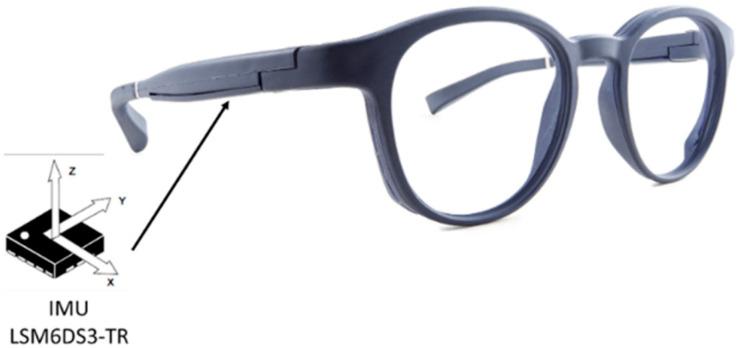
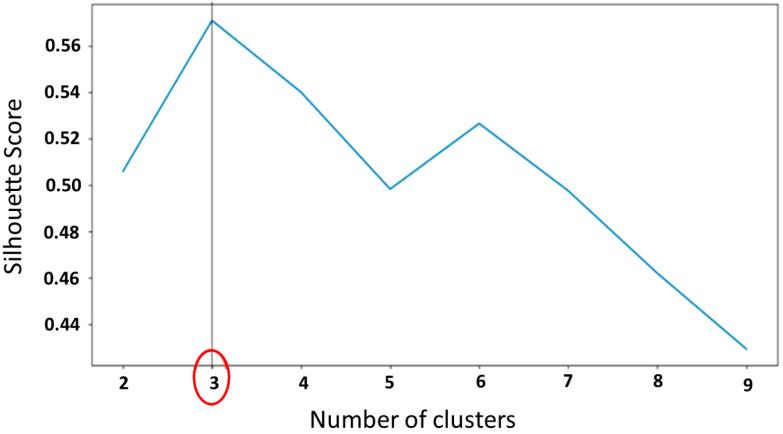
Falls and frailty status are often associated with a decline in physical capacity and multifactorial assessment is highly recommended. Based on the functional and biomechanical parameters measured during clinical tests with an accelerometer integrated into smart eyeglasses, the purpose was to characterize a population of older adults through an unsupervised analysis into different physical performance groups. A total of 84 participants (25 men and 59 women) over the age of sixty-five (age: 74.17 ± 5.80 years; height: 165.70 ± 8.22 cm; body mass: 68.93 ± 13.55 kg) performed a 30 s Sit-to-Stand test, a six-minute walking test (6MWT), and a 3 m Timed Up and Go (TUG) test. The acceleration data measured from the eyeglasses were processed to obtain six parameters: the number of Sit-to-Stands, the maximal vertical acceleration values during Sit-to-Stand movements, step duration and length, and the duration of the TUG test. The total walking distance covered during the 6MWT was also retained. After supervised analyses comparison (i.e., ANOVAs), only one of the parameters (i.e., step length) differed between faller groups and no parameters differed between frail and pre-frail participants. In contrast, unsupervised analysis (i.e., clustering algorithm based on K-means) categorized the population into three distinct physical performance groups (i.e., low, intermediate, and high). All the measured parameters discriminated the low- and high-performance groups. Four of the measured parameters differentiated the three groups. In addition, the low-performance group had a higher proportion of frail participants. These results are promising for monitoring activities in older adults to prevent the decline of physical capacities.
跌倒和虚弱状态通常与身体能力下降有关,因此强烈建议进行多因素评估。本研究通过将加速度计集成到智能眼镜中进行临床测试,基于所测量的功能和生物力学参数,旨在通过无监督分析将老年人群分为不同的身体表现组。共有 84 名 65 岁以上的参与者(男性 25 名,女性 59 名)参与了研究,他们的年龄为 74.17 ± 5.80 岁,身高为 165.70 ± 8.22cm,体重为 68.93 ± 13.55kg。参与者进行了 30 秒坐站测试、六分钟步行测试(6MWT)和 3 米计时起立行走测试(TUG)。从眼镜上测量的加速度数据经过处理后得到了六个参数:坐站次数、坐站运动过程中的最大垂直加速度值、步幅时长和长度,以及 TUG 测试的时长。6MWT 期间的总步行距离也被保留下来。经过监督分析比较(即 ANOVA),仅在跌倒组之间有一个参数(即步长)存在差异,而在虚弱和衰弱前期参与者之间没有参数存在差异。相比之下,无监督分析(即基于 K 均值的聚类算法)将人群分为三个不同的身体表现组(即低、中、高)。所有测量的参数都能区分低表现组和高表现组。有四个测量的参数可以区分这三个组。此外,低表现组中虚弱参与者的比例更高。这些结果对于监测老年人的活动以预防身体能力下降具有重要意义。


 Zotero 插件