
在慢性肾脏病中肠促胰岛素和胰高血糖素受体的多药理学。
Incretin and glucagon receptor polypharmacology in chronic kidney disease.
机构信息
Lilly Research Laboratories, Lilly Corporate CenterIndianapolisIndianaUnited States.
出版信息
Am J Physiol Endocrinol Metab. 2024 Jun 1;326(6):E747-E766. doi: 10.1152/ajpendo.00374.2023. Epub 2024 Mar 13.
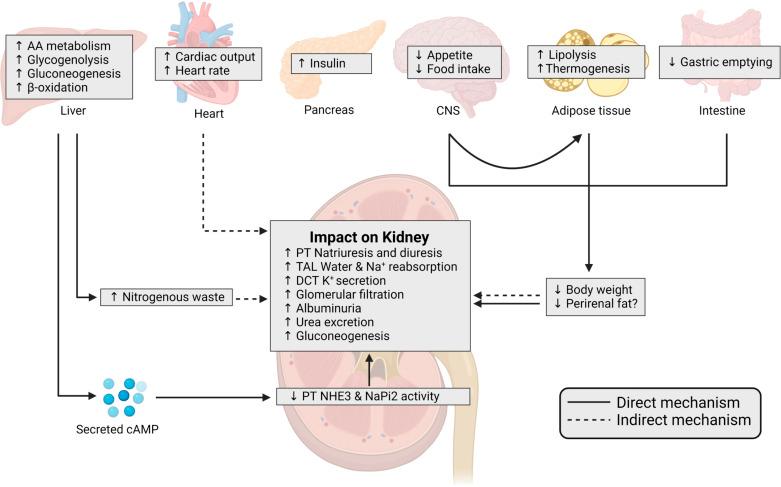
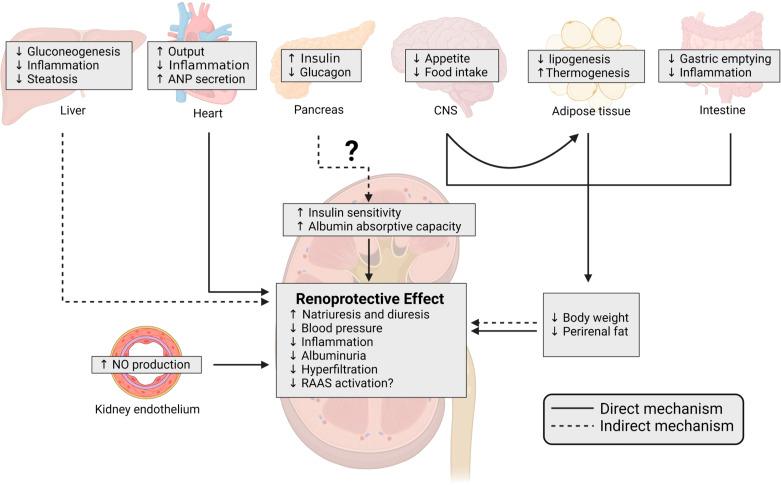
Chronic kidney disease is a debilitating condition associated with significant morbidity and mortality. In recent years, the kidney effects of incretin-based therapies, particularly glucagon-like peptide-1 receptor agonists (GLP-1RAs), have garnered substantial interest in the management of type 2 diabetes and obesity. This review delves into the intricate interactions between the kidney, GLP-1RAs, and glucagon, shedding light on their mechanisms of action and potential kidney benefits. Both GLP-1 and glucagon, known for their opposing roles in regulating glucose homeostasis, improve systemic risk factors affecting the kidney, including adiposity, inflammation, oxidative stress, and endothelial function. Additionally, these hormones and their pharmaceutical mimetics may have a direct impact on the kidney. Clinical studies have provided evidence that incretins, including those incorporating glucagon receptor agonism, are likely to exhibit improved kidney outcomes. Although further research is necessary, receptor polypharmacology holds promise for preserving kidney function through eliciting vasodilatory effects, influencing volume and electrolyte handling, and improving systemic risk factors.
慢性肾脏病是一种使人虚弱的疾病,与显著的发病率和死亡率相关。近年来,肠促胰岛素疗法(尤其是胰高血糖素样肽-1 受体激动剂 [GLP-1RAs])对 2 型糖尿病和肥胖症的治疗效果引起了人们的极大兴趣。本综述深入探讨了肾脏、GLP-1RAs 和胰高血糖素之间错综复杂的相互作用,阐明了它们的作用机制及其对肾脏的潜在益处。GLP-1 和胰高血糖素是两种调节葡萄糖稳态的激素,它们的作用相反,这两种激素都可以改善影响肾脏的全身危险因素,包括肥胖、炎症、氧化应激和内皮功能。此外,这些激素及其药物模拟物可能对肾脏有直接影响。临床研究提供了证据表明,肠促胰岛素,包括那些包含胰高血糖素受体激动剂的肠促胰岛素,可能会改善肾脏结局。尽管还需要进一步的研究,但受体多药理学有望通过发挥血管舒张作用、影响容量和电解质处理以及改善全身危险因素来保护肾脏功能。
 Zotero 插件