
全球和区域归因于高空腹血糖的结核病负担估计,1990 年至 2019 年:重点关注早期血糖控制。
Global and regional estimates of tuberculosis burden attributed to high fasting plasma glucose from 1990 to 2019: emphasis on earlier glycemic control.
机构信息
Department of Disease Control and Prevention, Shanghai Changhai Hospital, Shanghai, China.
出版信息
BMC Public Health. 2024 Mar 13;24(1):782. doi: 10.1186/s12889-024-18260-z.
BACKGROUND
Previous studies have shown subjects suffering from diabetes or persistent hyperglycemia were more likely to develop tuberculosis (TB). However, the global burden of TB attributed to high fasting plasma glucose (HFPG) remains unclear. This study aimed to characterize the global, regional, and national TB burden attributed to HFPG from 1990 to 2019.
METHODS
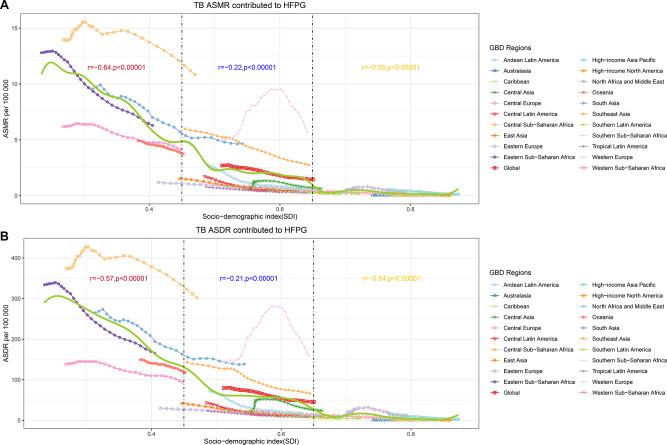
With Global Burden of Disease study 2019, the numbers and age-standardized mortality rates (ASMR) and age-standardized disability-adjusted life years (DALY) rates (ASDR) of TB attributed to HFPG at global, regional, and national levels from 1990 to 2019 were extracted. The locally weighted regression model was applied to estimate the TB burden for different socio-demographic index (SDI) regions.
RESULTS
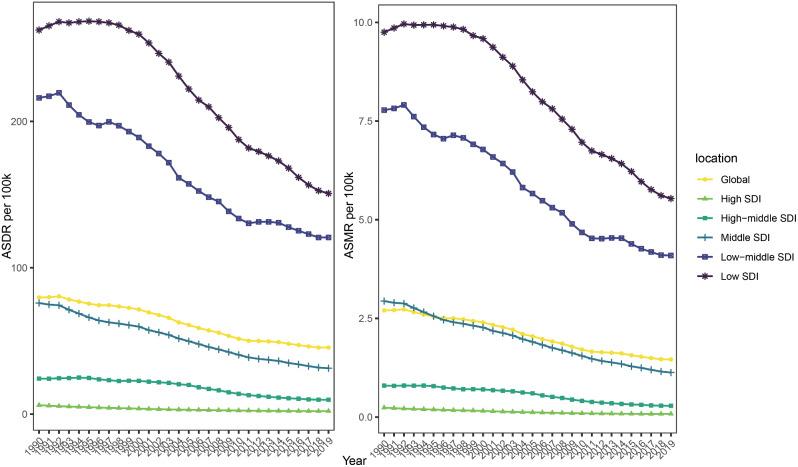
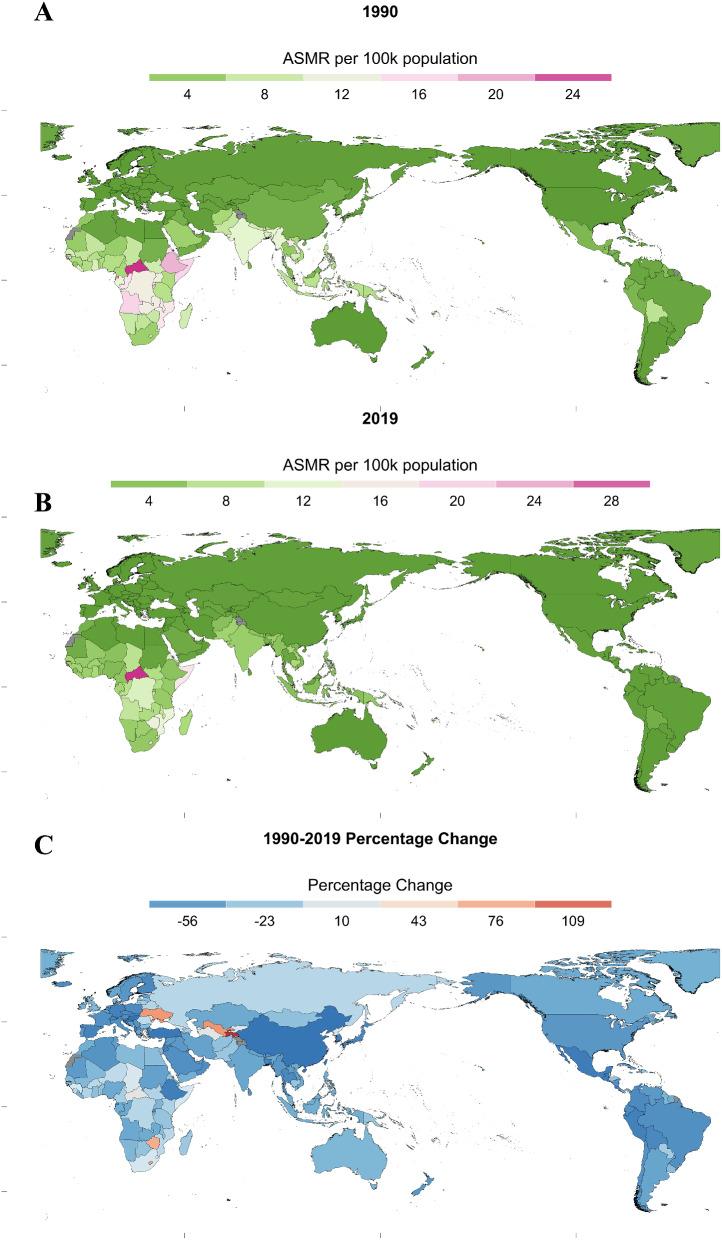
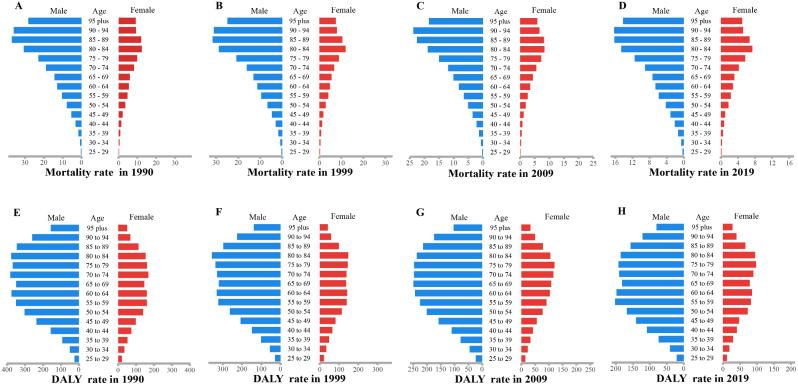
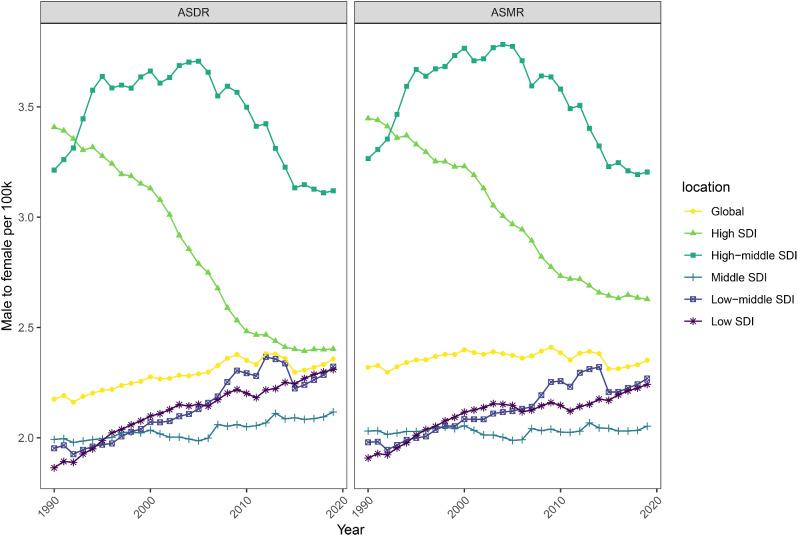
Globally, the ASMR and ASDR attributed to HFPG were 2.70 (95% UI, 1.64-3.94) and 79.70 (95% UI, 50.26-112.51) per 100,000 population in 1990, respectively. These rates decreased to 1.46 (95% UI, 0.91-2.08) and 45.53 (95% UI, 29.06-62.29) in 2019. The TB burden attributed to HFPG remained high in low SDI and Central Sub-Saharan Africa regions, while it declined with most significantly in high SDI and East Asia regions. Additionally, the ASMR and ASDR of TB attributed to HFPG were significantly higher in the male and the elderly population.
CONCLUSIONS
The global TB burden attributable to HFPG decreased from 1990 to 2019, but remained high in low SDI regions among high-risk populations. Thus, urgent efforts are required to enhance the awareness of early glycemic control and TB treatment to alleviate the severe situation.
背景
先前的研究表明,患有糖尿病或持续性高血糖的患者更容易患上结核病(TB)。然而,高空腹血糖(HFPG)导致的全球结核病负担仍不清楚。本研究旨在描述 1990 年至 2019 年期间,HFPG 导致的全球、区域和国家结核病负担。
方法
利用 2019 年全球疾病负担研究的数据,提取了 1990 年至 2019 年期间全球、区域和国家因 HFPG 导致的结核病数量和年龄标准化死亡率(ASMR)和年龄标准化伤残调整生命年(ASDR)。应用局部加权回归模型估计不同社会人口指数(SDI)地区的结核病负担。
结果
全球范围内,1990 年 HFPG 导致的 ASMR 和 ASDR 分别为每 100,000 人 2.70(95%置信区间,1.64-3.94)和 79.70(95%置信区间,50.26-112.51)。这些比率在 2019 年分别降至 1.46(95%置信区间,0.91-2.08)和 45.53(95%置信区间,29.06-62.29)。HFPG 导致的结核病负担在低 SDI 和中撒哈拉以南非洲地区仍然很高,而在高 SDI 和东亚地区下降幅度最大。此外,HFPG 导致的结核病的 ASMR 和 ASDR 在男性和老年人群中明显更高。
结论
1990 年至 2019 年期间,全球 HFPG 导致的结核病负担有所下降,但在高风险人群中的低 SDI 地区仍然较高。因此,需要紧急努力提高对早期血糖控制和结核病治疗的认识,以缓解这一严峻形势。

 Zotero 插件