
胆固醇调节KvAP电压传感器桨状基序环的结构动力学。
Cholesterol modulates the structural dynamics of the paddle motif loop of KvAP voltage sensor.
作者信息
Das Anindita, Bysack Arpan, Raghuraman H
机构信息
Crystallography and Molecular Biology Division, Saha Institute of Nuclear Physics, 1/AF Bidhannagar, Kolkata, India.
Homi Bhabha National Institute, Training School Complex, Anushaktinagar, Mumbai, 400 094, India.
出版信息
Curr Res Struct Biol. 2024 Mar 6;7:100137. doi: 10.1016/j.crstbi.2024.100137. eCollection 2024.
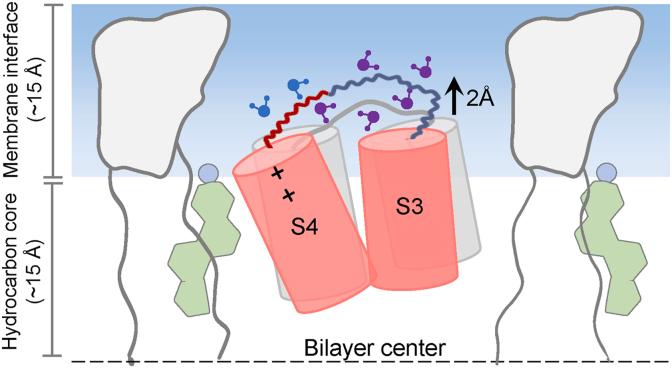
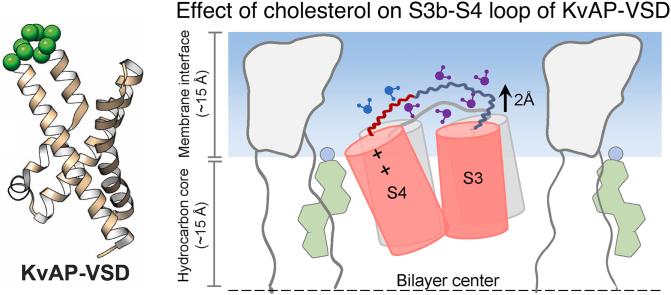
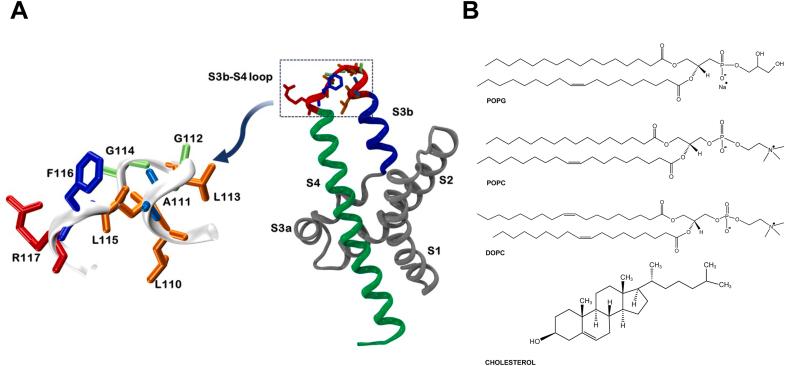
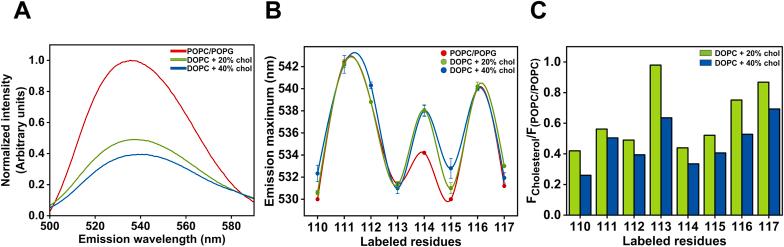
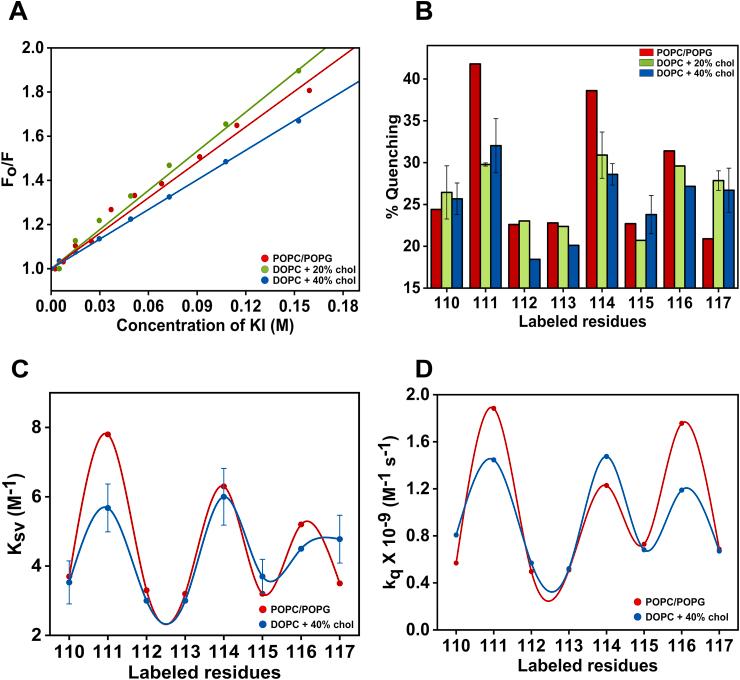
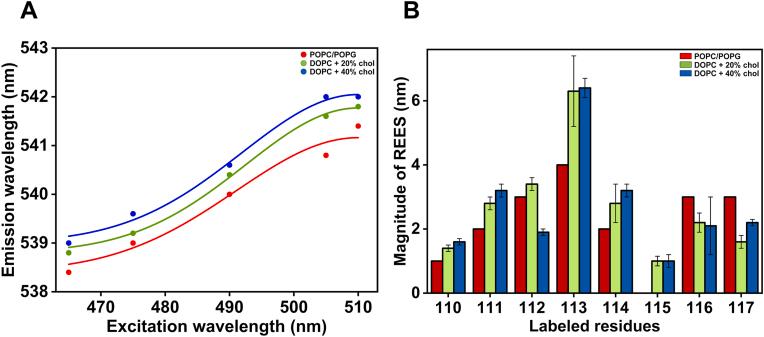
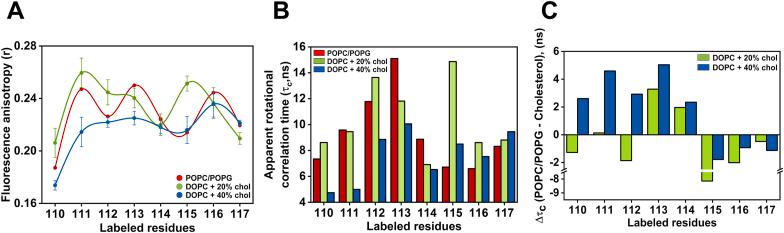
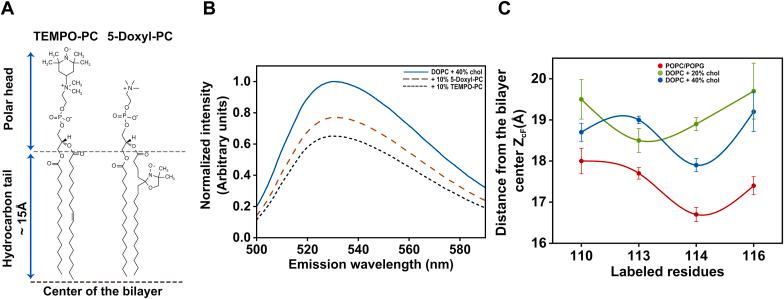
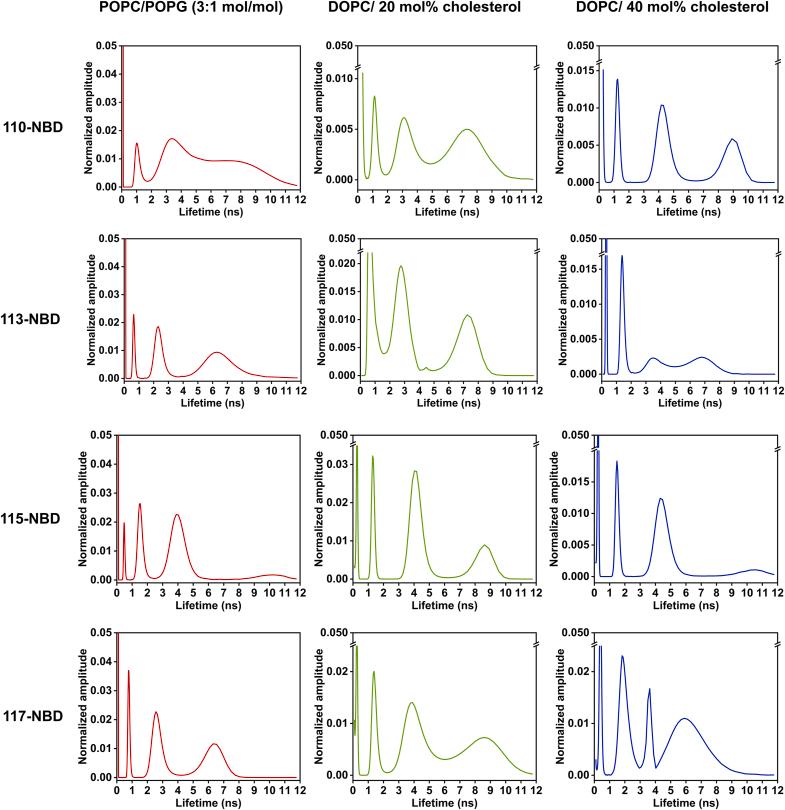
KvAP is a prokaryotic Kv channel, which has been widely used as a model system to understand voltage- and lipid-dependent gating mechanisms. In phospholipid membranes, the KvAP-VSD adopts the activated/'Up' conformation, whereas the presence of non-phospholipids in membranes favours the structural transition to resting/'Down' state. The S3b-S4 paddle motif loop of KvAP-VSD is functionally important as this participates in protein-protein interactions and is the target for animal toxins. In this study, we have monitored the modulatory role of cholesterol - the physiologically-relevant non-phospholipid - on the organization and dynamics of the S3b-S4 loop of the isolated KvAP-VSD in membranes by site-directed fluorescence approaches using the environmental sensitivity of 7-nitrobenz-2-oxa-1,3-diazol-4-yl-ethylenediamine (NBD) fluorescence. Our results show that cholesterol alters the dynamic nature (rotational and hydration dynamics) of S3b-S4 loop in a segmental fashion, ., the residues 110 to 114 and 115 to 117 behave differently in the presence of cholesterol, which is accompanied by considerable change in conformational heterogeneity. Further, quantitative depth measurements using the parallax quenching method reveal that the sensor loop is located at the shallow interfacial region of cholesterol-containing membranes, suggesting that the sensor loop organization is not directly correlated with S4 helix movement. Our results clearly show that cholesterol-induced changes in bilayer properties may not be the predominant factor for the sensor loop's altered structural dynamics, but can be attributed to the conformational change of the KvAP-VSD in cholesterol-containing membranes. Overall, these results are relevant for gating mechanisms, particularly the lipid-dependent gating, of Kv channels in membranes.
KvAP是一种原核钾离子通道,已被广泛用作理解电压和脂质依赖性门控机制的模型系统。在磷脂膜中,KvAP-VSD采取激活的/“向上”构象,而膜中存在非磷脂则有利于向静息/“向下”状态的结构转变。KvAP-VSD的S3b-S4桨状基序环在功能上很重要,因为它参与蛋白质-蛋白质相互作用,并且是动物毒素的作用靶点。在本研究中,我们利用7-硝基苯并-2-恶唑-1,3-二氮杂环丁烷-4-基-乙二胺(NBD)荧光的环境敏感性,通过定点荧光方法监测了胆固醇(生理相关的非磷脂)对膜中分离的KvAP-VSD的S3b-S4环的组织和动力学的调节作用。我们的结果表明,胆固醇以片段方式改变S3b-S4环的动态性质(旋转和水合动力学),即,在胆固醇存在下,残基110至114和115至117的行为不同,这伴随着构象异质性的显著变化。此外,使用视差猝灭法进行的定量深度测量表明,传感环位于含胆固醇膜的浅界面区域,这表明传感环的组织与S4螺旋运动没有直接相关性。我们的结果清楚地表明,胆固醇诱导的双层性质变化可能不是传感环结构动力学改变的主要因素,而是可归因于含胆固醇膜中KvAP-VSD的构象变化。总体而言,这些结果与膜中钾离子通道的门控机制,特别是脂质依赖性门控相关。

 Zotero 插件