
在植物核仁超微结构和复制的分区点击-iT 检测和超分辨率 CLEM 分析。
In-section Click-iT detection and super-resolution CLEM analysis of nucleolar ultrastructure and replication in plants.
机构信息
Mendel Centre for Plant Genomics and Proteomics, Central European Institute of Technology (CEITEC), Masaryk University, Kamenice 5, CZ-62500, Brno, Czech Republic.
Charles University, Faculty of Science, Biology Section, Imaging Methods Core Facility at BIOCEV, Průmyslová 595, 252 50, Vestec, Czech Republic.
出版信息
Nat Commun. 2024 Mar 19;15(1):2445. doi: 10.1038/s41467-024-46324-6.
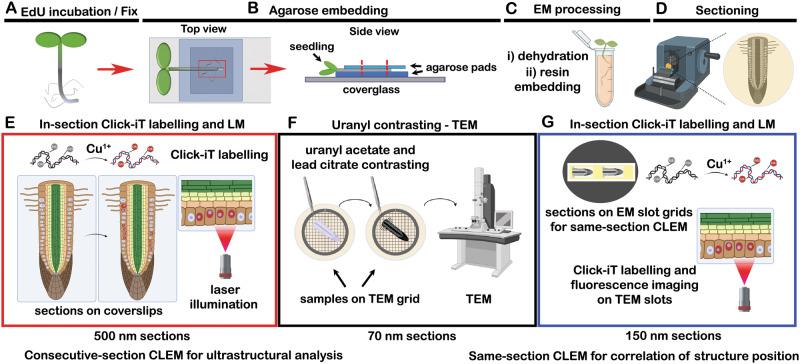
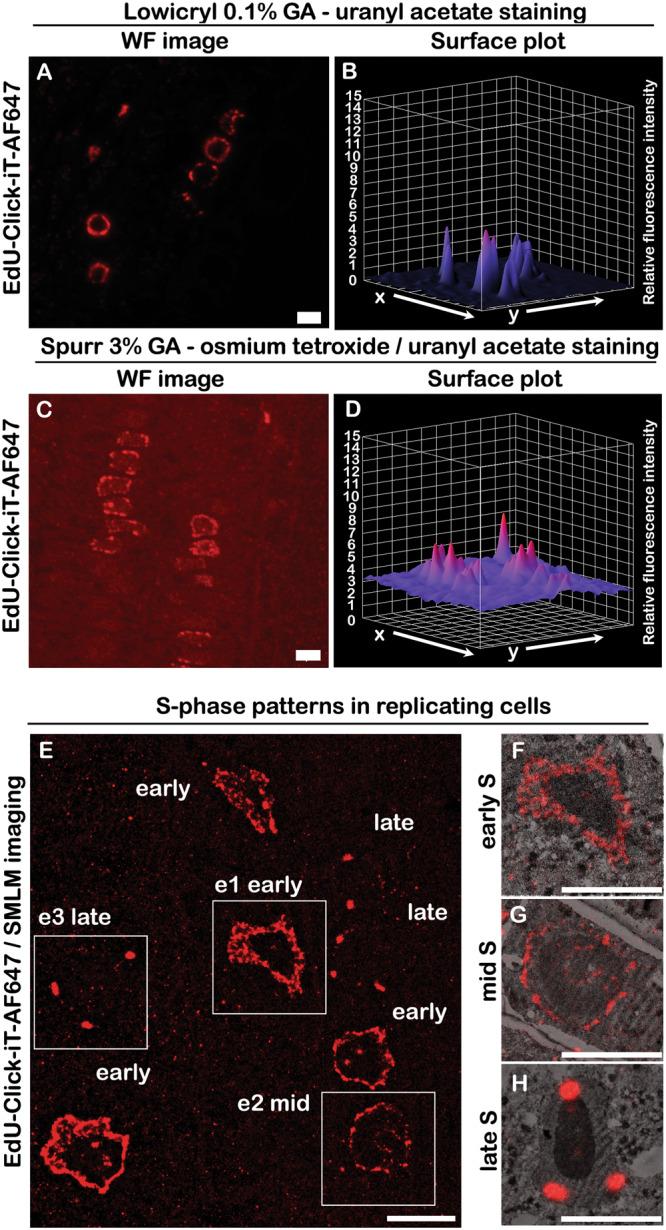
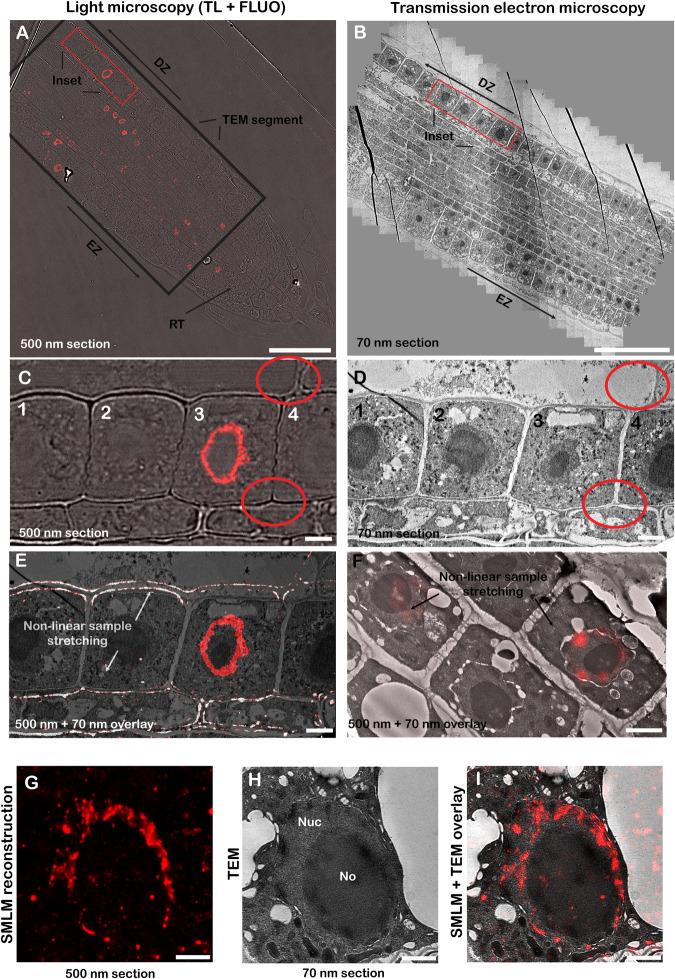
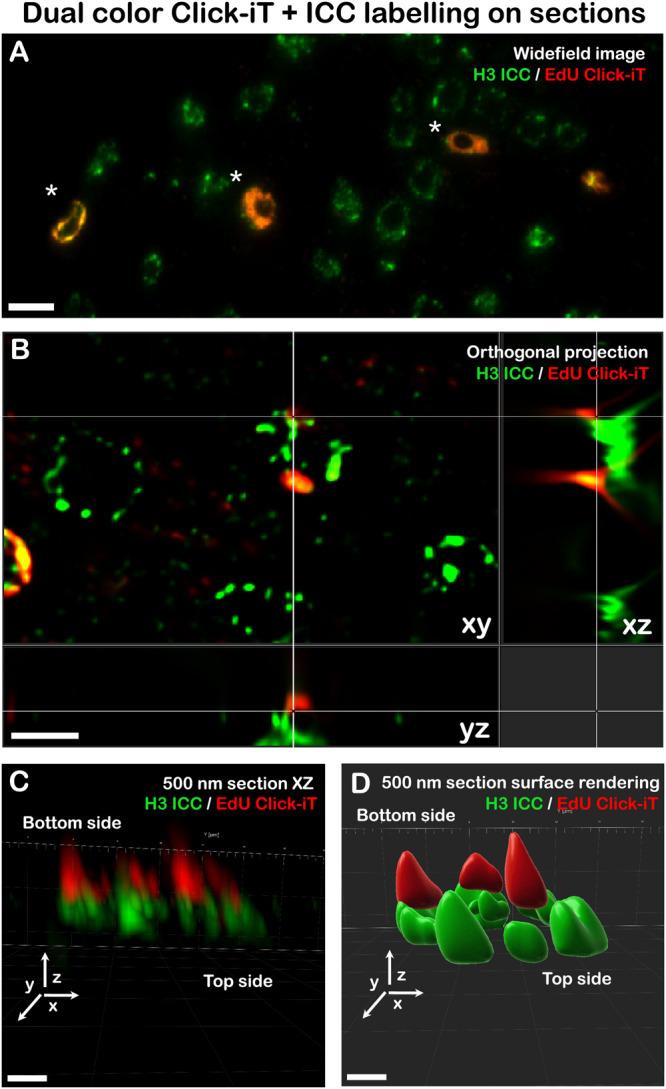
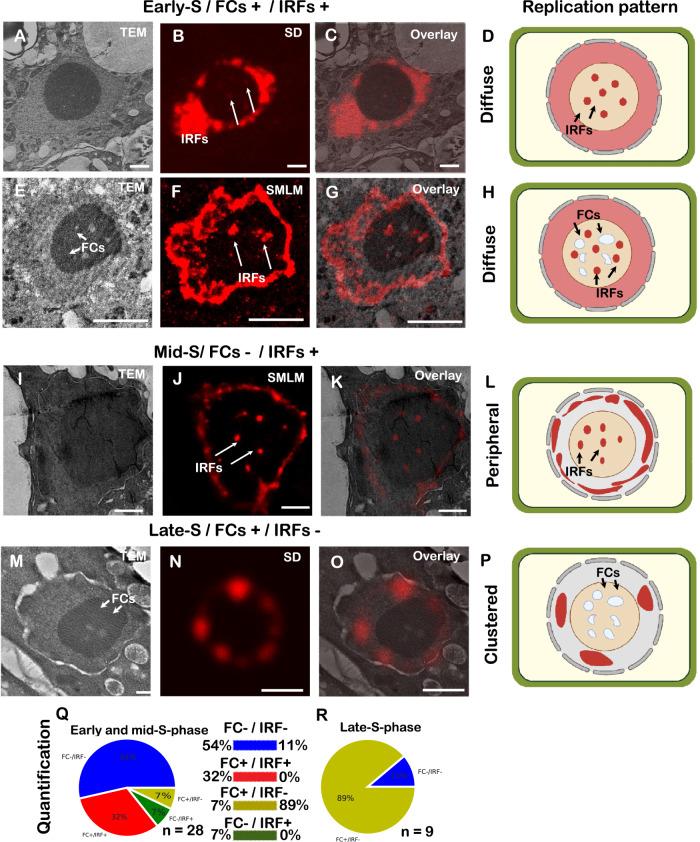
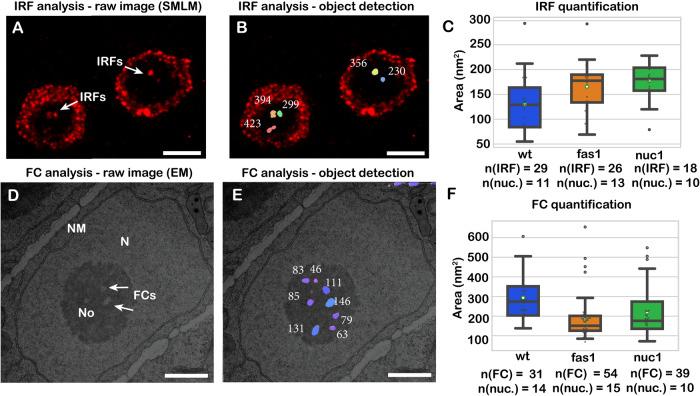
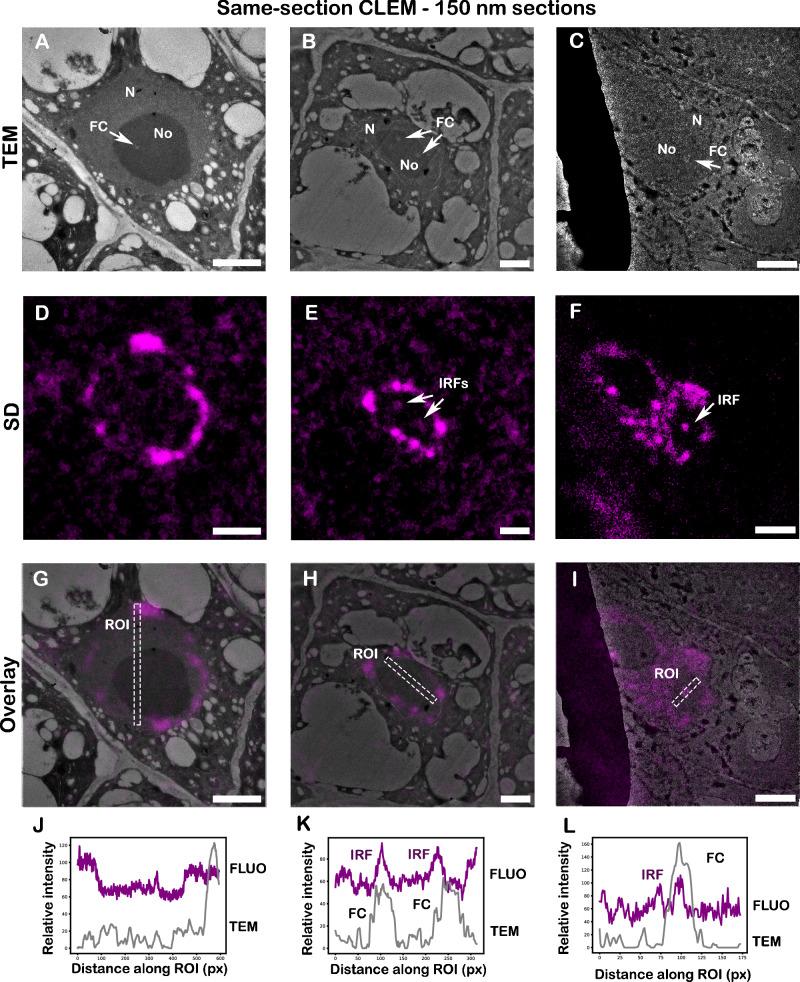
Correlative light and electron microscopy (CLEM) is an important tool for the localisation of target molecule(s) and their spatial correlation with the ultrastructural map of subcellular features at the nanometre scale. Adoption of these advanced imaging methods has been limited in plant biology, due to challenges with plant tissue permeability, fluorescence labelling efficiency, indexing of features of interest throughout the complex 3D volume and their re-localization on micrographs of ultrathin cross-sections. Here, we demonstrate an imaging approach based on tissue processing and embedding into methacrylate resin followed by imaging of sections by both, single-molecule localization microscopy and transmission electron microscopy using consecutive CLEM and same-section CLEM correlative workflow. Importantly, we demonstrate that the use of a particular type of embedding resin is not only compatible with single-molecule localization microscopy but shows improvements in the fluorophore blinking behavior relative to the whole-mount approaches. Here, we use a commercially available Click-iT ethynyl-deoxyuridine cell proliferation kit to visualize the DNA replication sites of wild-type Arabidopsis thaliana seedlings, as well as fasciata1 and nucleolin1 plants and apply our in-section CLEM imaging workflow for the analysis of S-phase progression and nucleolar organization in mutant plants with aberrant nucleolar phenotypes.
相关光镜和电子显微镜(CLEM)是一种重要的工具,用于定位目标分子及其与亚细胞特征的超微结构图谱在纳米尺度上的空间相关性。由于植物组织通透性、荧光标记效率、在复杂的 3D 体积中对感兴趣特征的索引以及它们在超薄切片的显微照片上的重新定位等方面的挑战,这些先进的成像方法在植物生物学中的应用受到限制。在这里,我们展示了一种基于组织处理和包埋在甲基丙烯酸酯树脂中的成像方法,然后通过单分子定位显微镜和透射电子显微镜对切片进行成像,使用连续的 CLEM 和同一切片 CLEM 相关工作流程。重要的是,我们证明了使用特定类型的包埋树脂不仅与单分子定位显微镜兼容,而且相对于整体安装方法,荧光团闪烁行为得到了改善。在这里,我们使用市售的 Click-iT 乙炔基 - 脱氧尿苷细胞增殖试剂盒来可视化野生型拟南芥幼苗的 DNA 复制位点,以及 fasciata1 和 nucleolin1 植物,并应用我们的切片内 CLEM 成像工作流程来分析具有异常核仁表型的突变体植物中的 S 期进展和核仁组织。


 Zotero 插件