
两种 DOT1 酶协同介导动基体中超高效的非泛素依赖的组蛋白 H3 赖氨酸 76 三甲基化。
Two DOT1 enzymes cooperatively mediate efficient ubiquitin-independent histone H3 lysine 76 tri-methylation in kinetoplastids.
机构信息
Department of Biochemistry and Molecular Biology, Thomas Jefferson University, Philadelphia, PA, USA.
Department of Biochemistry and Molecular Biophysics, Washington University School of Medicine, St. Louis, MO, USA.
出版信息
Nat Commun. 2024 Mar 19;15(1):2467. doi: 10.1038/s41467-024-46637-6.
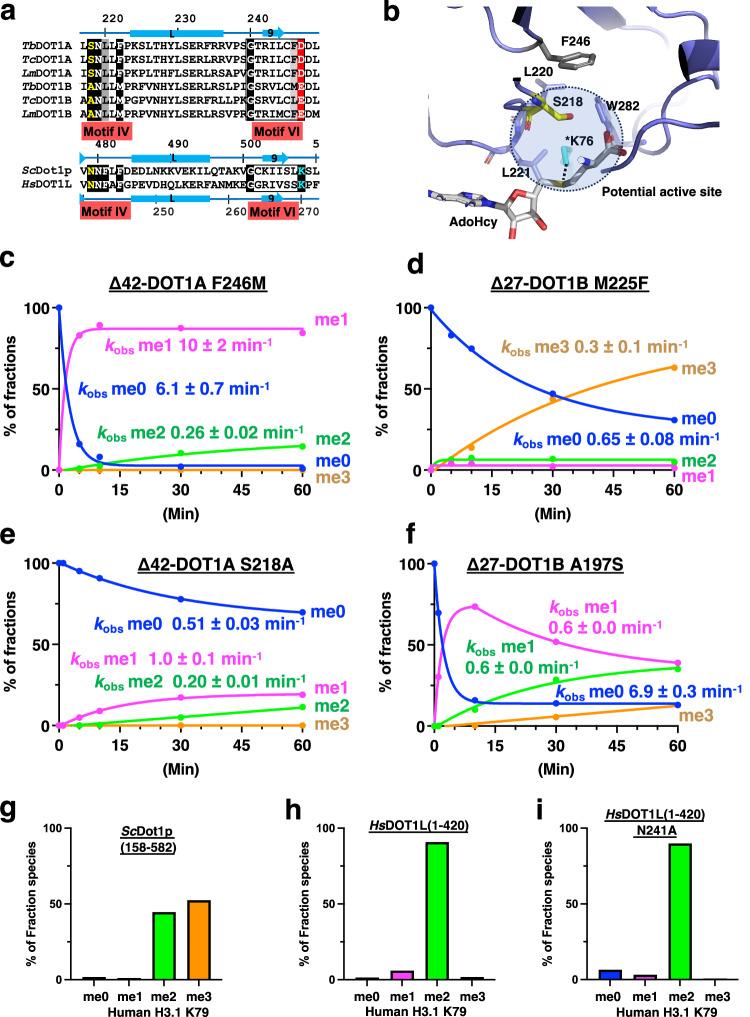
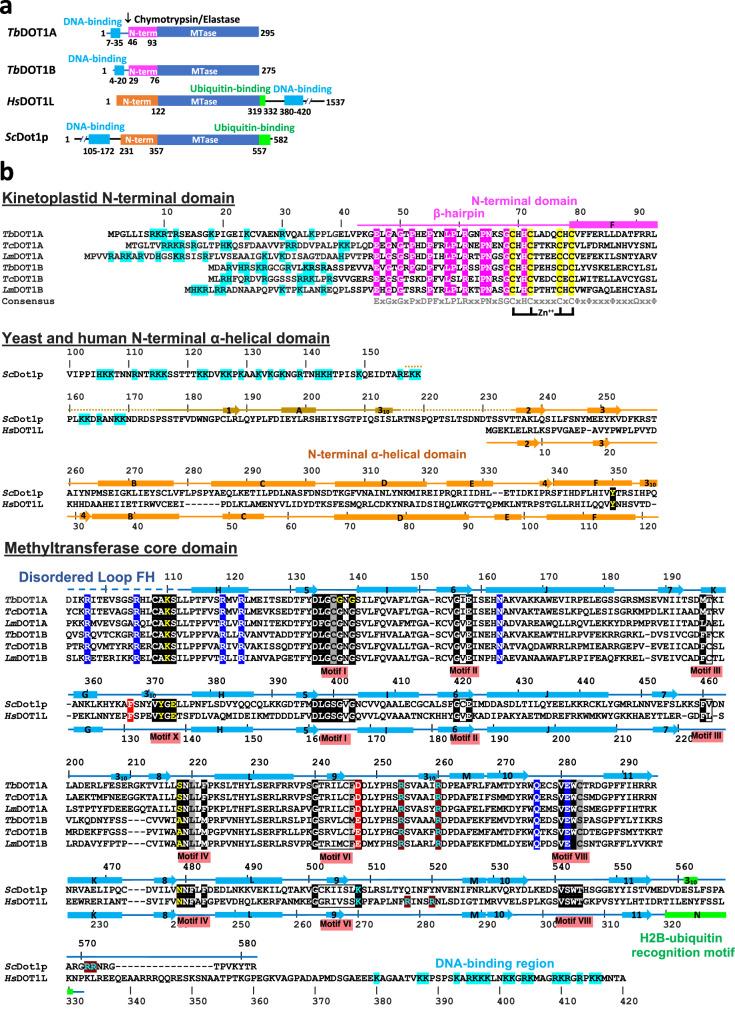
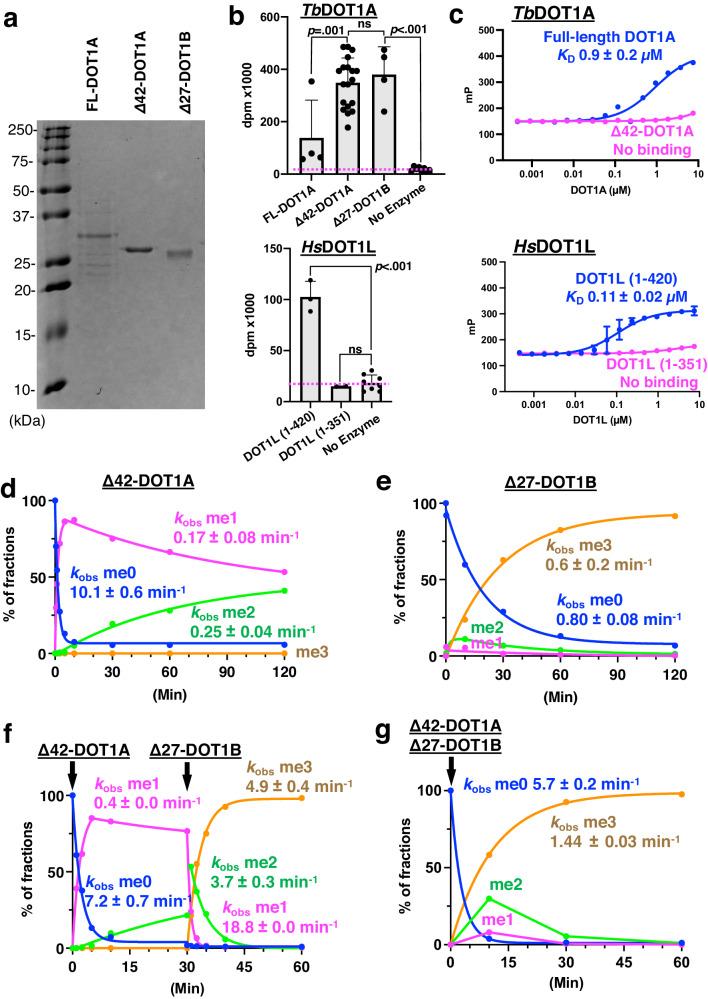
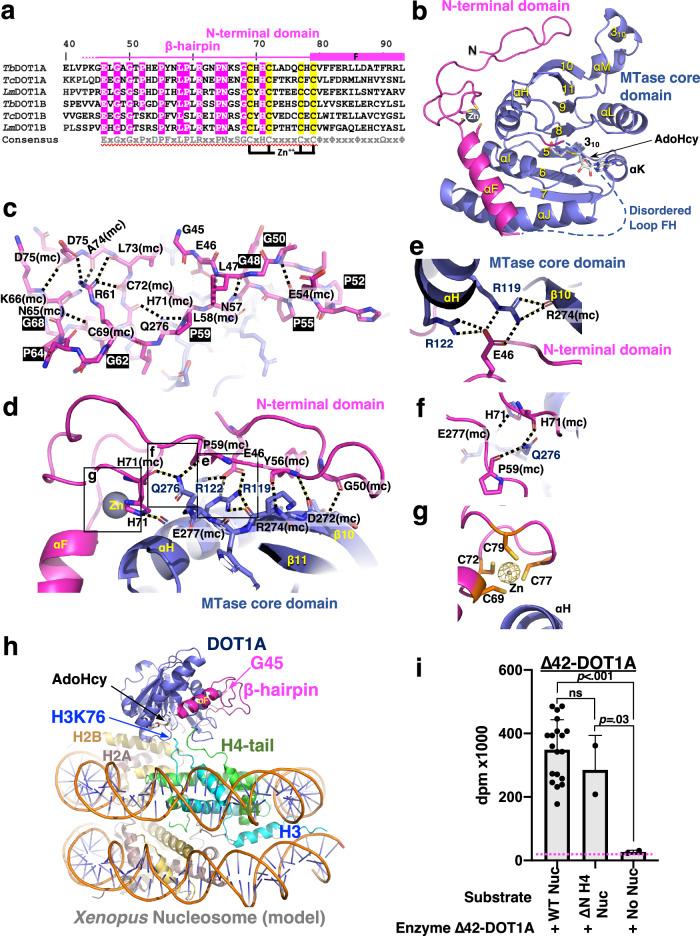
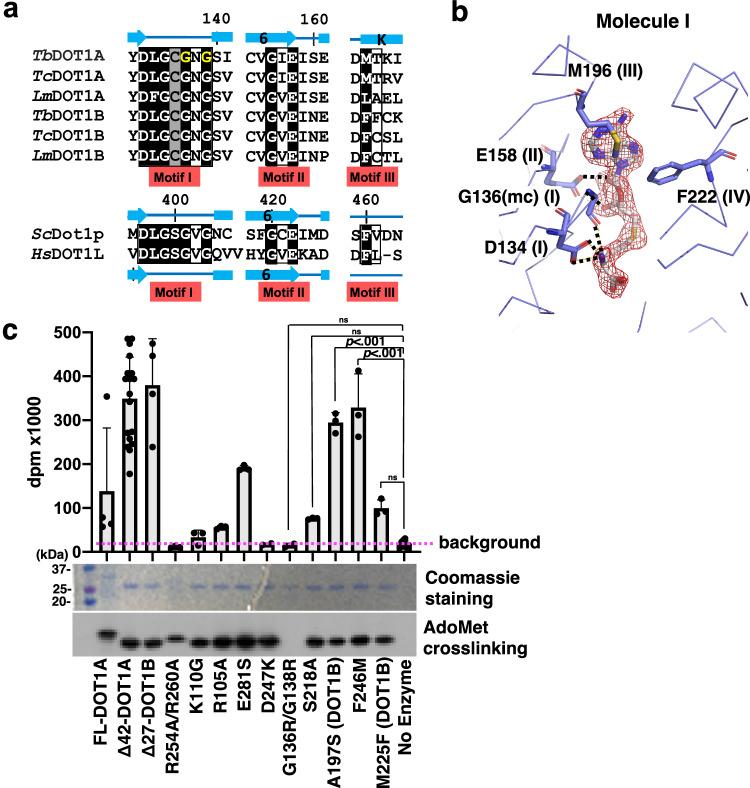
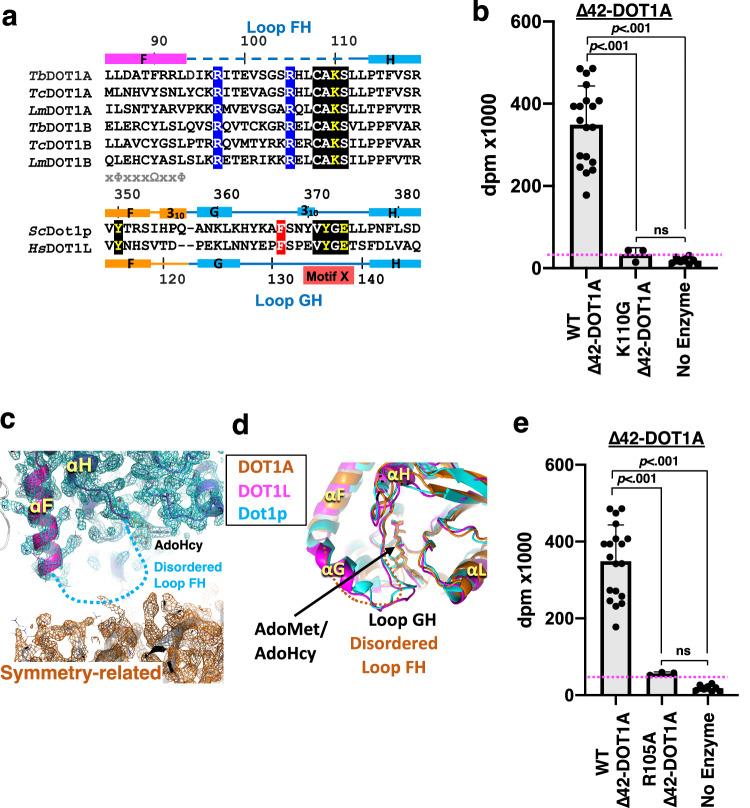
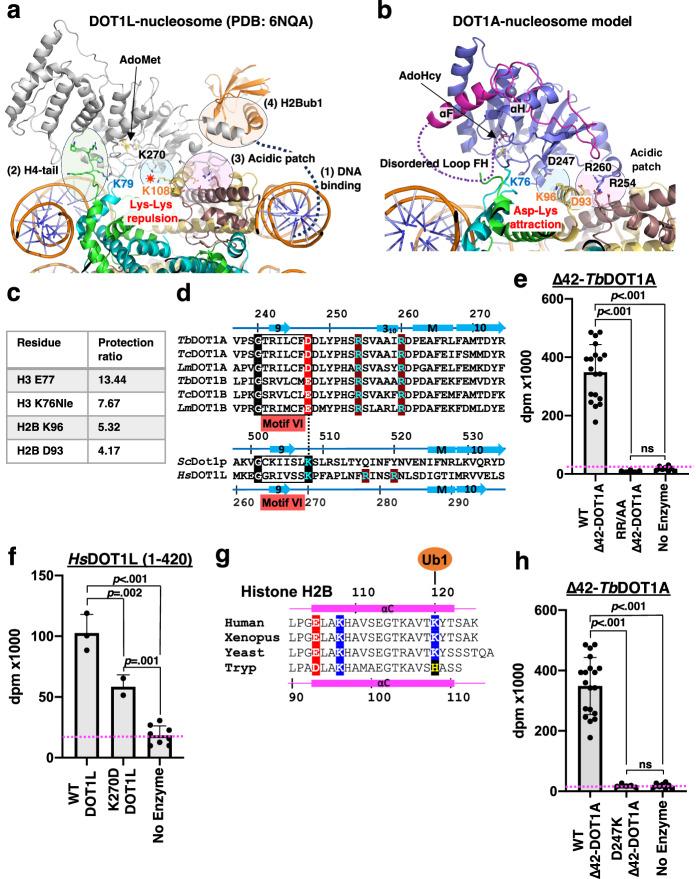
In higher eukaryotes, a single DOT1 histone H3 lysine 79 (H3K79) methyltransferase processively produces H3K79me2/me3 through histone H2B mono-ubiquitin interaction, while the kinetoplastid Trypanosoma brucei di-methyltransferase DOT1A and tri-methyltransferase DOT1B efficiently methylate the homologous H3K76 without H2B mono-ubiquitination. Based on structural and biochemical analyses of DOT1A, we identify key residues in the methyltransferase motifs VI and X for efficient ubiquitin-independent H3K76 methylation in kinetoplastids. Substitution of a basic to an acidic residue within motif VI (GxK) is essential to stabilize the DOT1A enzyme-substrate complex, while substitution of the motif X sequence VYGE by CAKS renders a rigid active-site loop flexible, implying a distinct mechanism of substrate recognition. We further reveal distinct methylation kinetics and substrate preferences of DOT1A (H3K76me0) and DOT1B (DOT1A products H3K76me1/me2) in vitro, determined by a Ser and Ala residue within motif IV, respectively, enabling DOT1A and DOT1B to mediate efficient H3K76 tri-methylation non-processively but cooperatively, and suggesting why kinetoplastids have evolved two DOT1 enzymes.
在高等真核生物中,单一的 DOT1 组蛋白 H3 赖氨酸 79(H3K79)甲基转移酶通过组蛋白 H2B 单泛素相互作用,连续地产生 H3K79me2/me3,而动基体原生动物锥虫的二甲基转移酶 DOT1A 和三甲基转移酶 DOT1B 则有效地甲基化同源的 H3K76,而无需 H2B 单泛素化。基于 DOT1A 的结构和生化分析,我们确定了甲基转移酶基序 VI 和 X 中的关键残基,这些残基对于在动基体原生动物中进行高效的非依赖泛素的 H3K76 甲基化是必需的。基序 VI(GxK)内碱性残基到酸性残基的取代对于稳定 DOT1A 酶-底物复合物是必不可少的,而基序 X 序列 VYGE 被 CAKS 取代使刚性的活性位点环变得灵活,这表明存在不同的底物识别机制。我们进一步揭示了 DOT1A(H3K76me0)和 DOT1B(DOT1A 产物 H3K76me1/me2)在体外的不同甲基化动力学和底物偏好性,这分别由基序 IV 内的一个 Ser 和 Ala 残基决定,使 DOT1A 和 DOT1B 能够非连续但协同地介导有效的 H3K76 三甲基化,这也解释了为什么动基体原生动物进化出了两种 DOT1 酶。
 Zotero 插件