
在可持续的角豆胶纳米复合水凝胶中使用石墨烯量子点改性蒙脱石增强染料去除效果。
Enhanced dye removal using montmorillonite modified with graphene quantum dots in sustainable salep nanocomposite hydrogel.
作者信息
Mohammad Sharifi Kolsum, Poursattar Marjani Ahmad, Gozali Balkanloo Peyman
机构信息
Department of Organic Chemistry, Faculty of Chemistry, Urmia University, Urmia, Iran.
出版信息
Sci Rep. 2024 Mar 25;14(1):7011. doi: 10.1038/s41598-024-57729-0.
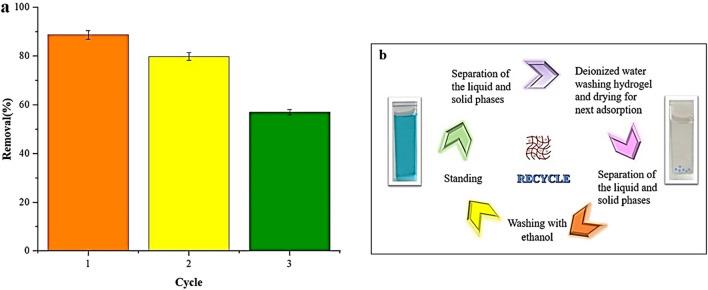
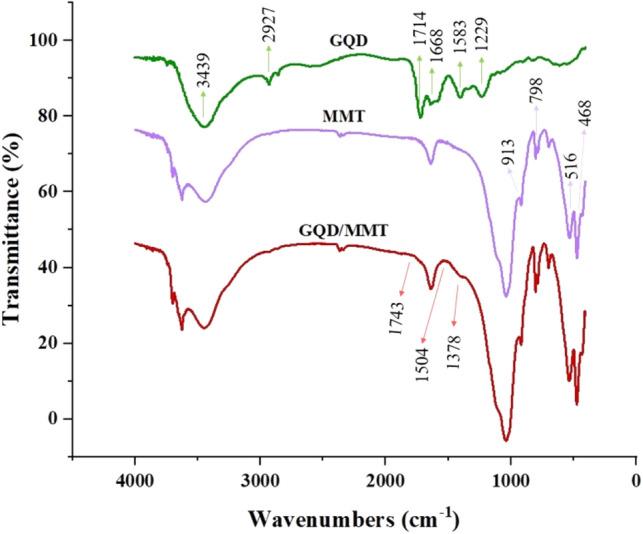
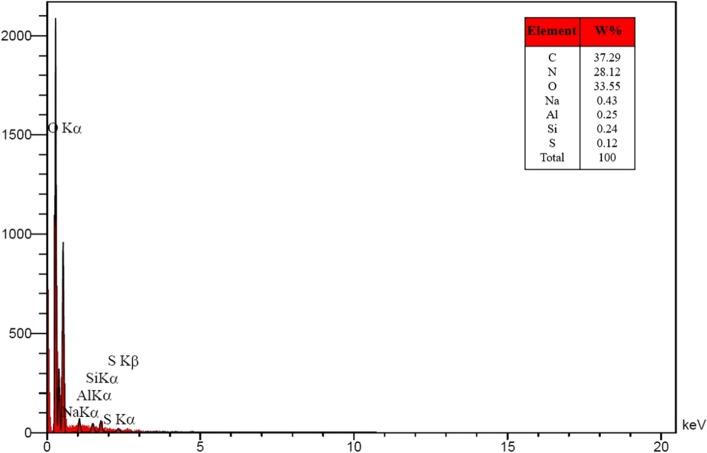
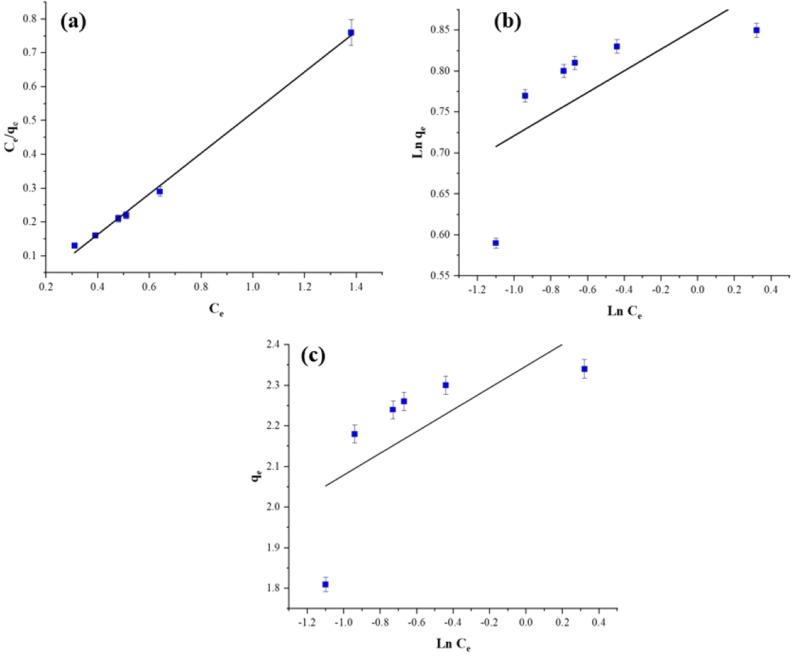
This research investigated the utilization of graphene quantum dot/montmorillonite (GQD/MMT) as an effective nanofiller in a hydrogel composed of salep biopolymer. The semi-IPN hydrogel was synthesized using salep as the substrate, acrylamide (AAm) as the monomer, ammonium persulfate (APS) as an initiator in free radical polymerization, and N,N'-methylenebisacrylamide (MBA) as a cross-linking agent. The hydrogels were applied to remove safranin (SA), methylene blue (MB), crystal violet (CV), methyl green (MG), congo red (CR), and malachite green (MG) dyes from the water. The diverse properties were analyzed using a scanning electron microscope, fourier infrared spectroscopy, mapping, energy dispersive spectroscopy, weighing analysis, X-ray diffraction, and thermal stability analyses. The optimism of the prepared adsorbent in dye absorption was evaluated by measuring the swelling amount, pH impact, adsorbent dosage, and contact time. The adsorption calculations were described using kinetics and isotherm models. The results indicated that the Langmuir isotherm model (R = 99.6) and the pseudo-second-order kinetic model (R = 99.9) provided the best fit for the absorption process of MB. The presence of additional amounts of GQD/MMT had a reciprocal effect on the adsorption efficiency due to the accumulation of GQD/MMT in the semi-interpenetrating polymer network (semi-IPN (structure. The findings revealed that the samples exhibited high thermal stability, and the absorption process was primarily chemical. Furthermore, the nanocomposite hydrogels demonstrated distinct mechanisms for absorbing anionic dye (CR) and cationic dye (MB). Under optimal conditions, using 7 wt% GQD/MMT at a concentration of 5 ppm, pH = 7, an adsorbent dosage of 50 mg, at room temperature, and a contact time of 90 min, the maximum removal efficiencies were achieved: MB (96.2%), SA (98.2%), MG (86%), CV (99.8%), MG (95.8%), and CR (63.4%). These results highlight the adsorbent's high absorption capacity, rapid removal rate, and reusability, demonstrating its potential as an eco-friendly and cost-effective solution for removing dyes from water.
本研究考察了石墨烯量子点/蒙脱石(GQD/MMT)作为一种有效纳米填料在由角叉菜胶生物聚合物组成的水凝胶中的应用。以角叉菜胶为底物、丙烯酰胺(AAm)为单体、过硫酸铵(APS)为自由基聚合引发剂、N,N'-亚甲基双丙烯酰胺(MBA)为交联剂合成了半互穿聚合物网络(semi-IPN)水凝胶。将该水凝胶应用于去除水中的番红(SA)、亚甲基蓝(MB)、结晶紫(CV)、甲基绿(MG)、刚果红(CR)和孔雀石绿(MG)染料。使用扫描电子显微镜、傅里叶红外光谱、映射、能量色散光谱、重量分析、X射线衍射和热稳定性分析等方法对其多种性能进行了分析。通过测量溶胀量、pH值影响、吸附剂用量和接触时间来评估所制备吸附剂在染料吸附方面的优势。用动力学和等温线模型描述吸附计算。结果表明,Langmuir等温线模型(R = 99.6)和伪二级动力学模型(R = 99.9)最适合MB的吸附过程。由于GQD/MMT在半互穿聚合物网络(semi-IPN)结构中的积累,额外添加GQD/MMT对吸附效率有相反的影响。研究结果表明,样品具有高热稳定性,且吸附过程主要为化学吸附。此外,纳米复合水凝胶对阴离子染料(CR)和阳离子染料(MB)的吸附表现出不同的机制。在最佳条件下,使用7 wt% GQD/MMT,浓度为5 ppm,pH = 7,吸附剂用量为50 mg,室温下接触时间为90 min,实现了最大去除效率:MB(96.2%)、SA(98.2%)、MG(86%)、CV(99.8%)、MG(95.8%)和CR(63.4%)。这些结果突出了吸附剂的高吸附容量、快速去除率和可重复使用性,证明了其作为一种从水中去除染料的环保且经济高效解决方案的潜力。








 Zotero 插件