
利用基于电子健康记录的序贯器官衰竭评估标准的成人脓毒症事件验证和脓毒症患病率及死亡率的流行病学分析:韩国单中心研究。
Validation of Adult Sepsis Event and Epidemiologic Analysis of Sepsis Prevalence and Mortality Using Adult Sepsis Event's Electronic Health Records-Based Sequential Organ Failure Assessment Criteria: A Single-Center Study in South Korea.
机构信息
All authors: Department of Pulmonary and Critical Care Medicine, Asan Medical Center, University of Ulsan College of Medicine, Seoul, South Korea.
出版信息
Crit Care Med. 2024 Aug 1;52(8):1173-1182. doi: 10.1097/CCM.0000000000006270. Epub 2024 Mar 26.
OBJECTIVES
In 2018, the Centers for Disease Control and Prevention introduced the Adult Sepsis Event (ASE) definition, using electronic health records (EHRs) data for surveillance and sepsis quality improvement. However, data regarding ASE outside the United States remain limited. We therefore aimed to validate the diagnostic accuracy of the ASE and to assess the prevalence and mortality of sepsis using ASE.
DESIGN
Retrospective cohort study.
SETTING
A single center in South Korea, with 2732 beds including 221 ICU beds.
PATIENTS
During the validation phase, adult patients who were hospitalized or visiting the emergency department between November 5 and November 11, 2019, were included. In the subsequent phase of epidemiologic analysis, we included adult patients who were admitted from January to December 2020.
INTERVENTIONS
None.
MEASUREMENTS AND MAIN RESULTS
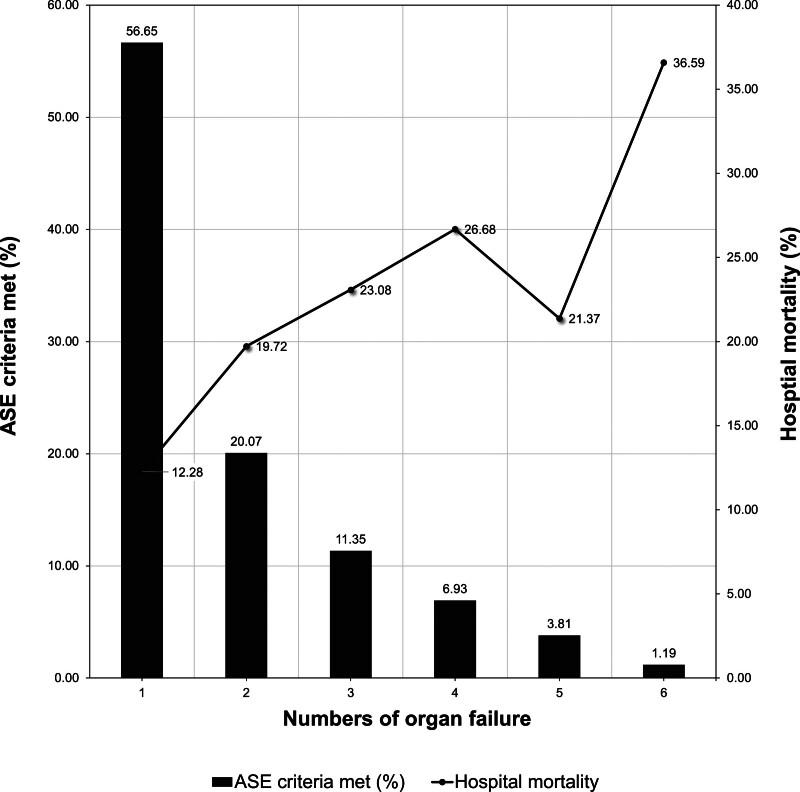
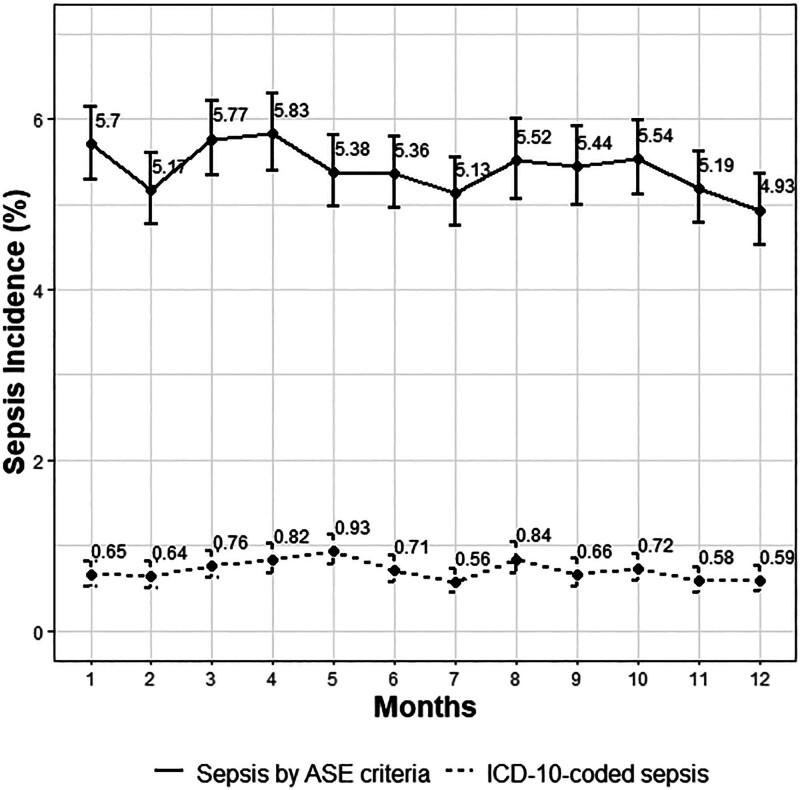
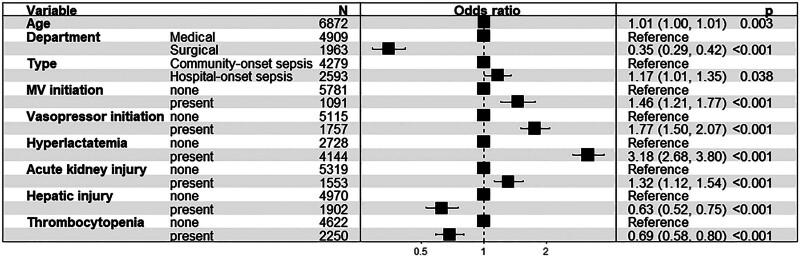
ASE had a sensitivity of 91.6%, a specificity of 98.3%, a positive predictive value (PPV) of 57.4%, and a negative predictive value of 99.8% when compared with the Sepsis-3 definition. Of 126,998 adult patient hospitalizations in 2020, 6,872 cases were diagnosed with sepsis based on the ASE (5.4% per year), and 893 patients were identified as having sepsis according to the International Classification of Diseases , 10th Edition (ICD-10) (0.7% per year). Hospital mortality rates were 16.6% (ASE) and 23.5% (ICD-10-coded sepsis). Monthly sepsis prevalence and hospital mortality exhibited less variation when diagnosed using ASE compared with ICD-10 coding (coefficient of variation [CV] for sepsis prevalence: 0.051 vs. 0.163, Miller test p < 0.001; CV for hospital mortality: 0.087 vs. 0.261, p = 0.001).
CONCLUSIONS
ASE demonstrated high sensitivity and a moderate PPV compared with the Sepsis-3 criteria in a Korean population. The prevalence of sepsis, as defined by ASE, was 5.4% per year and was similar to U.S. estimates. The prevalence of sepsis by ASE was eight times higher and exhibited less monthly variability compared with that based on the ICD-10 code.
目的
2018 年,疾病控制与预防中心(CDC)引入了成人脓毒症事件(ASE)定义,利用电子健康记录(EHR)数据进行监测和脓毒症质量改进。然而,美国以外的 ASE 数据仍然有限。因此,我们旨在验证 ASE 的诊断准确性,并评估使用 ASE 诊断的脓毒症的患病率和死亡率。
设计
回顾性队列研究。
地点
韩国的一个单一中心,有 2732 张床位,包括 221 张 ICU 床位。
患者
在验证阶段,纳入 2019 年 11 月 5 日至 11 月 11 日期间住院或到急诊就诊的成年患者。在随后的流行病学分析阶段,纳入 2020 年 1 月至 12 月期间入院的成年患者。
干预措施
无。
测量和主要结果
与 Sepsis-3 定义相比,ASE 的敏感性为 91.6%,特异性为 98.3%,阳性预测值(PPV)为 57.4%,阴性预测值为 99.8%。在 2020 年的 126998 例成年患者住院中,根据 ASE 诊断为脓毒症的有 6872 例(占 5.4%/年),根据国际疾病分类第 10 版(ICD-10)诊断为脓毒症的有 893 例(占 0.7%/年)。住院死亡率为 16.6%(ASE)和 23.5%(ICD-10 编码的脓毒症)。与 ICD-10 编码相比,使用 ASE 诊断时,脓毒症的月度患病率和住院死亡率变化较小(脓毒症患病率的变异系数[CV]:0.051 对 0.163,米勒检验,p<0.001;住院死亡率的 CV:0.087 对 0.261,p=0.001)。
结论
在韩国人群中,ASE 与 Sepsis-3 标准相比,具有较高的敏感性和中等的 PPV。根据 ASE 定义,脓毒症的患病率为 5.4%/年,与美国的估计值相似。ASE 定义的脓毒症患病率是基于 ICD-10 编码的 8 倍,且月度变化较小。

 Zotero 插件