
正颌手术后恶心和呕吐的预防:范围综述。
Prevention of postoperative nausea and vomiting after orthognathic surgery: a scoping review.
机构信息
State Key Laboratory of Oral Diseases, Department of Anesthesiology, West China Hospital of Stomatology, National Clinical Research Center for Oral Diseases, Sichuan University, Chengdu, 610041, China.
出版信息
BMC Anesthesiol. 2024 Mar 28;24(1):121. doi: 10.1186/s12871-024-02510-z.
INTRODUCTION
Postoperative nausea and vomiting (PONV) is one of the most common adverse events following orthognathic surgery. It's a distressing feeling for patients and continues to be the cause of postoperative complications such as bleeding, delayed healing, and wound infection. This scoping review aims to identify effective PONV prophylaxis strategies during orthognathic surgery that have emerged in the past 15 years.
METHODS
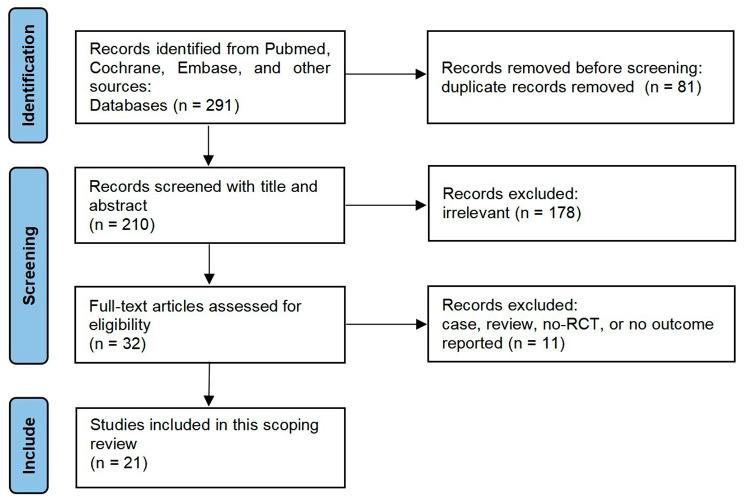
We searched Pubmed, Cochrane Controlled Register of Trials, and Embase from 2008 to May 2023. Studies meeting the following criteria were eligible for inclusion: (1) recruited patients undergo any orthognathic surgery; (2) evaluated any pharmacologic or non-pharmacologic method to prevent PONV. Studies meeting the following criteria were excluded: (1) case series, review papers, or retrospective studies; (2) did not report our prespecified outcomes.
RESULTS
Twenty-one studies were included in this review. Pharmacological methods for PONV prevention include ondansetron and dexamethasone (3 studies), peripheral nerve block technique (4 studies), dexmedetomidine (1 study), pregabalin (2 studies), nefopam (2 studies), remifentanil (1 study), propofol (2 studies), and penehyclidine (1 study). Non-pharmacologic methods include capsicum plaster (1 study), throat packs (2 studies) and gastric aspiration (2 studies).
CONCLUSIONS
Based on current evidence, we conclude that prophylactic antiemetics like dexamethasone, ondansetron, and penehyclidine are the first defense against PONV. Multimodal analgesia with nerve block techniques and non-opioid analgesics should be considered due to their notable opioid-sparing and PONV preventive effect. For the non-pharmacological methods, throat packs are not recommended for routine use because of their poor effect and serious complications. More prospective RCTs are required to confirm whether gastric aspiration can prevent PONV effectively for patients undergoing orthognathic surgery.
简介
术后恶心呕吐(PONV)是正颌手术后最常见的不良反应之一。它会给患者带来不适,并且仍然是术后出血、愈合延迟和伤口感染等并发症的原因。本综述旨在确定过去 15 年来正颌手术中预防 PONV 的有效策略。
方法
我们从 2008 年至 2023 年 5 月在 Pubmed、Cochrane 对照试验注册库和 Embase 进行了搜索。符合以下标准的研究有资格入选:(1)招募接受任何正颌手术的患者;(2)评估任何预防 PONV 的药物或非药物方法。符合以下标准的研究被排除在外:(1)病例系列、综述文章或回顾性研究;(2)未报告我们预先指定的结果。
结果
本综述共纳入 21 项研究。预防 PONV 的药物方法包括昂丹司琼和地塞米松(3 项研究)、周围神经阻滞技术(4 项研究)、右美托咪定(1 项研究)、普瑞巴林(2 项研究)、奈福泮(2 项研究)、瑞芬太尼(1 项研究)、丙泊酚(2 项研究)和盐酸戊乙奎醚(1 项研究)。非药物方法包括辣椒贴膏(1 项研究)、咽喉填塞(2 项研究)和胃抽吸(2 项研究)。
结论
根据目前的证据,我们得出结论,预防性止吐药如地塞米松、昂丹司琼和盐酸戊乙奎醚是预防 PONV 的第一道防线。由于其显著的阿片类药物节约和 PONV 预防作用,应考虑使用多模式镇痛联合神经阻滞技术和非阿片类镇痛药。对于非药物方法,由于效果不佳且并发症严重,不建议常规使用咽喉填塞。需要更多的前瞻性 RCT 来证实胃抽吸是否能有效地预防正颌手术患者的 PONV。
 Zotero 插件