
膳食多酚对癌症侵袭中粘着斑和金属蛋白酶的影响。
Dietary Polyphenols Effects on Focal Adhesion Plaques and Metalloproteinases in Cancer Invasiveness.
作者信息
Carrano Raffaele, Grande Martina, Leti Maggio Eleonora, Zucca Carlotta, Bei Riccardo, Palumbo Camilla, Focaccetti Chiara, Nardozi Daniela, Lucarini Valeria, Angiolini Valentina, Mancini Patrizia, Barberini Francesca, Barillari Giovanni, Cifaldi Loredana, Masuelli Laura, Benvenuto Monica, Bei Roberto
机构信息
Department of Clinical Sciences and Translational Medicine, University of Rome "Tor Vergata", Via Montpellier 1, 00133 Rome, Italy.
Medical School, University of Rome "Tor Vergata", Via Montpellier 1, 00133 Rome, Italy.
出版信息
Biomedicines. 2024 Feb 21;12(3):482. doi: 10.3390/biomedicines12030482.
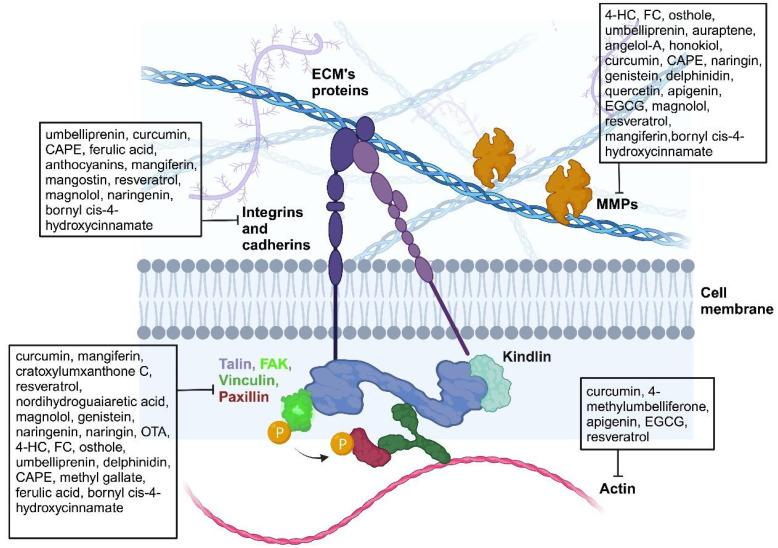
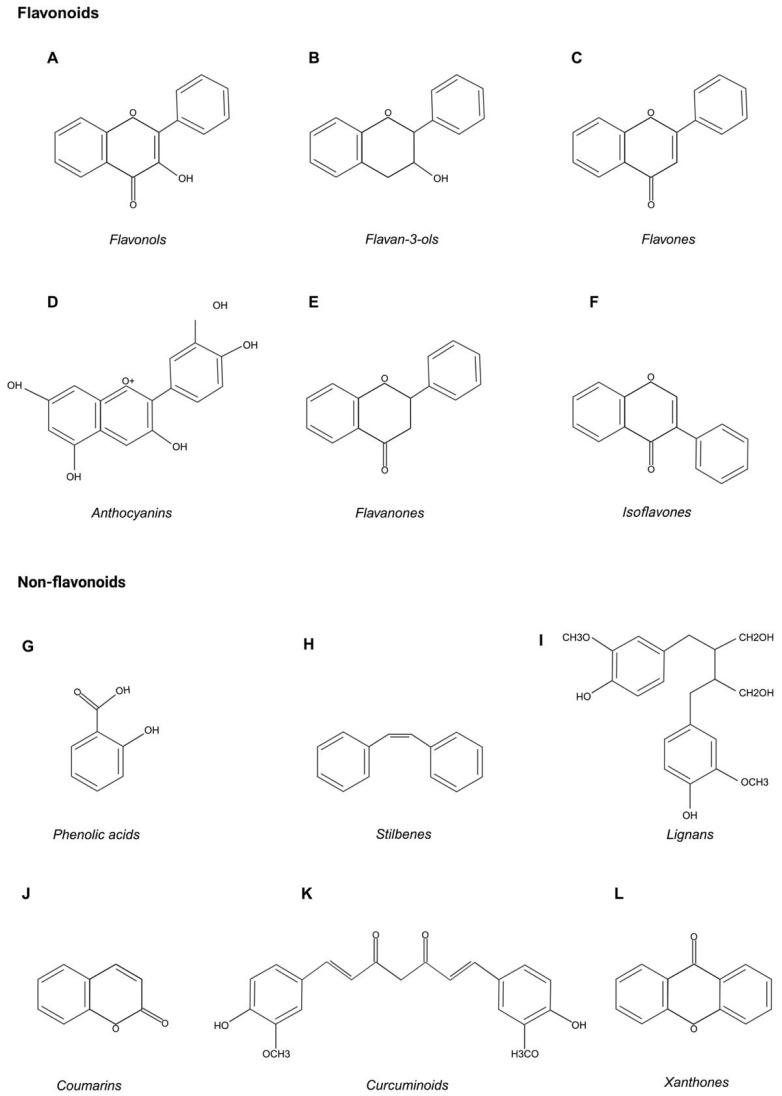
Focal adhesion plaques (FAPs) play an important role in the communication between cells and the extracellular matrix (ECM) and in cells' migration. FAPs are macromolecular complexes made by different proteins which also interact with matrix metalloproteinases (MMPs). Because of these fundamental properties, FAPs and MMPs are also involved in cancer cells' invasion and in the metastatic cascade. The most important proteins involved in FAP formation and activity are (i) integrins, (ii) a complex of intracellular proteins and (iii) cytoskeleton proteins. The latter, together with MMPs, are involved in the formation of filopodia and invadopodia needed for cell movement and ECM degradation. Due to their key role in cancer cell migration and invasion, MMPs and components of FAPs are often upregulated in cancer and are thus potential targets for cancer therapy. Polyphenols, a large group of organic compounds found in plant-based food and beverages, are reported to have many beneficial healthy effects, including anticancer and anti-inflammatory effects. In this review, we discuss the growing evidence which demonstrates that polyphenols can interact with the different components of FAPs and MMPs, inhibit various pathways like PI3K/Akt, lower focal adhesion kinase (FAK) phosphorylation and decrease cancer cells' invasiveness, leading to an overall antitumoral effect. Finally, here we highlight that polyphenols could hold potential as adjunctive therapies to conventional cancer treatments due to their ability to target key mechanisms involved in cancer progression.
粘着斑(FAPs)在细胞与细胞外基质(ECM)之间的通讯以及细胞迁移过程中发挥着重要作用。FAPs是由不同蛋白质组成的大分子复合物,这些蛋白质还与基质金属蛋白酶(MMPs)相互作用。由于这些基本特性,FAPs和MMPs也参与癌细胞的侵袭和转移过程。参与FAP形成和活性的最重要蛋白质包括:(i)整合素,(ii)细胞内蛋白质复合物,以及(iii)细胞骨架蛋白。后者与MMPs一起,参与细胞移动和ECM降解所需的丝状伪足和侵袭伪足的形成。由于它们在癌细胞迁移和侵袭中起关键作用,MMPs和FAPs的组分在癌症中常常上调,因此是癌症治疗的潜在靶点。多酚是在植物性食品和饮料中发现的一大类有机化合物,据报道具有许多有益健康的作用,包括抗癌和抗炎作用。在本综述中,我们讨论了越来越多的证据,这些证据表明多酚可以与FAPs和MMPs的不同组分相互作用,抑制PI3K/Akt等各种信号通路,降低粘着斑激酶(FAK)的磷酸化水平并降低癌细胞的侵袭性,从而产生整体抗肿瘤作用。最后,我们强调多酚由于能够靶向参与癌症进展的关键机制,可能作为传统癌症治疗的辅助疗法具有潜力。
 Zotero 插件