
探讨血清骨粘连蛋白和热休克蛋白 27 在儿科 MAFLD 诊断和代谢心血管健康中的作用。
Exploring the Role of Serum Osteonectin and Hsp27 in Pediatric MAFLD Diagnosis and Cardiometabolic Health.
机构信息
Faculty of Medicine, "Carol Davila" University of Medicine and Pharmacy, 37 Dionisie Lupu Street, 2nd District, 020021 Bucharest, Romania.
Clinical Research Unit RECIF (Reseau d'Epidemiologie Clinique International Francophone), 19-21 Stefan cel Mare Street, 2nd District, 020125 Bucharest, Romania.
出版信息
Nutrients. 2024 Mar 16;16(6):866. doi: 10.3390/nu16060866.
BACKGROUND
Childhood obesity is one of the major challenges of public health policies. The problem of fatty liver in childhood, known as MAFLD (metabolic dysfunction-associated fatty liver disease), is of particular interest as the gold standard diagnosis technique is invasive (liver biopsy). Hence, efforts are made to discover more specific biomarkers for the MAFLD signature. Therefore, the aim of the study was to evaluate Osteonectin and Hsp27 as biomarkers for MAFLD diagnosis and to assess their links with auxological and biochemical profiles of overweight and obese pediatric subjects.
METHODS
A cross-sectional study in which we (re)analyzed data from the MR PONy cohort comprising 71 pediatric subjects. Auxological data, liver ultrasonography and biochemical serum profile were recorded. Lipid-derived indices and body composition indices were calculated. Nevertheless, serum Osteonectin and Hsp27 levels were assessed using an ELISA approach.
RESULTS
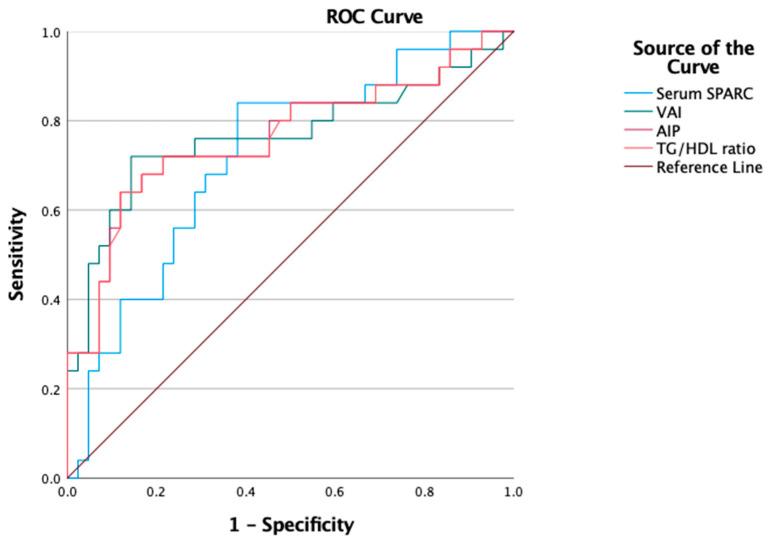
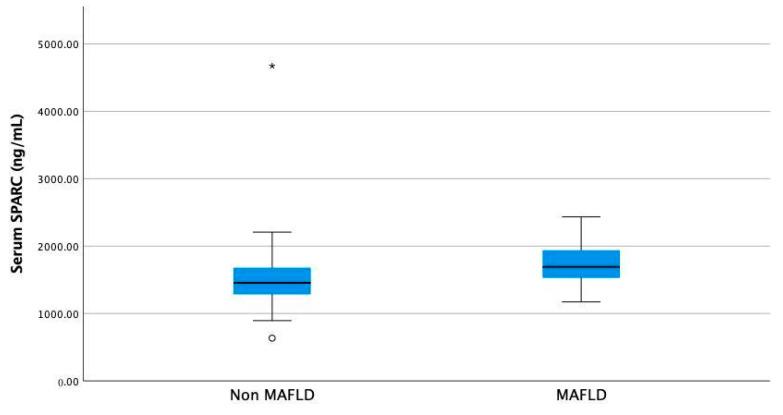
MAFLD prevalence was 40.8%. Higher Osteonectin levels were noted in MAFLD subjects versus non-MAFLD subjects and in dyslipidemic children regardless of their liver function status. Lipid-derived indices had good diagnostic capacity for MAFLD.
CONCLUSIONS
We confirm Osteonectin as a MAFLD diagnosis biomarker in children. Also, lipid-derived indices are useful as metabolic-associated organ impairment markers in children even before the onset of obesity.
背景
儿童肥胖是公共卫生政策面临的主要挑战之一。儿童脂肪肝问题,即 MAFLD(代谢相关脂肪性肝病),尤其值得关注,因为其金标准诊断技术具有侵袭性(肝活检)。因此,人们努力发现更特异的 MAFLD 标志物。因此,本研究旨在评估骨粘连蛋白和热休克蛋白 27 作为 MAFLD 诊断的生物标志物,并评估它们与超重和肥胖儿科患者的生长和生化特征的相关性。
方法
这是一项横断面研究,我们(重新)分析了包含 71 名儿科患者的 MR PONy 队列的数据。记录了生长数据、肝脏超声和生化血清特征。计算了脂质衍生指数和身体成分指数。然而,使用 ELISA 方法评估了血清骨粘连蛋白和热休克蛋白 27 水平。
结果
MAFLD 患病率为 40.8%。MAFLD 组患者的骨粘连蛋白水平高于非 MAFLD 组患者,且无论肝功能状态如何,血脂异常儿童的骨粘连蛋白水平均较高。脂质衍生指数对 MAFLD 具有良好的诊断能力。
结论
我们在儿童中证实骨粘连蛋白是 MAFLD 的诊断生物标志物。此外,即使在肥胖发生之前,脂质衍生指数也可作为与代谢相关的器官损伤标志物用于儿童。

 Zotero 插件