
内压和神经肌肉药物对生物力学的影响:一项实证和多室建模研究。
The influence of internal pressure and neuromuscular agents on biomechanics: an empirical and multi-compartmental modelling study.
作者信息
Essmann Clara L, Elmi Muna, Rekatsinas Christoforos, Chrysochoidis Nikolaos, Shaw Michael, Pawar Vijay, Srinivasan Mandayam A, Vavourakis Vasileios
机构信息
Department of Bioinformatics and Molecular Genetics, University of Freiburg, Freiburg, Baden-Wuerttemberg, Germany.
Department of Computer Science, University College London, London, United Kingdom.
出版信息
Front Bioeng Biotechnol. 2024 Mar 15;12:1335788. doi: 10.3389/fbioe.2024.1335788. eCollection 2024.
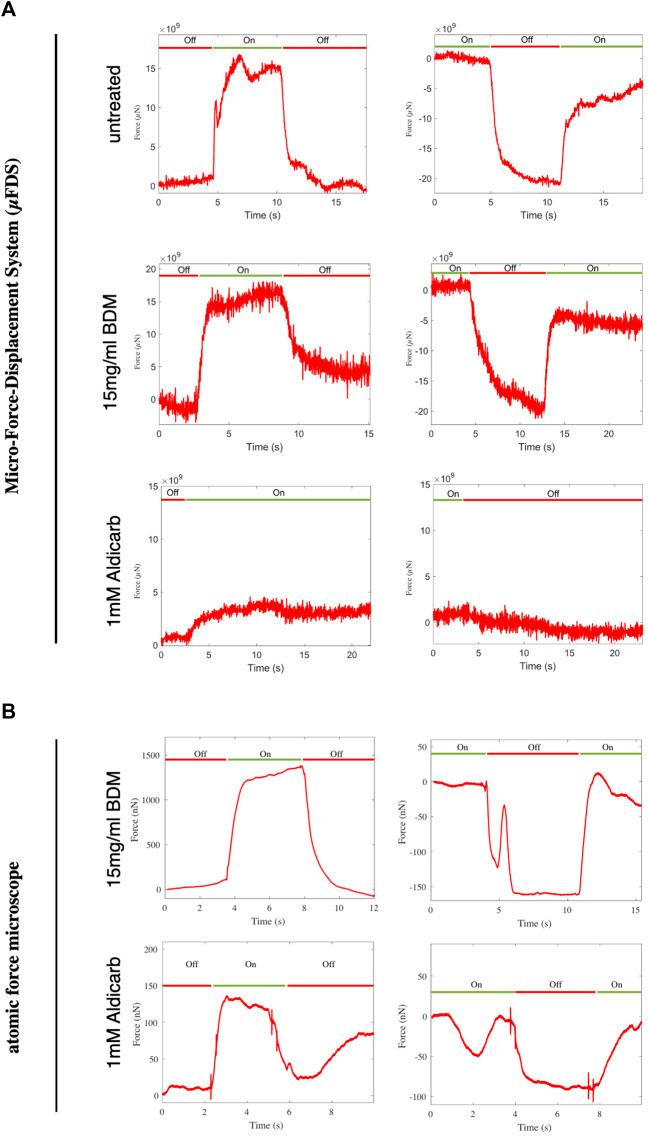
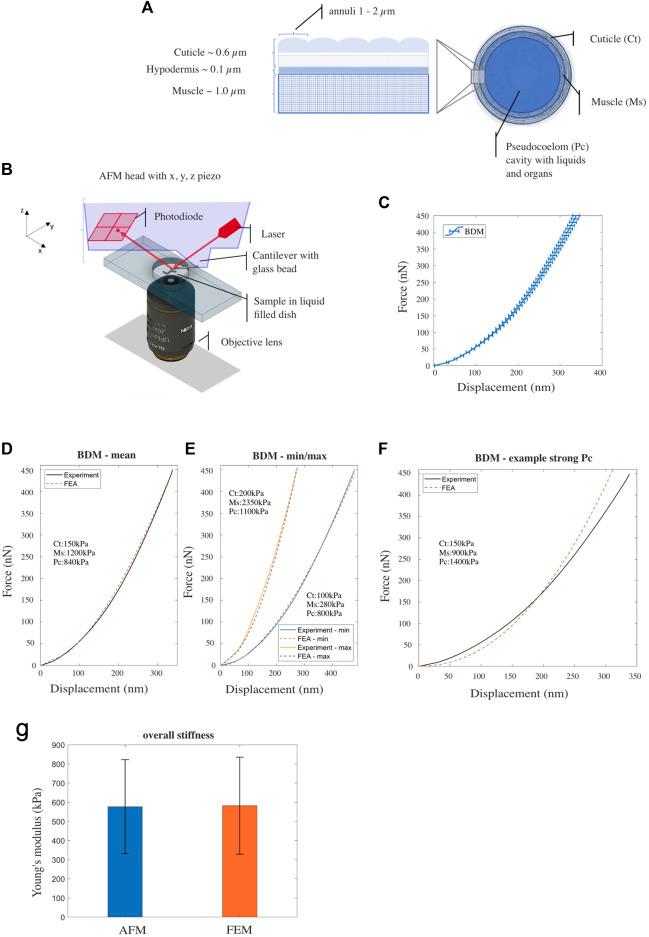
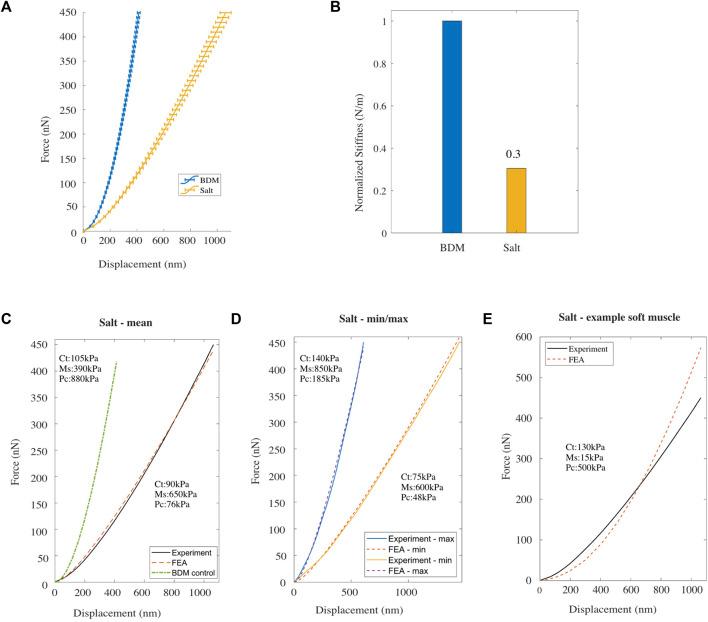
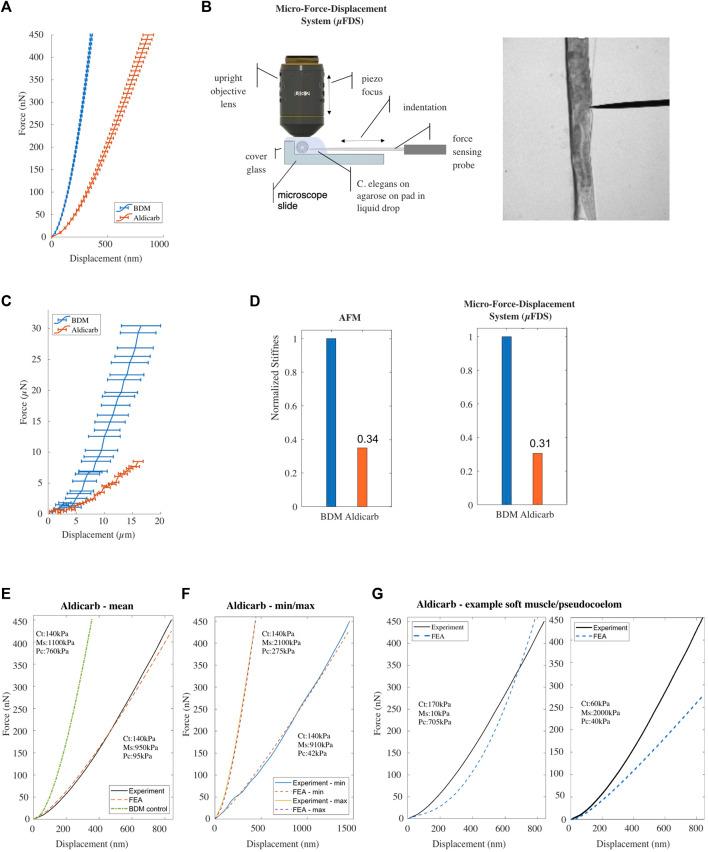
The function of a specific tissue and its biomechanics are interdependent, with pathologies or ageing often being intertwined with structural decline. The biomechanics of , a model organism widely used in pharmacological and ageing research, has been established as biomarker for healthy ageing. However, the properties of the constituent tissues, and their contribution to the overall mechanical characteristics of the organism, remain relatively unknown. In this study we investigated the biomechanics of healthy cuticle, muscle tissue, and pseudocoelom using a combination of indentation experiments and modelling. We performed stiffness measurements using an atomic force microscope. To approximate the nematode's cylindrical body we used a novel three-compartment nonlinear finite element model, enabling us to analyse of how changes in the elasticity of individual compartments affect the bulk stiffness. We then fine-tuned the parameters of the model to match the simulation force-indentation output to the experimental data. To test the finite element model, we modified distinct compartments experimentally. Our results, in agreement with previous studies, suggest that hyperosmotic shock reduces stiffness by decreasing the internal pressure. Unexpectedly, treatment with the neuromuscular agent aldicarb, traditionally associated with muscle contraction, reduced stiffness by decreasing the internal pressure. Furthermore, our finite element model can offer insights into how drugs, mutations, or processes such as ageing target individual tissues.
特定组织的功能及其生物力学是相互依存的,病理学或衰老常常与结构衰退交织在一起。秀丽隐杆线虫是一种在药理学和衰老研究中广泛使用的模式生物,其生物力学已被确立为健康衰老的生物标志物。然而,其组成组织的特性及其对生物体整体力学特性的贡献仍然相对未知。在本研究中,我们结合压痕实验和建模,研究了健康秀丽隐杆线虫的角质层、肌肉组织和假体腔的生物力学。我们使用原子力显微镜进行硬度测量。为了近似线虫的圆柱形身体,我们使用了一种新颖的三室非线性有限元模型,使我们能够分析各个腔室弹性的变化如何影响整体硬度。然后,我们对模型参数进行微调,以使模拟的力-压痕输出与实验数据相匹配。为了测试有限元模型,我们通过实验改变了不同的腔室。我们的结果与先前的研究一致,表明高渗休克通过降低内部压力来降低硬度。出乎意料的是,传统上与肌肉收缩相关的神经肌肉药物涕灭威处理通过降低内部压力降低了硬度。此外,我们的有限元模型可以深入了解药物、突变或衰老等过程如何作用于单个组织。

 Zotero 插件