
基于实验、计算和理论计算的新型吡唑衍生物在盐酸溶液中对碳钢腐蚀的吸附及抑制机制
Adsorption and Inhibition Mechanisms of New Pyrazole Derivatives for Carbon Steel Corrosion in Hydrochloric Acid Solutions Based on Experimental, Computational, and Theoretical Calculations.
作者信息
Adlani Loubna, Benzbiria Nisrine, Titi Abderrahim, Timoudan Nadia, Warad Ismail, AlObaid Abeer, Al-Maswari Basheer Mohammed, Benhiba Fouad, Touzani Rachid, Zarrok Hassan, Bentiss Fouad, Oudda Hassan, Zarrouk Abdelkader
机构信息
Laboratory of Advanced Materials and Process Engineering, Faculty of Sciences, Ibn Tofail University, P.O. Box. 133, 14000 Kenitra, Morocco.
Laboratory of Interface Materials Environment, Faculty of Sciences Ain Chock, Hassan II University, Mâarif, B.P. 5366 Casablanca, Morocco.
出版信息
ACS Omega. 2024 Mar 5;9(12):13746-13763. doi: 10.1021/acsomega.3c08282. eCollection 2024 Mar 26.
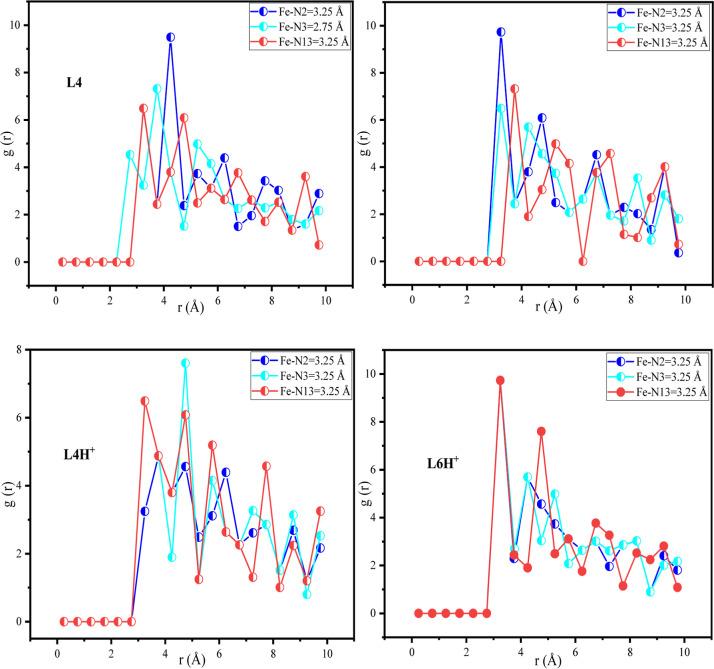
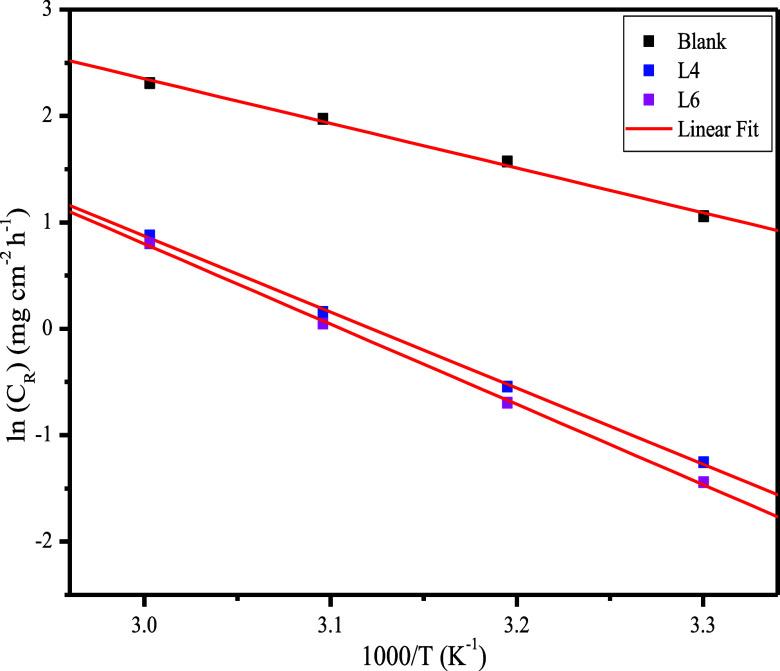
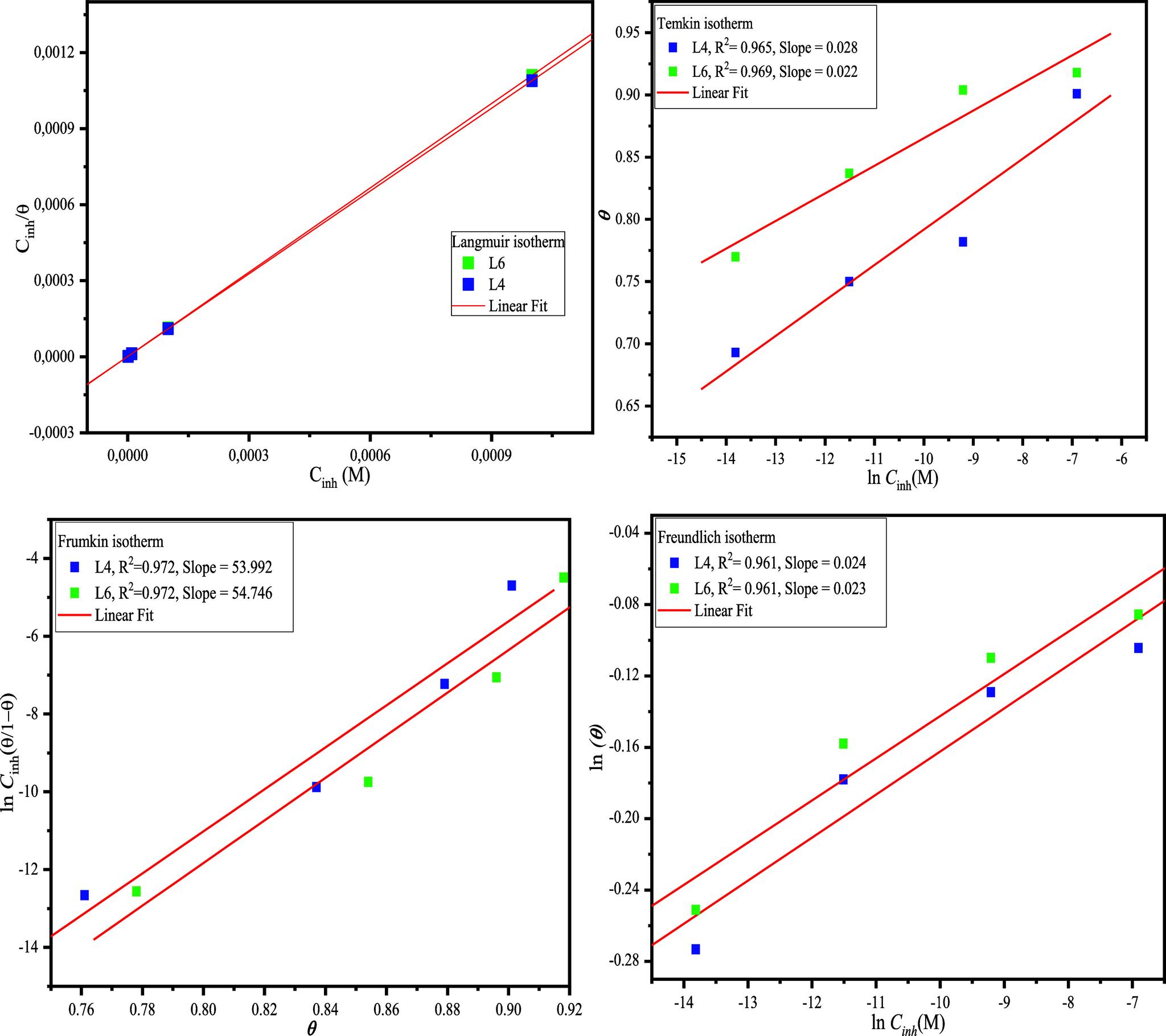
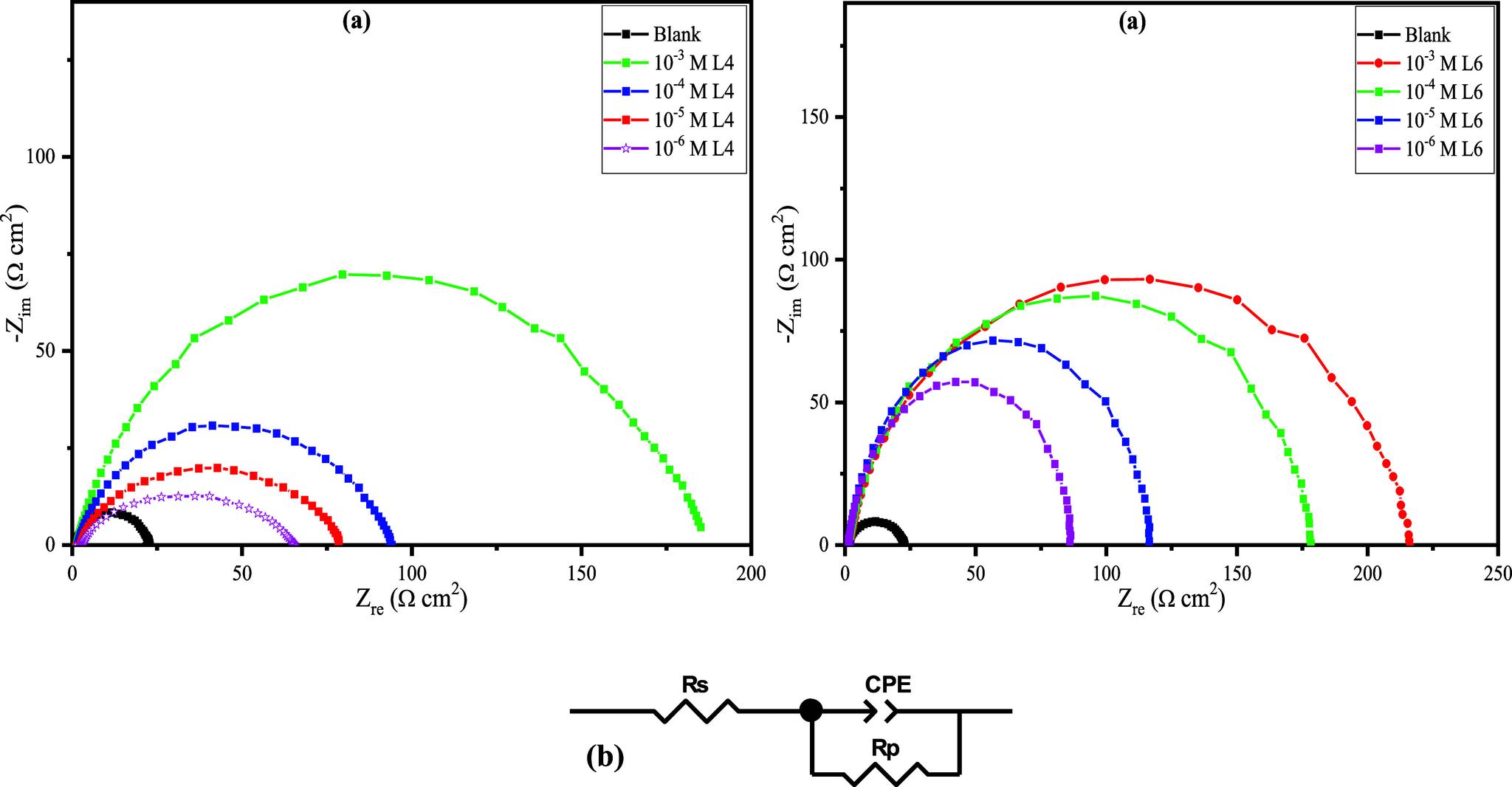
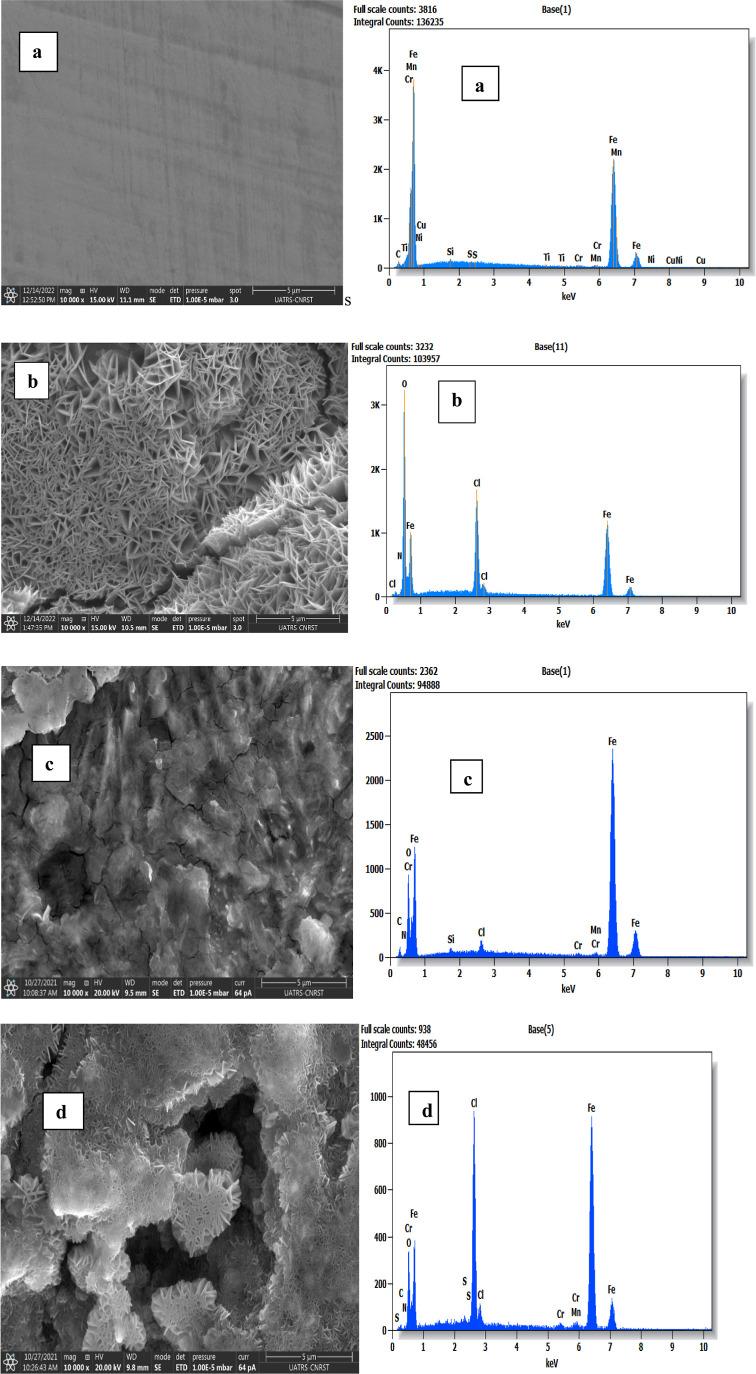
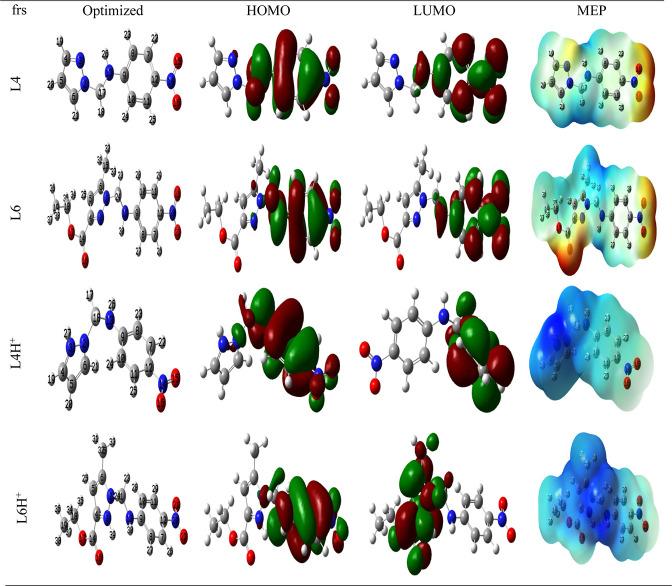
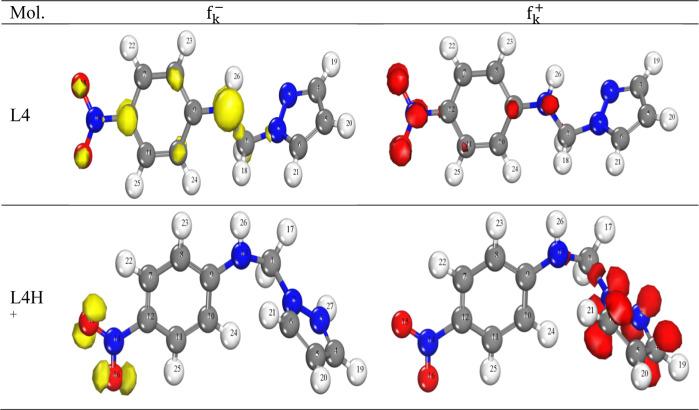
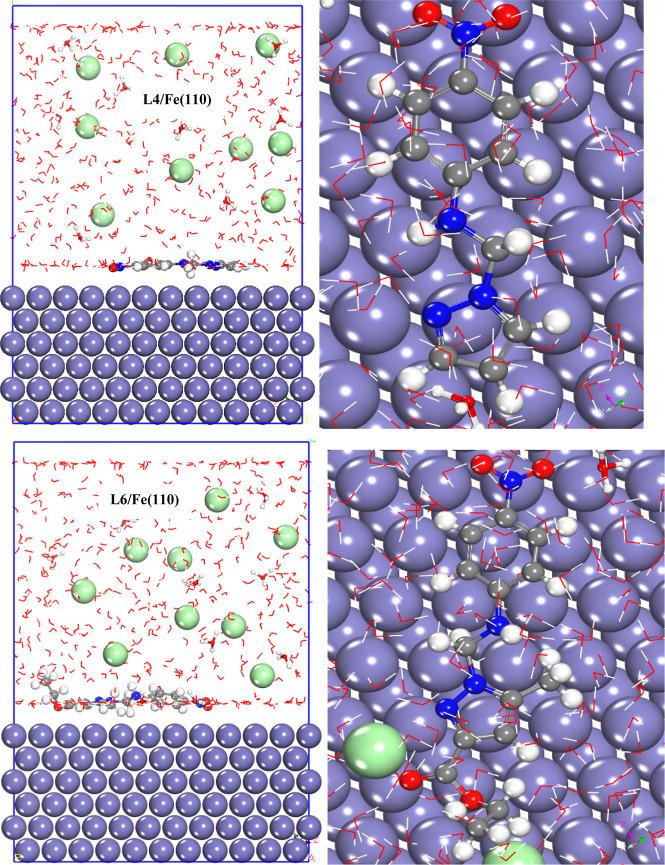
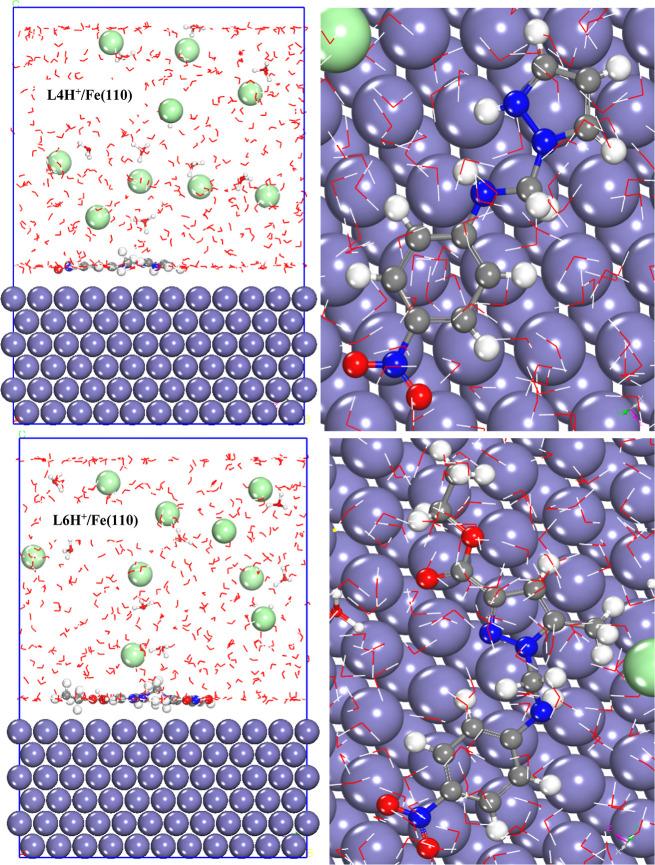
The study aims to synthesize two green pyrazole compounds, -((1-pyrazol-1-yl)methyl)-4-nitroaniline (L4) and ethyl 5-methyl-1-(((4-nitrophenyl)amino)methyl)-1-pyrazole-3-carboxylate (L6), and test their action as corrosion inhibitors for carbon steel (CS) in a 1 M HCl solution. Both chemical and electrochemical methods, namely, gravimetric measurements (WL), potentiodynamic polarization (PDP), and electrochemical impedance spectroscopy (EIS), were used to assess the efficiency of the investigated molecules. DFT calculations at B3LYP/6-31++G (d, p) and molecular dynamics simulation were used to carry out quantum chemical calculations in order to link their electronic characteristics with the findings of experiments. The organic products exhibited good anticorrosion ability, with maximum inhibition efficiencies (IE %) of 91.8 and 90.8% for 10 M L6 and L4, respectively. In accordance with PDP outcomes, L6 and L4 inhibitors act as mixed-type inhibitors. Assessment of the temperature influence evinces that both L4 and L6 are chemisorbed on CS. The adsorption of L4 and L6 on CS appears to follow the Langmuir isotherm. Scanning electron microscopy and UV-visible disclose the constitution of a barrier layer, limiting the accessibility of corrosive species to the CS surface. Theoretical studies were performed to support the results derived from experimental techniques (WL, PDP, and EIS).
该研究旨在合成两种绿色吡唑化合物,即 -((1-吡唑-1-基)甲基)-4-硝基苯胺(L4)和 5-甲基-1-(((4-硝基苯基)氨基)甲基)-1-吡唑-3-羧酸乙酯(L6),并测试它们在 1 M HCl 溶液中作为碳钢(CS)缓蚀剂的作用。采用化学和电化学方法,即重量法测量(WL)、动电位极化(PDP)和电化学阻抗谱(EIS),来评估所研究分子的效率。使用 B3LYP/6-31++G(d, p) 水平的密度泛函理论(DFT)计算和分子动力学模拟进行量子化学计算,以便将其电子特性与实验结果联系起来。有机产物表现出良好的防腐能力,对于 10 M 的 L6 和 L4,最大抑制效率(IE%)分别为 91.8% 和 90.8%。根据 PDP 结果,L6 和 L4 抑制剂为混合型抑制剂。温度影响评估表明,L4 和 L6 均化学吸附在 CS上。L4 和 L6 在 CS 上的吸附似乎遵循朗缪尔等温线。扫描电子显微镜和紫外可见光谱揭示了阻挡层的形成,限制了腐蚀性物质与 CS 表面的接触。进行理论研究以支持从实验技术(WL、PDP 和 EIS)得出的结果。






 Zotero 插件