
负载蜂胶的脂质体:酚类化合物的表征及生物可及性评估
Propolis-loaded liposomes: characterization and evaluation of the bioaccessibility of phenolic compounds.
作者信息
Saroglu Oznur, Karadag Ayse
机构信息
Food Engineering Department, Chemical and Metallurgical Engineering Faculty, Yildiz Technical University, Istanbul, Turkey.
出版信息
ADMET DMPK. 2024 Feb 5;12(1):209-224. doi: 10.5599/admet.2204. eCollection 2024.
BACKGROUND AND PURPOSE
Propolis has low water solubility, poor stability, and limited bioaccessibility of phenolic constituents when subjected to digestion. To overcome these drawbacks, the liposomal encapsulation method can be employed.
EXPERIMENTAL APPROACH
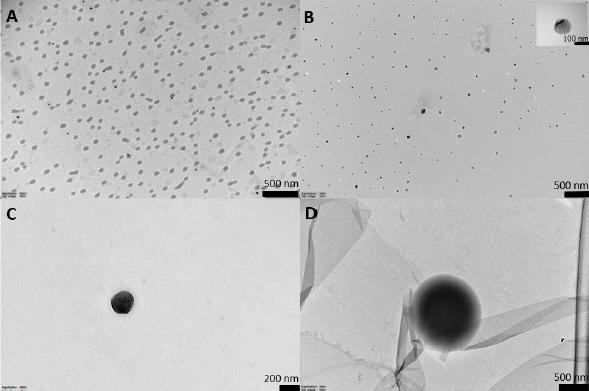
Soybean phosphatidylcholine lecithin mixed with Tween 80 (T80) and ammonium phosphatides (AMP) was used to produce propolis extract (PE)-loaded liposomes. The mean particle size, zeta potential, encapsulation efficiency values, and transmission electron microscopy analysis were used to characterize liposomes. Individual phenolics were determined for digested and nondigested propolis-loaded liposomes and propolis extract.
KEY RESULTS
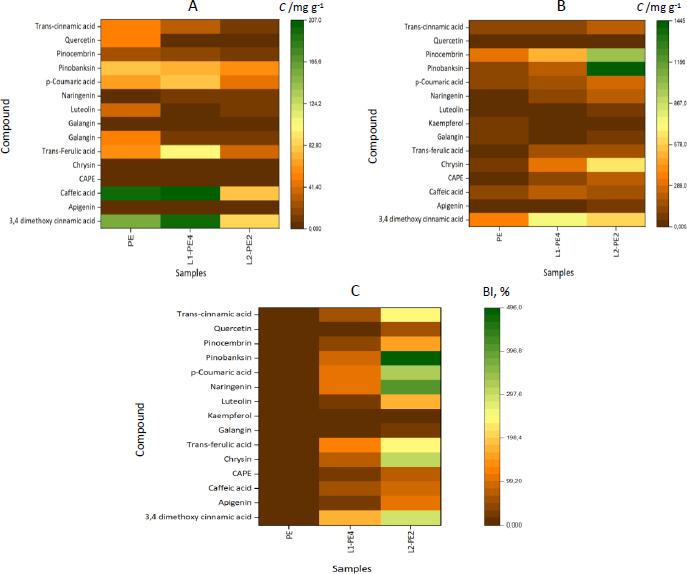
Tween 80 incorporation reduced the size of unloaded liposomes, whereas AMP inclusion yielded larger liposomes. In both formulations, PE loading significantly increased the size and reduced the zeta potential values and homogeneity of the size distribution. In free PE, the most bioaccessible polyphenols were phenolic acids (3.20 to 5.63 %), and flavonoids such as caffeic acid phenethyl ester, galangin, pinobanksin, and pinocembrin (0.03 to 2.12 %) were the least bioaccessible. Both liposomal propolis provided significantly higher bioaccessibility of phenolic compounds. The liposomes with T80 and AMP in their compositions recovered 52.43 and 185.90 % of the total amount of phenolic compounds in the nondigested samples, respectively. The liposomes containing AMP not only exhibited high solubility for PE but also provided protection to the phenolic compounds during digestion.
CONCLUSION
Liposomal encapsulation could be a promising approach to improving the solubility and stability of PE in digestive fluids, making it suitable for the delivery of propolis in oral formulations.
背景与目的
蜂胶的水溶性低、稳定性差,且酚类成分在消化过程中的生物可及性有限。为克服这些缺点,可采用脂质体包封法。
实验方法
将大豆磷脂酰胆碱卵磷脂与吐温80(T80)和磷脂铵(AMP)混合,用于制备负载蜂胶提取物(PE)的脂质体。通过平均粒径、zeta电位、包封率值和透射电子显微镜分析对脂质体进行表征。测定了未消化和消化后的负载蜂胶脂质体及蜂胶提取物中各酚类物质的含量。
主要结果
加入吐温80可减小未负载脂质体的尺寸,而加入AMP则会产生更大的脂质体。在两种配方中,负载PE均显著增加了脂质体的尺寸,降低了zeta电位值和尺寸分布的均匀性。在游离PE中,生物可及性最高的多酚是酚酸(3.20%至5.63%),而黄酮类化合物如咖啡酸苯乙酯、高良姜素、松属素和白杨素(0.03%至2.12%)的生物可及性最低。两种脂质体蜂胶的酚类化合物生物可及性均显著更高。含有T80和AMP的脂质体分别回收了未消化样品中酚类化合物总量的52.43%和185.90%。含有AMP的脂质体不仅对PE表现出高溶解性,而且在消化过程中对酚类化合物起到了保护作用。
结论
脂质体包封可能是一种有前景的方法,可提高PE在消化液中的溶解度和稳定性,使其适用于口服制剂中蜂胶的递送。

 Zotero 插件