
石灰岩洞穴、硫酸成因洞穴和火山洞穴的地质微生物学:基本概念与未来展望。
The geomicrobiology of limestone, sulfuric acid speleogenetic, and volcanic caves: basic concepts and future perspectives.
作者信息
Turrini Paolo, Chebbi Alif, Riggio Filippo Pasquale, Visca Paolo
机构信息
Department of Science, Roma Tre University, Rome, Italy.
National Biodiversity Future Center, Palermo, Italy.
出版信息
Front Microbiol. 2024 Mar 20;15:1370520. doi: 10.3389/fmicb.2024.1370520. eCollection 2024.
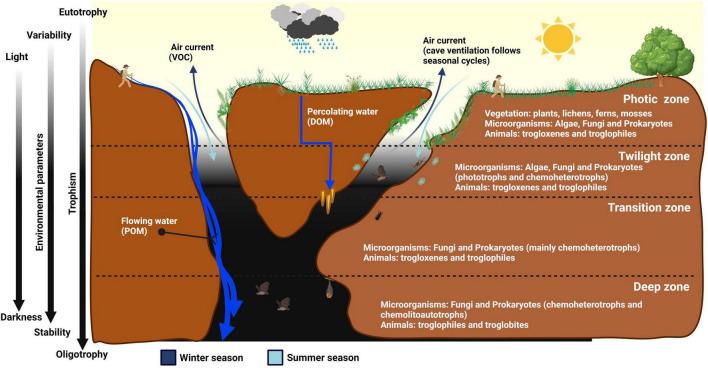
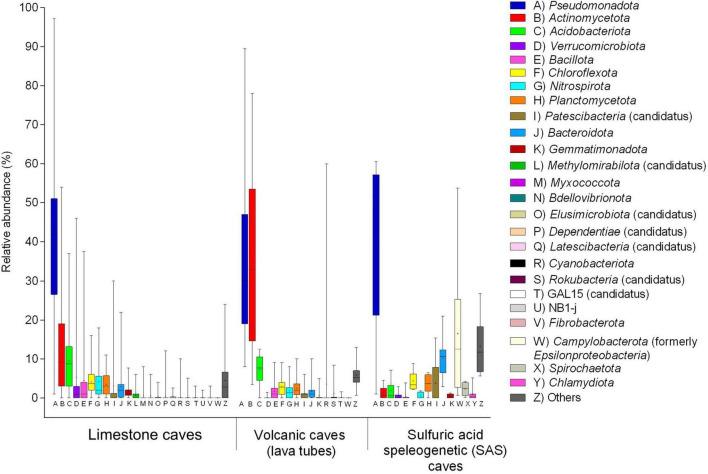
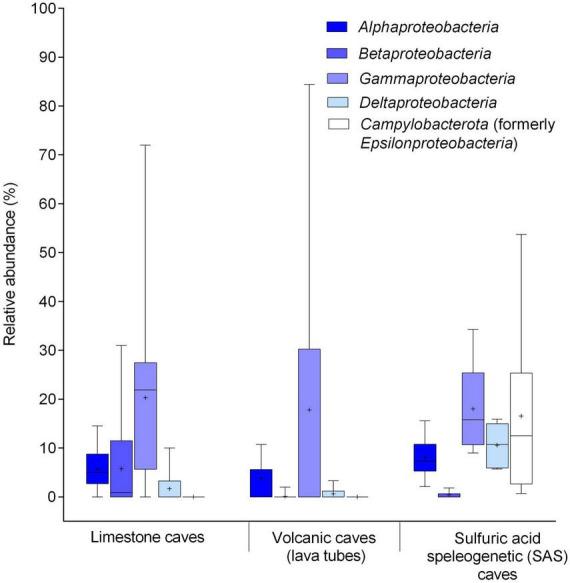
Caves are ubiquitous subterranean voids, accounting for a still largely unexplored surface of the Earth underground. Due to the absence of sunlight and physical segregation, caves are naturally colonized by microorganisms that have developed distinctive capabilities to thrive under extreme conditions of darkness and oligotrophy. Here, the microbiomes colonizing three frequently studied cave types, i.e., limestone, sulfuric acid speleogenetic (SAS), and lava tubes among volcanic caves, have comparatively been reviewed. Geological configurations, nutrient availability, and energy flows in caves are key ecological drivers shaping cave microbiomes through photic, twilight, transient, and deep cave zones. Chemoheterotrophic microbial communities, whose sustenance depends on nutrients supplied from outside, are prevalent in limestone and volcanic caves, while elevated inorganic chemical energy is available in SAS caves, enabling primary production through chemolithoautotrophy. The 16S rRNA-based metataxonomic profiles of cave microbiomes were retrieved from previous studies employing the Illumina platform for sequencing the prokaryotic V3-V4 hypervariable region to compare the microbial community structures from different cave systems and environmental samples. Limestone caves and lava tubes are colonized by largely overlapping bacterial phyla, with the prevalence of and , whereas the co-dominance of and members characterizes SAS caves. Most of the metataxonomic profiling data have so far been collected from the twilight and transient zones, while deep cave zones remain elusive, deserving further exploration. Integrative approaches for future geomicrobiology studies are suggested to gain comprehensive insights into the different cave types and zones. This review also poses novel research questions for unveiling the metabolic and genomic capabilities of cave microorganisms, paving the way for their potential biotechnological applications.
洞穴是普遍存在的地下空洞,占地球地下仍未得到充分探索的表面。由于缺乏阳光和物理隔离,洞穴自然被微生物定殖,这些微生物已发展出在黑暗和贫营养的极端条件下茁壮成长的独特能力。在此,对定殖在三种经常研究的洞穴类型中的微生物群落进行了比较综述,这三种洞穴类型分别是石灰岩洞穴、硫酸成岩洞穴(SAS)以及火山洞穴中的熔岩管。洞穴中的地质构造、养分可用性和能量流动是通过洞穴的有光区、弱光区、过渡区和深部洞穴区塑造洞穴微生物群落的关键生态驱动因素。依赖外部供应养分生存的化能异养微生物群落普遍存在于石灰岩洞穴和火山洞穴中,而在SAS洞穴中可获得较高的无机化学能,从而能够通过化能自养进行初级生产。洞穴微生物群落基于16S rRNA的元分类学图谱是从先前使用Illumina平台对原核生物V3 - V4高变区进行测序的研究中获取的,以比较不同洞穴系统和环境样本中的微生物群落结构。石灰岩洞穴和熔岩管主要由大量重叠的细菌门类定殖,其中 和 占优势,而SAS洞穴的特征是 和 成员共同占主导地位。到目前为止,大多数元分类学分析数据是从弱光区和过渡区收集的,而深部洞穴区仍然难以捉摸,值得进一步探索。建议采用综合方法进行未来的地球微生物学研究,以全面了解不同的洞穴类型和区域。本综述还提出了新的研究问题,以揭示洞穴微生物的代谢和基因组能力,为其潜在的生物技术应用铺平道路。




 Zotero 插件