
基于胱氨酸核心的二苯丙氨酸附加肽的自组装荧光纳米结构实现氧化还原响应性药物递送。
Cystine-cored diphenylalanine appended peptide-based self-assembled fluorescent nanostructures direct redox-responsive drug delivery.
作者信息
Nayak Suman, Das Kiran, Sivagnanam Subramaniyam, Baskar Shyamvarnan, Stewart Adele, Kumar Dinesh, Maity Biswanath, Das Priyadip
机构信息
Department of Chemistry, SRM Institute of Science and Technology, SRM Nagar, Potheri, Kattankulathur, Tamil Nadu 603203, India.
Department of Systems Biology, Centre of Biomedical Research (CBMR), SGPGI campus, Raebareli Road, Lucknow, Uttar Pradesh 226014, India.
出版信息
iScience. 2024 Mar 16;27(4):109523. doi: 10.1016/j.isci.2024.109523. eCollection 2024 Apr 19.
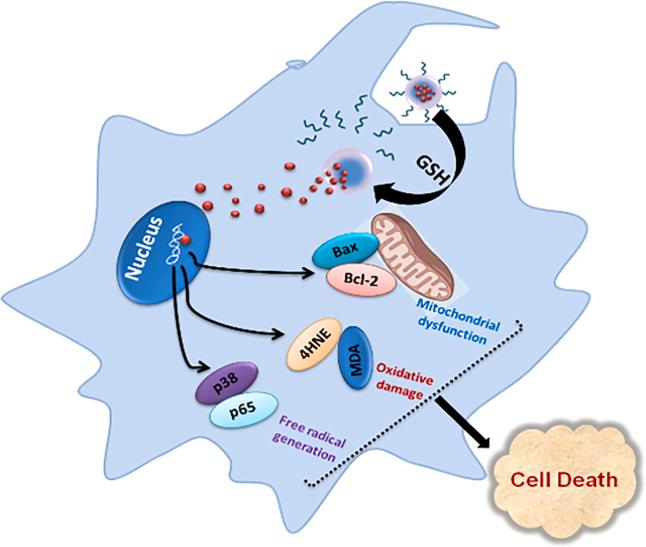
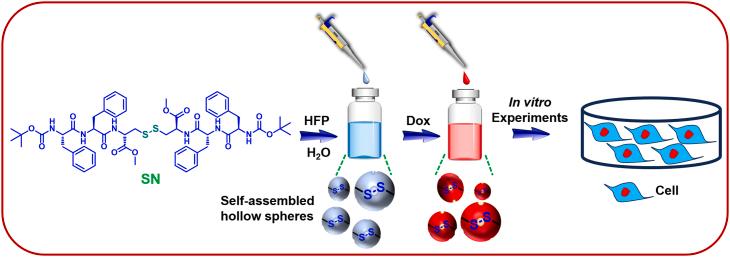
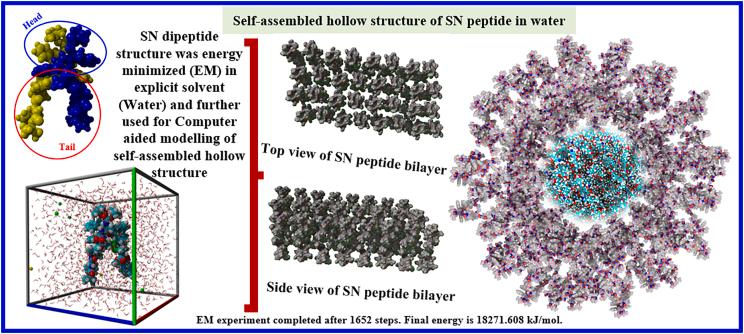
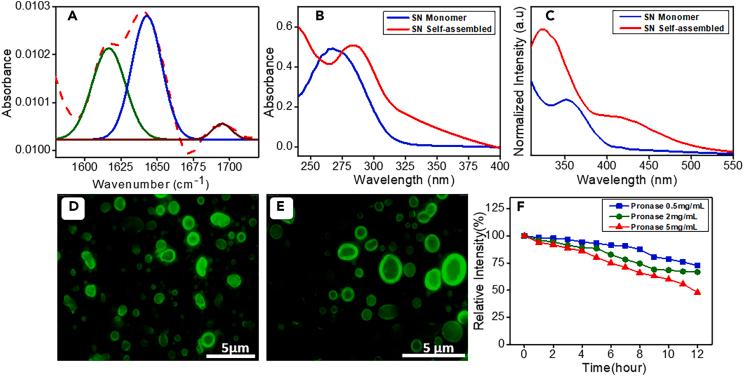
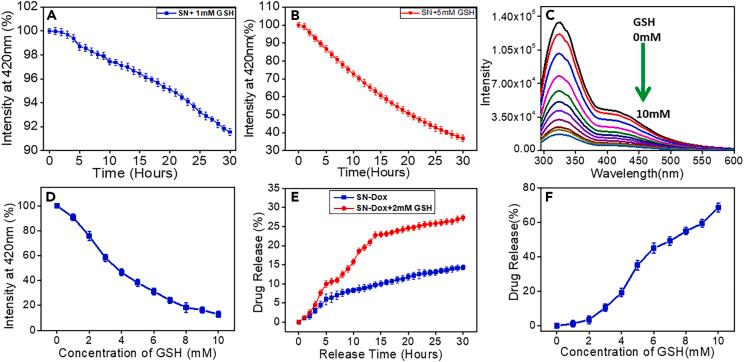
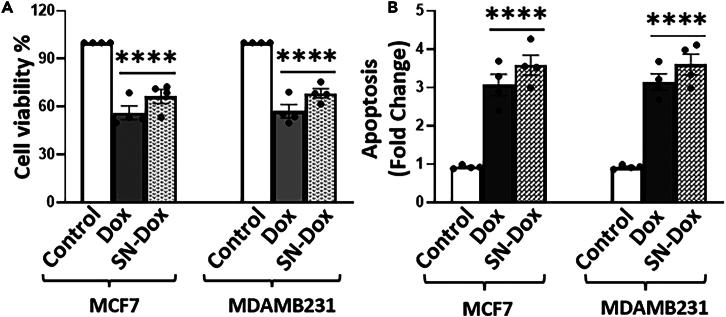
Fabrication of stimuli-responsive superstructure capable of delivering chemotherapeutics directly to the cancer cell by sparing healthy cells is crucial. Herein, we developed redox-responsive hollow spherical assemblies through self-assembly of disulfide-linked cysteine-diphenylalanine (SN). These fluorescent hollow spheres display intrinsic green fluorescence, are proteolytically stable and biocompatible, and allow for real-time monitoring of their intracellular entry. The disulfide bond facilitates selective degradation in the presence of high glutathione (GSH) concentrations, prevalent in cancer cells. We achieved efficient encapsulation (68.72%) of the anticancer drug doxorubicin (Dox) and demonstrated GSH-dependent, redox-responsive drug release within cancerous cells. SN-Dox exhibited a 20-fold lower effective concentration (2.5 μM) for compromising breast cancer cell viability compared to non-malignant cells (50 μM). The ability of SN-Dox to initiate DNA damage signaling and trigger apoptosis was comparable to that of the unencapsulated drug. Our findings highlight the potential of SN for creating site-specific drug delivery vehicles for sustained therapeutic release.
制造能够通过避开健康细胞将化疗药物直接递送至癌细胞的刺激响应性超结构至关重要。在此,我们通过二硫键连接的半胱氨酸-二苯基丙氨酸(SN)自组装开发了氧化还原响应性空心球形组装体。这些荧光空心球显示出固有绿色荧光,具有蛋白水解稳定性和生物相容性,并允许实时监测其细胞内进入情况。二硫键在癌细胞中普遍存在的高谷胱甘肽(GSH)浓度存在下促进选择性降解。我们实现了抗癌药物阿霉素(Dox)的高效包封(68.72%),并证明了在癌细胞内GSH依赖性、氧化还原响应性药物释放。与非恶性细胞(50 μM)相比,SN-Dox对损害乳腺癌细胞活力的有效浓度低20倍(2.5 μM)。SN-Dox引发DNA损伤信号传导和触发细胞凋亡的能力与未包封药物相当。我们的研究结果突出了SN在创建用于持续治疗释放的位点特异性药物递送载体方面的潜力。







 Zotero 插件