
关于成瘾的一种直觉(微生物组感受):与压力和社会系统的相互作用。
A gut (microbiome) feeling about addiction: Interactions with stress and social systems.
作者信息
García-Cabrerizo Rubén, Cryan John F
机构信息
IUNICS, University of the Balearic Islands, Palma, Spain.
Health Research Institute of the Balearic Islands (IdISBa), Palma, Spain.
出版信息
Neurobiol Stress. 2024 Mar 18;30:100629. doi: 10.1016/j.ynstr.2024.100629. eCollection 2024 May.
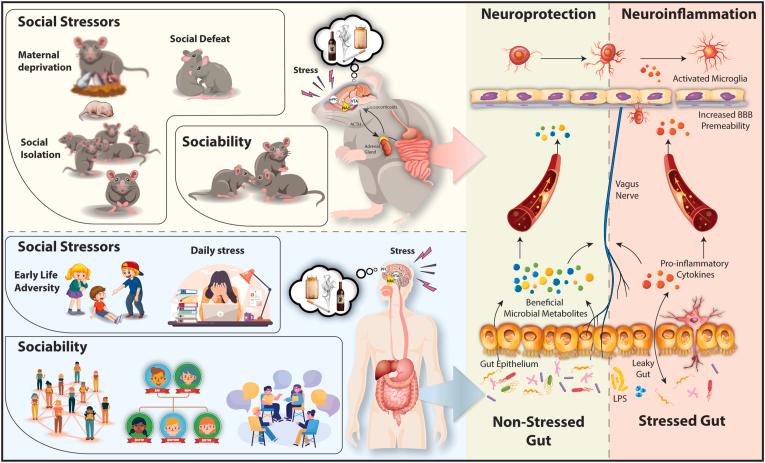
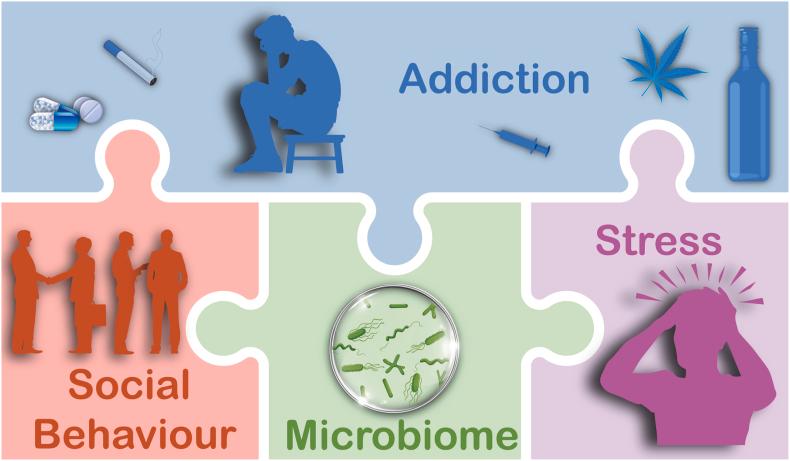
In recent years, an increasing attention has given to the intricate and diverse connection of microorganisms residing in our gut and their impact on brain health and central nervous system disease. There has been a shift in mindset to understand that drug addiction is not merely a condition that affects the brain, it is now being recognized as a disorder that also involves external factors such as the intestinal microbiota, which could influence vulnerability and the development of addictive behaviors. Furthermore, stress and social interactions, which are closely linked to the intestinal microbiota, are powerful modulators of addiction. This review delves into the mechanisms through which the microbiota-stress-immune axis may shape drug addiction and social behaviors. This work integrates preclinical and clinical evidence that demonstrate the bidirectional communication between stress, social behaviors, substance use disorders and the gut microbiota, suggesting that gut microbes might modulate social stress having a significance in drug addiction.
近年来,人们越来越关注存在于我们肠道中的微生物之间复杂多样的联系,以及它们对大脑健康和中枢神经系统疾病的影响。思维方式已经发生转变,认识到药物成瘾不仅仅是一种影响大脑的状况,现在人们认识到它是一种还涉及外部因素(如肠道微生物群)的疾病,这些外部因素可能影响成瘾行为的易感性和发展。此外,与肠道微生物群密切相关的压力和社会互动是成瘾的有力调节因素。本综述深入探讨了微生物群-压力-免疫轴可能影响药物成瘾和社会行为的机制。这项工作整合了临床前和临床证据,这些证据证明了压力、社会行为、物质使用障碍和肠道微生物群之间的双向沟通,表明肠道微生物可能调节社会压力,这在药物成瘾中具有重要意义。
 Zotero 插件