
枸杞的植物化学、营养成分、健康益处及未来展望:综述
Phytochemistry, nutritional composition, health benefits and future prospects of L. (Medlar): A review.
作者信息
Nistor Doru Ion, Marc Romina Alina, Mureșan Crina Carmen
机构信息
Food Engineering Department, Faculty of Food Science and Technology, University of Agricultural Sciences and Veterinary Medicine, 400372 Cluj-Napoca, Romania.
出版信息
Food Chem X. 2024 Mar 31;22:101334. doi: 10.1016/j.fochx.2024.101334. eCollection 2024 Jun 30.
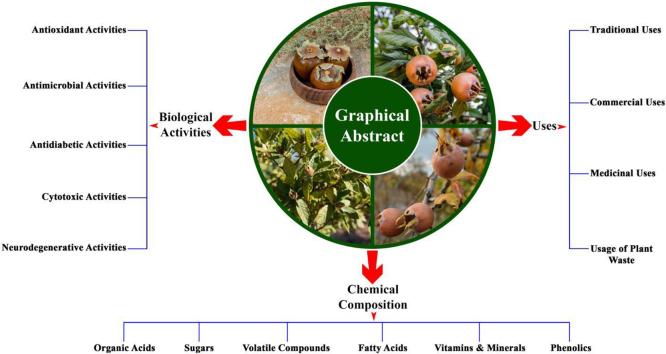
L., commonly known as medlar, is one of two species of the Rosaceae family. The medlar plant has a long history of use in gastronomy and healthcare. Medlar waste is used to extract hazardous heavy metals from contaminated water. The nutritional value of fruits comes from their composition of carbohydrates, carotenoids, amino acids, organic acids, proteins, vitamins, fatty acids, and vital components. fruit contains a high concentration of important phenolic components, which contribute to its anti-diabetic and antioxidant properties. Additionally, several studies have identified diverse biological properties of the plant, including the cytotoxic, neurodegenerative, and antibacterial properties of its fruits and leaves. Scientists are investigating underutilized plant species to address sustainability issues in food production. This review study will provide a comprehensive examination of its chemical composition, medical applications, plant waste utilization, and potential biological activities.
欧楂,通常被称为枸杞,是蔷薇科的两个物种之一。欧楂植物在美食和医疗保健方面有着悠久的使用历史。欧楂废料被用于从受污染的水中提取有害重金属。果实的营养价值来自其碳水化合物、类胡萝卜素、氨基酸、有机酸、蛋白质、维生素、脂肪酸和重要成分的组成。果实含有高浓度的重要酚类成分,这有助于其抗糖尿病和抗氧化特性。此外,多项研究已经确定了该植物的多种生物学特性,包括其果实和叶子的细胞毒性、神经退行性和抗菌特性。科学家们正在研究未充分利用的植物物种,以解决食品生产中的可持续性问题。本综述研究将全面考察其化学成分、医学应用、植物废料利用和潜在的生物活性。



 Zotero 插件