
与阿尔茨海默病和其他特征相关的多基因风险影响涉及 T 细胞信号和激活的基因。
Polygenic risk associated with Alzheimer's disease and other traits influences genes involved in T cell signaling and activation.
机构信息
Department of Neurology, Columbia University, New York, NY, United States.
The Taub Institute for Research on Alzheimer's Disease and the Aging Brain, Columbia University, New York, NY, United States.
出版信息
Front Immunol. 2024 Mar 25;15:1337831. doi: 10.3389/fimmu.2024.1337831. eCollection 2024.
INTRODUCTION
T cells, known for their ability to respond to an enormous variety of pathogens and other insults, are increasingly recognized as important mediators of pathology in neurodegeneration and other diseases. T cell gene expression phenotypes can be regulated by disease-associated genetic variants. Many complex diseases are better represented by polygenic risk than by individual variants.
METHODS
We first compute a polygenic risk score (PRS) for Alzheimer's disease (AD) using genomic sequencing data from a cohort of Alzheimer's disease (AD) patients and age-matched controls, and validate the AD PRS against clinical metrics in our cohort. We then calculate the PRS for several autoimmune disease, neurological disorder, and immune function traits, and correlate these PRSs with T cell gene expression data from our cohort. We compare PRS-associated genes across traits and four T cell subtypes.
RESULTS
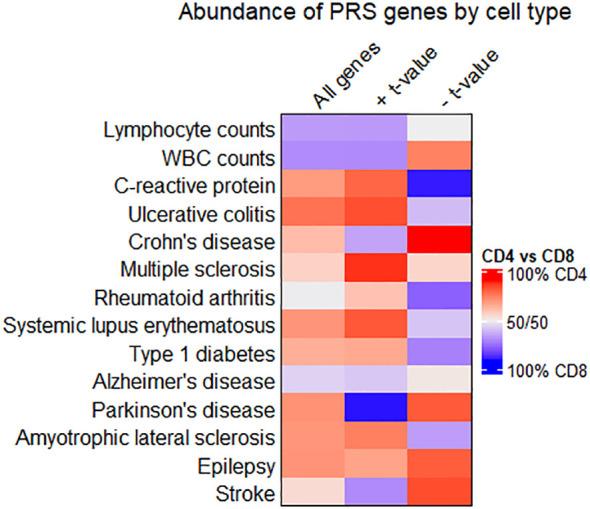
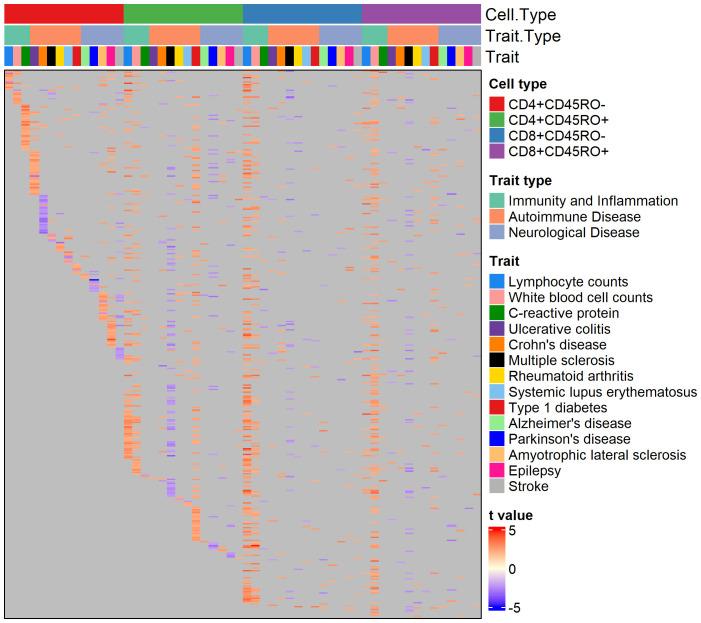
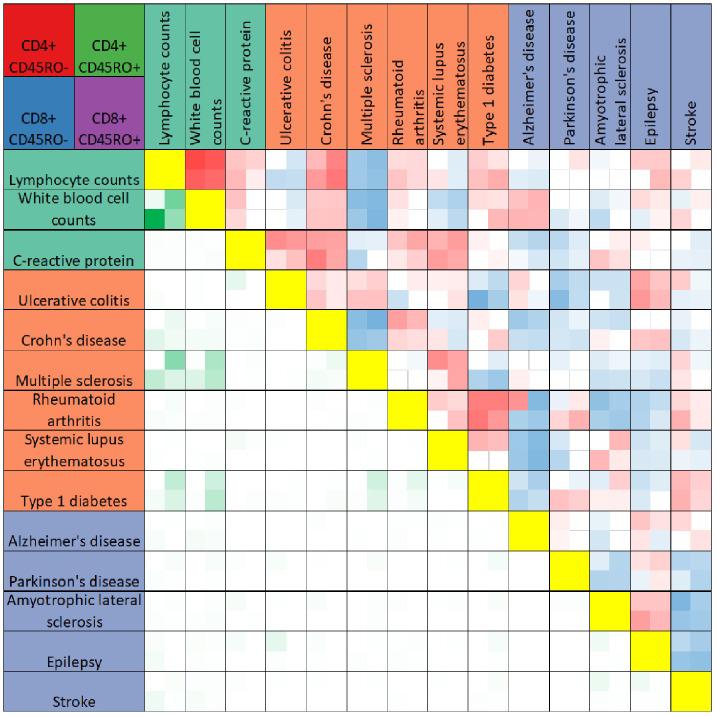
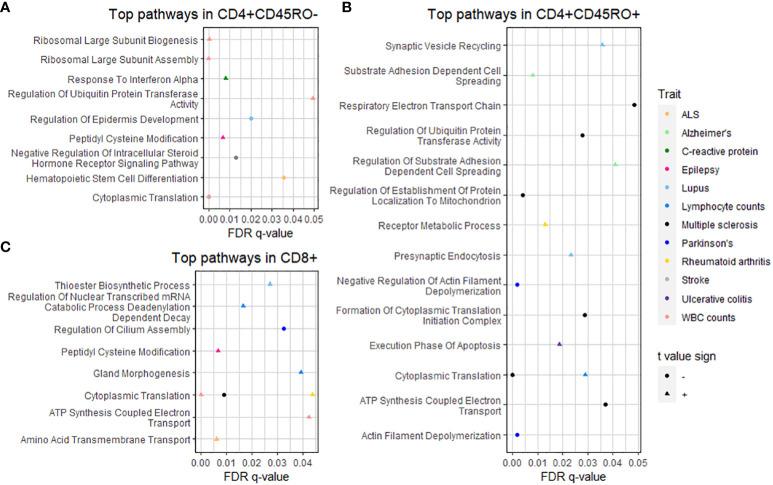
Several genes and biological pathways associated with the PRS for these traits relate to key T cell functions. The PRS-associated gene signature generally correlates positively for traits within a particular category (autoimmune disease, neurological disease, immune function) with the exception of stroke. The trait-associated gene expression signature for autoimmune disease traits was polarized towards CD4+ T cell subtypes.
DISCUSSION
Our findings show that polygenic risk for complex disease and immune function traits can have varying effects on T cell gene expression trends. Several PRS-associated genes are potential candidates for therapeutic modulation in T cells, and could be tested in applications using cells from patients bearing high or low polygenic risk for AD or other conditions.
简介
T 细胞以其对大量病原体和其他入侵物的反应能力而闻名,它们越来越被认为是神经退行性变和其他疾病中病理的重要介质。T 细胞基因表达表型可受与疾病相关的遗传变异调控。许多复杂疾病用多基因风险比个体变异更好地表示。
方法
我们首先使用来自阿尔茨海默病(AD)患者和年龄匹配对照的队列的基因组测序数据计算 AD 的多基因风险评分(PRS),并在我们的队列中针对临床指标验证 AD PRS。然后,我们计算了几种自身免疫性疾病、神经障碍和免疫功能特征的 PRS,并将这些 PRS 与我们队列中的 T 细胞基因表达数据相关联。我们比较了跨特征和四个 T 细胞亚型的 PRS 相关基因。
结果
与这些特征的 PRS 相关的几个基因和生物学途径与 T 细胞的关键功能有关。PRs 相关基因特征通常与特定类别(自身免疫性疾病、神经疾病、免疫功能)内的特征呈正相关,除了中风。自身免疫性疾病特征的与性状相关的基因表达特征偏向于 CD4+T 细胞亚型。
讨论
我们的发现表明,复杂疾病和免疫功能特征的多基因风险对 T 细胞基因表达趋势可能有不同的影响。几个 PRS 相关基因是 T 细胞中潜在的治疗调节候选基因,并且可以在应用中使用来自携带 AD 或其他疾病高或低多基因风险的患者的细胞进行测试。
 Zotero 插件