
从印度尼西亚茂物圈养食蟹猴中分离出的 spp. 的分子检测与鉴定。
Molecular detection and identification of spp. isolated from captive-bred cynomolgus monkeys in Bogor, Indonesia.
作者信息
Saepuloh Uus, Rosmanah Lis, Novita Risqa, Ayuningsih Ellis Dwi, Soviana Susi, Hadi Upik Kesumawati, Darusman Huda Shalahudin
机构信息
Primate Research Center, Bogor Agricultural University, Jl. Lodaya II/5, Bogor, 16151, Indonesia.
Research Center for Pharmaceutical Ingredients and Traditional Medicine, National Research and Innovation Agency (BRIN), Genomic Building, Cibinong Science Center, Jl. Raya Bogor No. 490, Cibinong, 16915 Indonesia.
出版信息
Vet World. 2024 Feb;17(2):337-343. doi: 10.14202/vetworld.2024.337-343. Epub 2024 Feb 8.
BACKGROUND AND AIM
Asian macaques are natural hosts of several species. Some monkey malaria parasites may infect humans and cause zoonotic infections. This study was conducted to estimate the prevalence of monkey malaria parasites in Bogor, Indonesia, based on molecular detection and identification, particularly in cynomolgus monkeys, which have a wide geographic distribution and share extensive habitats with humans. These data are needed to evaluate the status of simian malaria among macaques in Bogor and to study the potential risks to human health. These updated data will provide sufficient information for implementing malaria control strategies in the future and for developing a potential malaria vaccine using monkeys as an animal model.
MATERIALS AND METHODS
Blood samples of 274 cynomolgus monkeys () were collected and identified using microscopy. DNA was extracted from positive blood samples and analyzed using polymerase chain reaction (PCR) to amplify the small subunit ribosomal RNA () target gene using consensus primers for species. The PCR-positive samples were then nucleotide-sequenced using commercial sequencing services, analyzed using the BioEdit program, and aligned using Basic Local Alignment Search Tool from the National Center for Biotechnology Information. Phylogenetic trees were constructed using MEGA 11.0 and the neighbor-joining (NJ) method to determine the kinship of . Bootstrapping was performed using 500 replicates to assess the robustness of tree topologies.
RESULTS
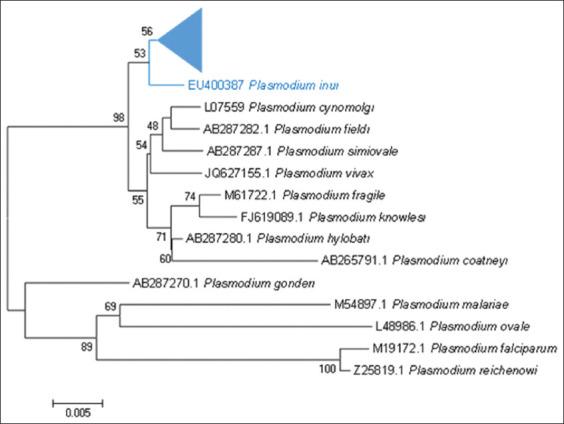
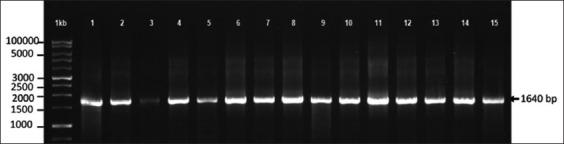
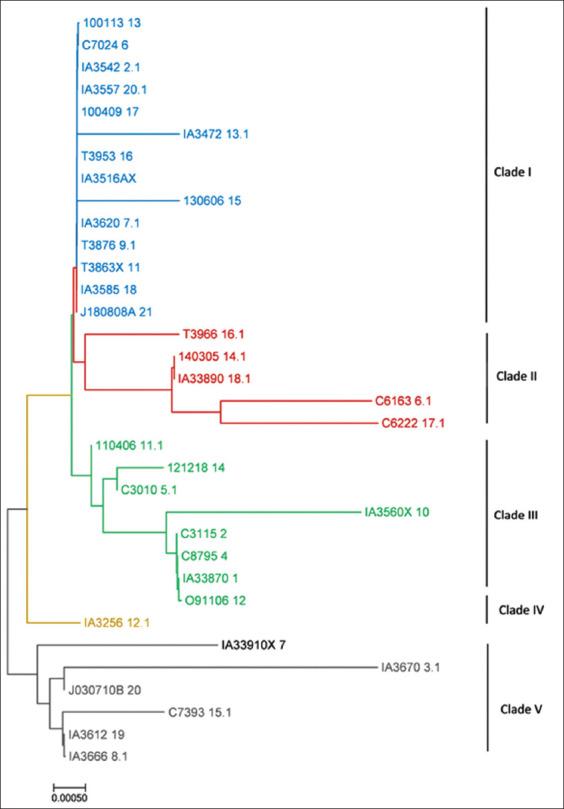
Thirty-eight of the 274 microscopically positive samples for spp. were also positive using PCR, resulting in a 1640 bp amplicon. Further, analysis using nucleotide sequencing confirmed that these positive samples were with more than 99% nucleotide identity compared to GenBank sequences. Phylogenetic tree analysis of the partial gene showed that all our isolates clustered and were closely related to a strain isolated from cynomolgus macaques in South China in 2011.
CONCLUSION
is the predominant malaria parasite in cynomolgus monkeys from Bogor.
背景与目的
亚洲猕猴是多种物种的自然宿主。一些猴疟原虫可能感染人类并导致人畜共患感染。本研究旨在基于分子检测和鉴定来估计印度尼西亚茂物猴疟原虫的流行率,特别是在食蟹猴中,食蟹猴具有广泛的地理分布且与人类共享广泛的栖息地。需要这些数据来评估茂物猕猴中猿猴疟疾的状况,并研究对人类健康的潜在风险。这些更新的数据将为未来实施疟疾控制策略以及开发以猴子为动物模型的潜在疟疾疫苗提供充分信息。
材料与方法
采集274只食蟹猴的血样并通过显微镜进行鉴定。从阳性血样中提取DNA,并使用聚合酶链反应(PCR)进行分析,使用针对疟原虫物种的通用引物扩增小亚基核糖体RNA(rRNA)靶基因。然后使用商业测序服务对PCR阳性样本进行核苷酸测序,使用BioEdit程序进行分析,并使用来自美国国立生物技术信息中心的基本局部比对搜索工具(BLAST)进行比对。使用MEGA 11.0和邻接法(NJ)构建系统发育树以确定疟原虫的亲缘关系。使用500次重复进行自展检验以评估树拓扑结构的稳健性。
结果
274份经显微镜检查为疟原虫属阳性的样本中有38份通过PCR检测也呈阳性,产生了1640 bp的扩增子。此外,通过核苷酸测序分析证实,这些阳性样本为食蟹猴疟原虫,与GenBank序列相比,核苷酸同一性超过99%。对食蟹猴疟原虫部分基因的系统发育树分析表明,我们所有的分离株聚集在一起,并且与2011年从中国南方食蟹猴分离的一株食蟹猴疟原虫密切相关。
结论
食蟹猴疟原虫是茂物食蟹猴中主要的疟原虫。

 Zotero 插件