
沉积物毒性测试:在环境法规中的应用评价。
Sediment Toxicity Tests: A Critical Review of Their use in Environmental Regulations.
机构信息
Finnish Environment Institute, Jyväskylä, Finland.
Toxicology Department, TotalEnergies, Paris La Défense, France.
出版信息
Environ Toxicol Chem. 2024 Aug;43(8):1697-1716. doi: 10.1002/etc.5861. Epub 2024 Apr 10.
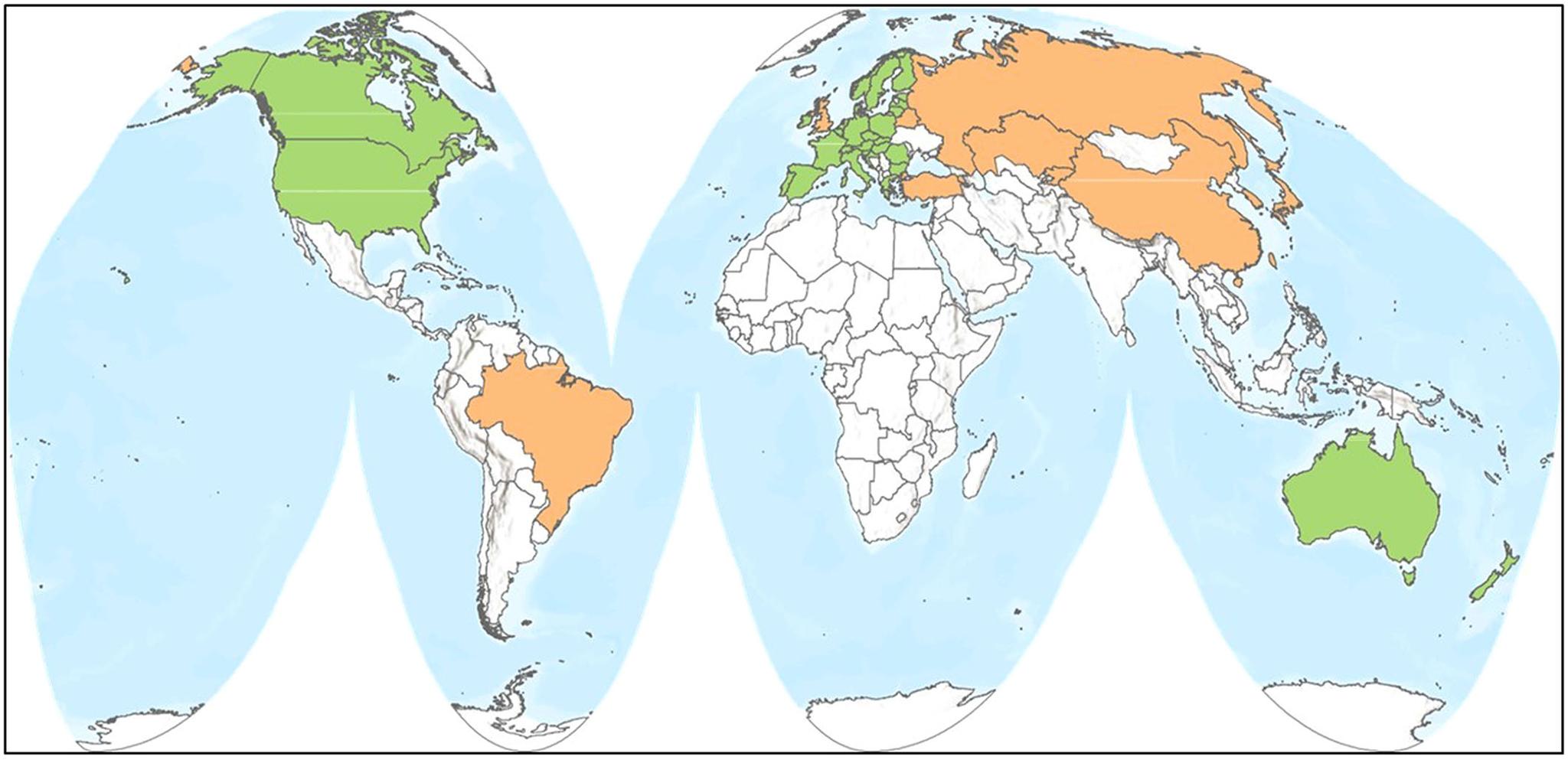
Sediments are an integral component of aquatic systems, linking multiple water uses, functions, and services. Contamination of sediments by chemicals is a worldwide problem, with many jurisdictions trying to prevent future pollution (prospective) and manage existing contamination (retrospective). The present review assesses the implementation of sediment toxicity testing in environmental regulations globally. Currently, the incorporation of sediment toxicity testing in regulations is most common in the European Union (EU), North America, and Australasian regions, with some expansion in Asia and non-EU Europe. Employing sediment toxicity testing in prospective assessments (i.e., before chemicals are allowed on the market) is most advanced and harmonized with pesticides. In the retrospective assessment of environmental risks (i.e., chemicals already contaminating sediments), regulatory sediment toxicity testing practices are applied inconsistently on the global scale. International harmonization of sediment toxicity tests is considered an asset and has been successful through the widespread adoption and deployment of Organisation for Economic Co-operation and Development guidelines. On the other hand, retrospective sediment assessments benefit from incorporating regional species and protocols. Currently used toxicity testing species are diverse, with temperate species being applied most often, whereas test protocols are insufficiently flexible to appropriately address the range of environmental contaminants, including nanomaterials, highly hydrophobic contaminants, and ionized chemicals. The ever-increasing and -changing pressures placed on aquatic resources are a challenge for protection and management efforts, calling for continuous sediment toxicity test method improvement to insure effective use in regulatory frameworks. Future developments should focus on including more subtle and specific toxicity endpoints (e.g., incorporating bioavailability-based in vitro tests) and genomic techniques, extending sediment toxicity testing from single to multispecies approaches, and providing a better link with ecological protection goals. Environ Toxicol Chem 2024;43:1697-1716. © 2024 The Authors. Environmental Toxicology and Chemistry published by Wiley Periodicals LLC on behalf of SETAC.
沉积物是水生系统的一个组成部分,将多种水用途、功能和服务联系在一起。化学物质对沉积物的污染是一个全球性问题,许多司法管辖区试图防止未来的污染(前瞻性)和管理现有的污染(回顾性)。本综述评估了全球环境法规中沉积物毒性测试的实施情况。目前,在法规中纳入沉积物毒性测试最常见于欧盟(EU)、北美和澳大拉西亚地区,亚洲和非欧盟欧洲也有所扩展。在前瞻性评估(即在化学品获准上市之前)中采用沉积物毒性测试最先进,与农药的协调性也最高。在对环境风险的回顾性评估(即已经污染沉积物的化学品)中,全球范围内对监管沉积物毒性测试实践的应用不一致。国际上协调沉积物毒性测试被认为是一项资产,并通过广泛采用和部署经济合作与发展组织的准则取得了成功。另一方面,回顾性沉积物评估受益于纳入区域物种和协议。目前使用的毒性测试物种多种多样,最常应用的是温带物种,而测试协议不够灵活,无法适当地处理包括纳米材料、疏水性强的污染物和离子化化学品在内的各种环境污染物。对水生资源的压力不断增加和变化,对保护和管理工作构成挑战,需要不断改进沉积物毒性测试方法,以确保在监管框架中有效使用。未来的发展应侧重于纳入更微妙和具体的毒性终点(例如,纳入基于生物利用度的体外测试)和基因组技术,从单一物种方法扩展到多物种方法,并与生态保护目标更好地联系起来。Environ Toxicol Chem 2024;43:1697-1716. © 2024 The Authors. Environmental Toxicology and Chemistry published by Wiley Periodicals LLC on behalf of SETAC.

 Zotero 插件