
基于超高效液相色谱-四极杆飞行时间串联质谱、网络药理学和分子对接揭示[具体药物或物质]在非小细胞肺癌中的活性成分及作用机制 。(原文中“of”后面缺少具体内容)
Revealing the active ingredients and mechanism of in non-small-cell lung cancer based on UPLC-Q-TOF-MS/MS, network pharmacology, and molecular docking.
作者信息
Guo Kaili, Jiang Yu, Qiao Wei, Yuan Panpan, Xue Miao, Liu Jiping, Wei Hao, Wang Bin, Zhu Xingmei
机构信息
Department of Pharmacology, Shaanxi University of Chinese Medicine, Shaanxi, Xianyang, 712046, China.
Key Laboratory of Pharmacodynamics and Material Basis of Chinese Medicine of Shaanxi Administration of Traditional Chinese Medicine, Shaanxi Xianyang, 712046, China.
出版信息
Heliyon. 2024 Apr 3;10(7):e29166. doi: 10.1016/j.heliyon.2024.e29166. eCollection 2024 Apr 15.
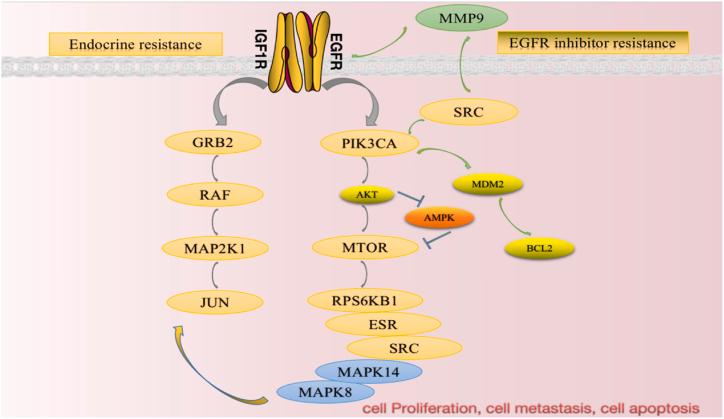
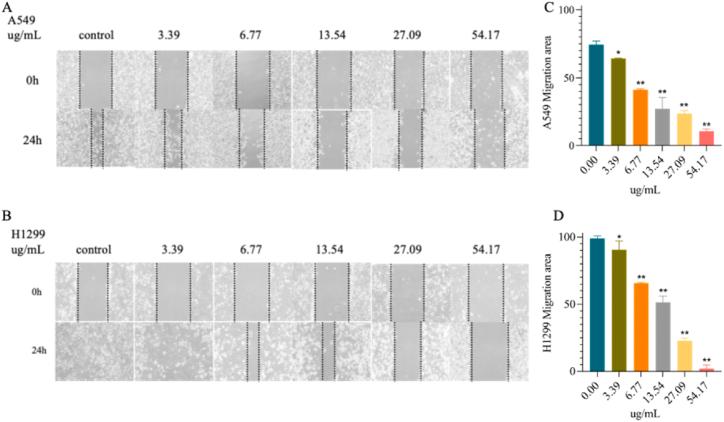
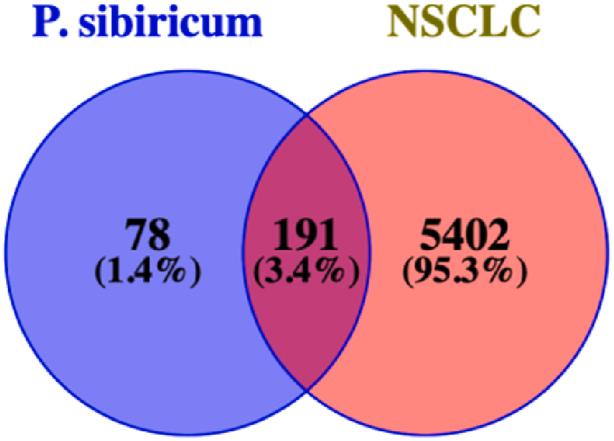
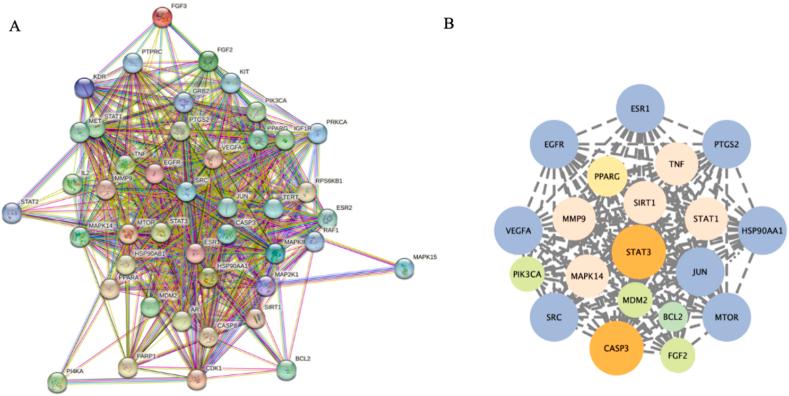
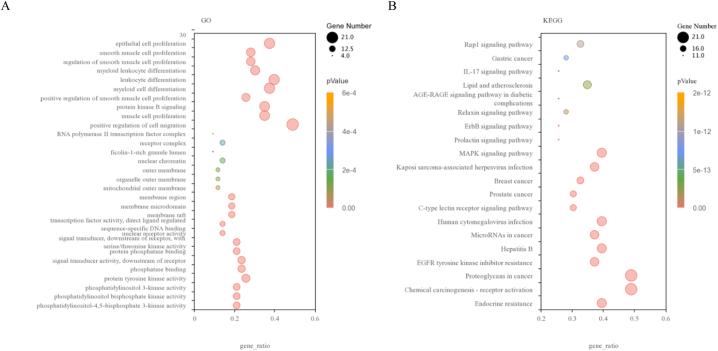
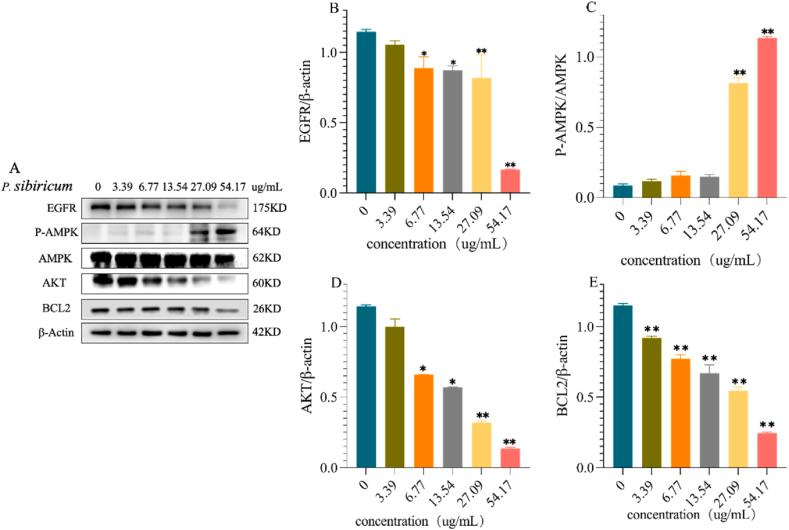
The alcohol extraction of has exhibited significant inhibitory effects on the production of free radicals and the proliferation of non-small-cell lung carcinoma (NSCLC) A549 cells. Despite the diverse components found in alcohol extraction of and its multiple targets, the active components and associated targets remain largely unidentified. Hence, there is a need for additional investigation into the pharmacodynamic elements and mechanisms of action. This study aimed to analyze and identify the components responsible for the anti-tumor activity of alcohol extraction from using UPLC-Q-TOF-MS/MS for the first time. Subsequently, the targets of the active components were predicted using the SwissTargetPrediction database, whereas the targets for NSCLC were sourced from the Online Mendelian Inheritance in Man database (OMIM) and the GeneCards database. Next, the targets of chemical composition were integrated with disease targets via Venny online. GO and KEGG pathway enrichment analyses were performed utilizing DAVID. Subsequently, a network analysis of "components-targets-pathways" was established using Cytoscape 3.8.2 and assessed with the "network analyzer" plug-in. Molecular docking was conducted utilizing Autodock 1.5.6. The study aimed to examine the anti-proliferative impacts and underlying mechanisms of alcohol extraction from on NSCLC through in vivo and in vitro investigations utilizing an animal model of transplanted tumor, CCK8 assay, cell scratch test, RT-qPCR, and western blotting. The study unveiled that 17 active components extracted from alcohol demonstrated anti-non-small cell lung cancer (NSCLC) effects through the modulation of 191 targets and various significant signaling pathways. These pathways include Endocrine resistance, PI3K/AKT, Chemical carcinogenesis-receptor activation, Proteoglycans in cancer, EGFR tyrosine kinase inhibitor resistance, AMPK signaling pathway, and other related signaling pathways. Network analysis and molecular docking results indicated that specific compounds such as (25S)-26-O-(β-d-glucopyranosyl)-furost-5-en3β,22α,26-triol3-O-β-d-glucopyranosyl-(1→2)-β-d-glucopyranosyl-(1→4)-β-d-glucopyranoside, Timosaponin H1, Deapi-platycodin D3, (3R)-5,7-dihydroxy-6,8-dimethyl-3-(4'-hydroxybenzyl)-chroman-4-one, Disporopsin, Funkioside F, Kingianoside E, Parisyunnanoside H, and Sibiricoside B primarily targeted 17 key proteins (BCL2, EGFR, ESR1, ESR2, GRB2, IGF1R, JUN, MAP2K1, MAPK14, MAPK8, MDM2, MMP9, mTOR, PIK3CA, RAF1, RPS6KB1, and SRC) collectively. In conclusion, the alcohol extraction of demonstrated inhibitory effects on cell proliferation, induction of apoptosis, and inhibition of metastasis through various pathways.
[具体植物名称]的醇提取物对自由基的产生和非小细胞肺癌(NSCLC)A549细胞的增殖具有显著的抑制作用。尽管[具体植物名称]醇提取物中发现了多种成分及其多个靶点,但活性成分及其相关靶点在很大程度上仍未明确。因此,有必要对其药效学成分和作用机制进行进一步研究。本研究旨在首次使用超高效液相色谱-四极杆飞行时间串联质谱(UPLC-Q-TOF-MS/MS)分析和鉴定[具体植物名称]醇提取物中负责抗肿瘤活性的成分。随后,使用SwissTargetPrediction数据库预测活性成分的靶点,而NSCLC的靶点则来自人类孟德尔遗传在线数据库(OMIM)和基因卡片数据库(GeneCards)。接下来,通过Venny在线工具将化学成分的靶点与疾病靶点进行整合。利用DAVID进行基因本体(GO)和京都基因与基因组百科全书(KEGG)通路富集分析。随后,使用Cytoscape 3.8.2建立“成分-靶点-通路”网络分析,并使用“网络分析器”插件进行评估。利用Autodock 1.5.6进行分子对接。本研究旨在通过使用移植瘤动物模型、CCK8检测、细胞划痕试验、实时定量聚合酶链反应(RT-qPCR)和蛋白质免疫印迹法,在体内和体外研究[具体植物名称]醇提取物对NSCLC的抗增殖作用及其潜在机制。研究发现,从[具体植物名称]醇提取物中提取的17种活性成分通过调节191个靶点和各种重要信号通路发挥抗非小细胞肺癌(NSCLC)作用。这些通路包括内分泌抵抗、磷脂酰肌醇-3激酶/蛋白激酶B(PI3K/AKT)、化学致癌-受体激活、癌症中的蛋白聚糖、表皮生长因子受体(EGFR)酪氨酸激酶抑制剂耐药、腺苷酸活化蛋白激酶(AMPK)信号通路以及其他相关信号通路。网络分析和分子对接结果表明,(25S)-26-O-(β-D-吡喃葡萄糖基)-呋甾-5-烯-3β,22α,26-三醇-3-O-β-D-吡喃葡萄糖基-(1→2)-β-D-吡喃葡萄糖基-(1→4)-β-D-吡喃葡萄糖苷、知母皂苷H1、去芹糖桔梗皂苷D3、(3R)-5,7-二羟基-6,8-二甲基-3-(4'-羟基苄基)-色满-酮、竹节参苷元F、山慈菇苷F、金盏花苷E、滇重楼苷H和西伯利亚远志糖苷B等特定化合物主要共同靶向17种关键蛋白(BCL2、EGFR、雌激素受体1(ESR1)、雌激素受体2(ESR2)、生长因子受体结合蛋白2(GRB2)、胰岛素样生长因子1受体(IGF1R)、原癌基因蛋白c-Jun(JUN)、丝裂原活化蛋白激酶激酶1(MAP2K1)、丝裂原活化蛋白激酶14(MAPK14)、丝裂原活化蛋白激酶8(MAPK8)、小鼠双微体2(MDM2)、基质金属蛋白酶9(MMP9)、哺乳动物雷帕霉素靶蛋白(mTOR)、磷脂酰肌醇-3激酶催化亚基α(PIK3CA)、原癌基因丝氨酸/苏氨酸蛋白激酶(RAF1)、核糖体蛋白S6激酶β-1(RPS6KB1)和原癌基因酪氨酸蛋白激酶(SRC))。总之,[具体植物名称]醇提取物通过多种途径对细胞增殖、诱导凋亡和抑制转移具有抑制作用。





 Zotero 插件