
B 细胞在癌症进展和抗肿瘤免疫中的作用。
The role of B-1 cells in cancer progression and anti-tumor immunity.
机构信息
Immunobiology Department, Immunology and Immunotherapy Division, Center of Molecular Immunology, Habana, Cuba.
Applied Genetics Group, Department of Biochemistry, Faculty of Biology, University of Habana, Habana, Cuba.
出版信息
Front Immunol. 2024 Apr 2;15:1363176. doi: 10.3389/fimmu.2024.1363176. eCollection 2024.
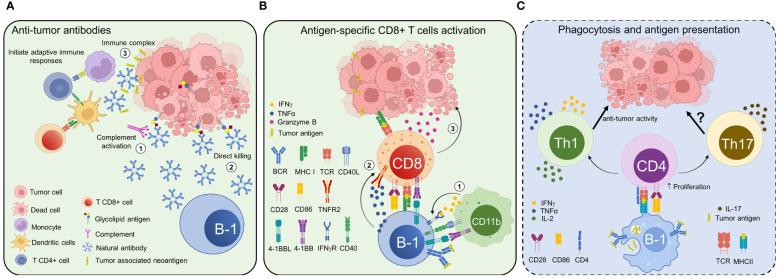
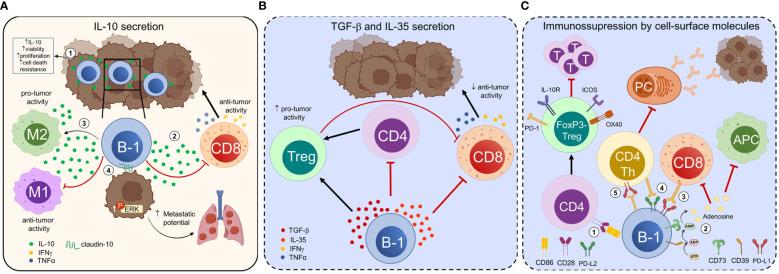
In recent years, in addition to the well-established role of T cells in controlling or promoting tumor growth, a new wave of research has demonstrated the active involvement of B cells in tumor immunity. B-cell subsets with distinct phenotypes and functions play various roles in tumor progression. Plasma cells and activated B cells have been linked to improved clinical outcomes in several types of cancer, whereas regulatory B cells have been associated with disease progression. However, we are only beginning to understand the role of a particular innate subset of B cells, referred to as B-1 cells, in cancer. Here, we summarize the characteristics of B-1 cells and review their ability to infiltrate tumors. We also describe the potential mechanisms through which B-1 cells suppress anti-tumor immune responses and promote tumor progression. Additionally, we highlight recent studies on the protective anti-tumor function of B-1 cells in both mouse models and humans. Understanding the functions of B-1 cells in tumor immunity could pave the way for designing more effective cancer immunotherapies.
近年来,除了 T 细胞在控制或促进肿瘤生长方面的作用已得到充分证实外,新一波研究还表明 B 细胞在肿瘤免疫中也有积极的参与。具有不同表型和功能的 B 细胞亚群在肿瘤进展中发挥着各种作用。浆细胞和活化的 B 细胞与几种类型癌症的临床结局改善相关,而调节性 B 细胞与疾病进展相关。然而,我们才刚刚开始了解一种特殊的先天 B 细胞亚群——B-1 细胞在癌症中的作用。在这里,我们总结了 B-1 细胞的特征,并回顾了它们浸润肿瘤的能力。我们还描述了 B-1 细胞抑制抗肿瘤免疫反应和促进肿瘤进展的潜在机制。此外,我们还强调了最近在小鼠模型和人类中关于 B-1 细胞的保护性抗肿瘤功能的研究。了解 B-1 细胞在肿瘤免疫中的功能可能为设计更有效的癌症免疫疗法铺平道路。
 Zotero 插件