
德国 COVID-19 疫苗接种的地区差异。
Regional variations in vaccination against COVID-19 in Germany.
机构信息
Paderborn University, Paderborn, Germany.
RWI - Leibniz Institute for Economic Research, Essen, Germany.
出版信息
PLoS One. 2024 Apr 18;19(4):e0296976. doi: 10.1371/journal.pone.0296976. eCollection 2024.
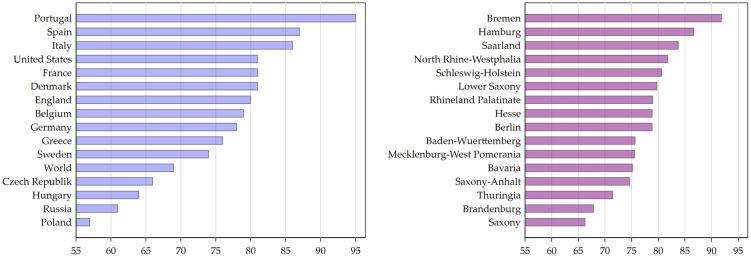
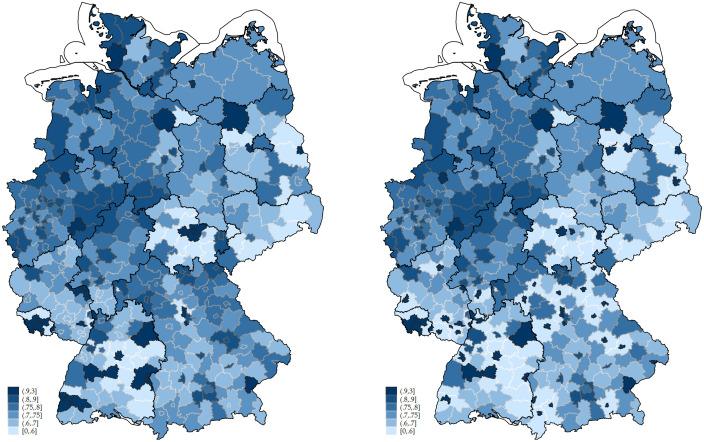
Vaccination willingness against COVID-19 is generally perceived as low. Moreover, there is large heterogeneity across and within countries. As a whole, Germany has average vaccination rates compared to other industrialized countries. However, vaccination rates in the 16 different German federal states differ by more than 20 percentage points. We describe variation in vaccination rates on the level of the 400 German counties using data on all vaccinations carried out until December 2022. Around 52-72% of that variation can be explained by regional differences in demographic characteristics, housing, education and political party preferences. We find indications that the remaining part may be due to differences in soft factors such as risk aversion, trust in the German government, trust in science, and beliefs in conspiracy theories regarding the origins of the Corona virus. We conclude that improving the trust in science and the fight against conspiracy theories may possibly be effective tools to improve vaccination rates and effectively fight pandemics.
人们普遍认为,人们对接种 COVID-19 疫苗的意愿较低。此外,各国之间和各国内部存在很大的异质性。总体而言,与其他工业化国家相比,德国的疫苗接种率处于平均水平。然而,16 个不同的德国联邦州的疫苗接种率相差超过 20 个百分点。我们使用截至 2022 年 12 月进行的所有疫苗接种数据,描述了德国 400 个县的疫苗接种率差异。大约 52-72%的差异可以用人口特征、住房、教育和政党偏好的地区差异来解释。我们发现,其余部分可能是由于风险规避、对德国政府的信任、对科学的信任以及对冠状病毒起源的阴谋论信仰等软因素的差异造成的。我们的结论是,提高对科学的信任和打击阴谋论可能是提高疫苗接种率和有效应对大流行病的有效工具。

 Zotero 插件