
疟原虫裂殖子衰老改变其运动性、感染性,并减少体外的免疫激活。
Ageing of Plasmodium falciparum malaria sporozoites alters their motility, infectivity and reduces immune activation in vitro.
机构信息
Leiden University Center for Infectious Diseases (LUCID), Leiden University Medical Center, Leiden, Netherlands.
Interventional Molecular Imaging Laboratory, Department of Radiology, Leiden University Medical Center, Leiden, Netherlands.
出版信息
Malar J. 2024 Apr 19;23(1):111. doi: 10.1186/s12936-024-04946-7.
BACKGROUND
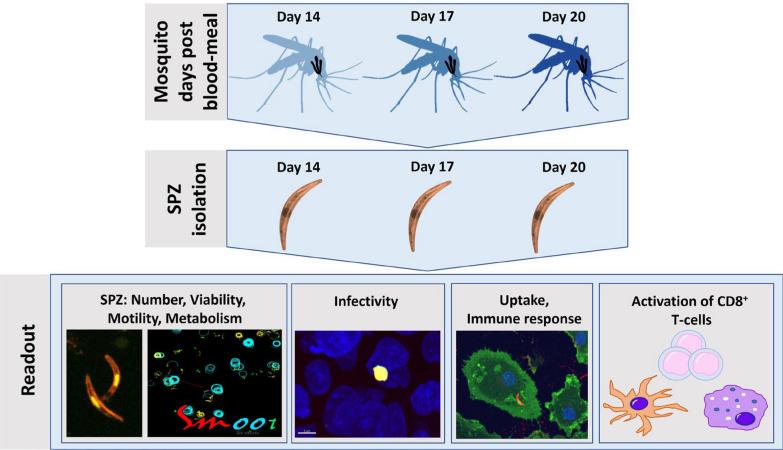
Sporozoites (SPZ), the infective form of Plasmodium falciparum malaria, can be inoculated into the human host skin by Anopheline mosquitoes. These SPZ migrate at approximately 1 µm/s to find a blood vessel and travel to the liver where they infect hepatocytes and multiply. In the skin they are still low in number (50-100 SPZ) and vulnerable to immune attack by antibodies and skin macrophages. This is why whole SPZ and SPZ proteins are used as the basis for most malaria vaccines currently deployed and undergoing late clinical testing. Mosquitoes typically inoculate SPZ into a human host between 14 and 25 days after their previous infective blood meal. However, it is unknown whether residing time within the mosquito affects SPZ condition, infectivity or immunogenicity. This study aimed to unravel how the age of P. falciparum SPZ in salivary glands (14, 17, or 20 days post blood meal) affects their infectivity and the ensuing immune responses.
METHODS
SPZ numbers, viability by live/dead staining, motility using dedicated sporozoite motility orienting and organizing tool software (SMOOT), and infectivity of HC-04.j7 liver cells at 14, 17 and 20 days after mosquito feeding have been investigated. In vitro co-culture assays with SPZ stimulated monocyte-derived macrophages (MoMɸ) and CD8 T-cells, analysed by flow cytometry, were used to investigate immune responses.
RESULTS
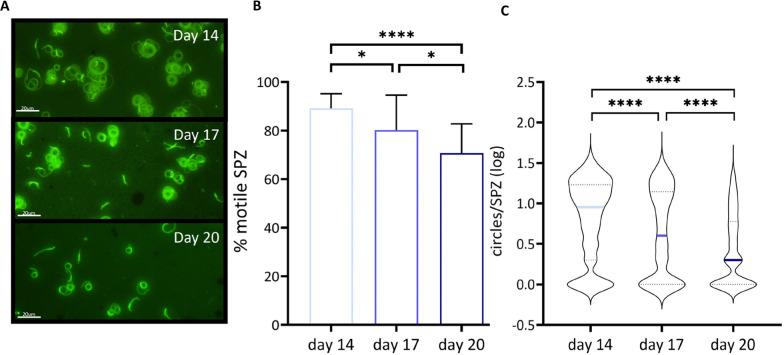
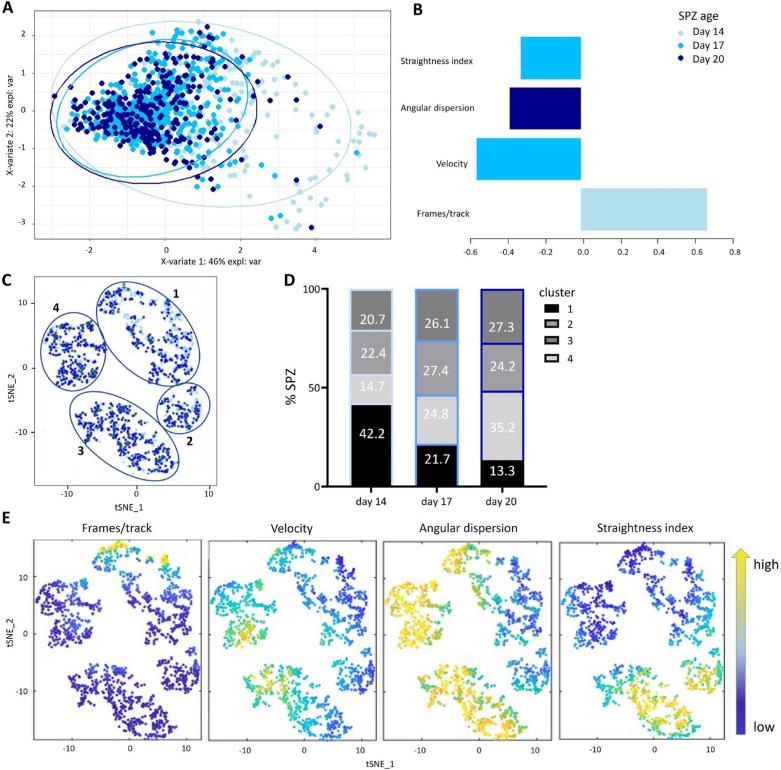
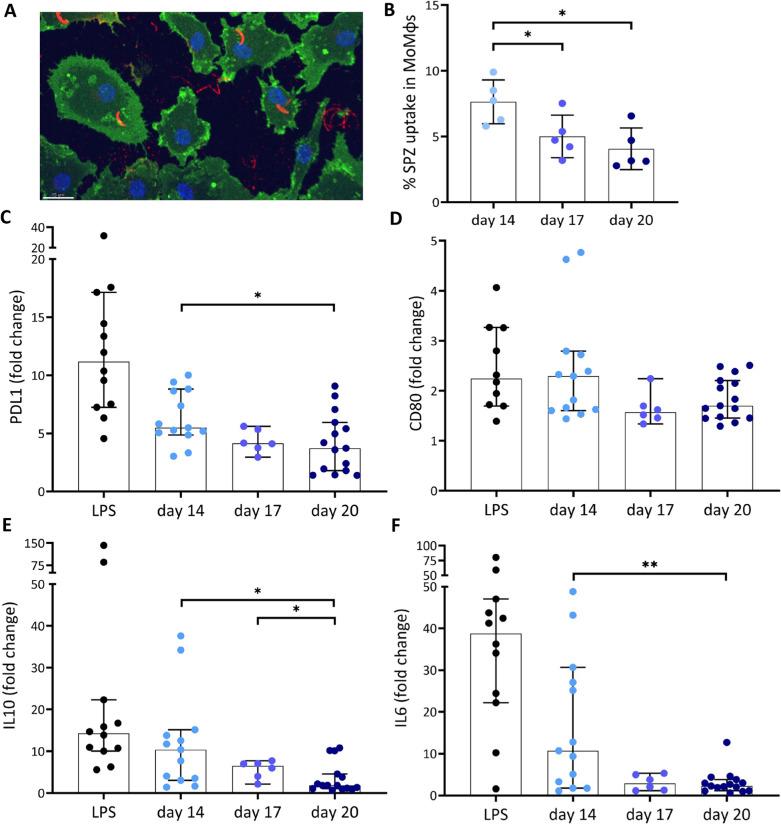
SPZ age did not result in different SPZ numbers or viability. However, a markedly different motility pattern, whereby motility decreased from 89% at day 14 to 80% at day 17 and 71% at day 20 was observed (p ≤ 0.0001). Similarly, infectivity of day 20 SPZ dropped to ~ 50% compared with day 14 SPZ (p = 0.004). MoMɸ were better able to take up day 14 SPZ than day 20 SPZ (from 7.6% to 4.1%, p = 0.03) and displayed an increased expression of pro-inflammatory CD80, IL-6 (p = 0.005), regulatory markers PDL1 (p = 0.02), IL-10 (p = 0.009) and cytokines upon phagocytosis of younger SPZ. Interestingly, co-culture of these cells with CD8 T-cells revealed a decreased expression of activation marker CD137 and cytokine IFNγ compared to their day 20 counterparts. These findings suggest that older (day 17-20) P. falciparum SPZ are less infectious and have decreased immune regulatory potential.
CONCLUSION
Overall, this data is a first step in enhancing the understanding of how mosquito residing time affects P. falciparum SPZ and could impact the understanding of the P. falciparum infectious reservoir and the potency of whole SPZ vaccines.
背景
疟原虫(Plasmodium falciparum)的感染形式——孢子(SPZ),可通过疟蚊接种到人类宿主的皮肤中。这些 SPZ 以大约 1µm/s 的速度迁移,寻找血管,并迁移到肝脏,在那里它们感染肝细胞并繁殖。在皮肤中,它们的数量仍然很少(50-100 个 SPZ),容易受到抗体和皮肤巨噬细胞的免疫攻击。这就是为什么目前使用的大多数疟疾疫苗都是基于全 SPZ 和 SPZ 蛋白,并正在进行后期临床试验的原因。蚊子通常在其上次感染性吸血后 14 到 25 天之间将 SPZ 接种到人类宿主中。然而,目前尚不清楚蚊子中 SPZ 的驻留时间是否会影响 SPZ 的状况、感染力或免疫原性。本研究旨在揭示疟原虫 SPZ 在唾液腺中的年龄(血餐后 14、17 或 20 天)如何影响其感染力和随后的免疫反应。
方法
研究了 14、17 和 20 天蚊子喂食后 SPZ 的数量、死活染色的活力、使用专门的 SPZ 运动定向和组织工具软件(SMOOT)的运动性,以及对 HC-04.j7 肝细胞的感染力。使用流式细胞术分析了与 SPZ 刺激的单核细胞衍生的巨噬细胞(MoMɸ)和 CD8 T 细胞的体外共培养测定,以研究免疫反应。
结果
SPZ 年龄并没有导致 SPZ 数量或活力的不同。然而,观察到明显不同的运动模式,即运动性从第 14 天的 89%下降到第 17 天的 80%和第 20 天的 71%(p≤0.0001)。同样,第 20 天 SPZ 的感染性下降到与第 14 天 SPZ 相比约 50%(p=0.004)。MoMɸ 摄取第 14 天 SPZ 的能力强于第 20 天 SPZ(从 7.6%到 4.1%,p=0.03),并在吞噬年轻 SPZ 时显示出促炎 CD80、IL-6(p=0.005)、调节标志物 PDL1(p=0.02)、IL-10(p=0.009)和细胞因子的表达增加。有趣的是,与第 20 天的 SPZ 相比,与这些细胞共培养的 CD8 T 细胞显示出激活标志物 CD137 和细胞因子 IFNγ 的表达减少。这些发现表明,较老的(第 17-20 天)疟原虫 SPZ 的传染性较低,免疫调节潜力降低。
结论
总的来说,这项数据是深入了解蚊子驻留时间如何影响疟原虫 SPZ 的第一步,可能会影响对疟原虫感染性储存库的理解以及全 SPZ 疫苗的效力。



 Zotero 插件