
健康与疾病中的NLRP炎性小体
NLRP inflammasomes in health and disease.
作者信息
Xu Zhihao, Kombe Kombe Arnaud John, Deng Shasha, Zhang Hongliang, Wu Songquan, Ruan Jianbin, Zhou Ying, Jin Tengchuan
机构信息
Center of Disease Immunity and Intervention, College of Medicine, Lishui University, Lishui, 323000, China.
Laboratory of Structural Immunology, the CAS Key Laboratory of Innate Immunity and Chronic Disease, School of Basic Medical Sciences, Division of Life Sciences and Medicine, University of Science and Technology of China, Hefei, 230027, China.
出版信息
Mol Biomed. 2024 Apr 22;5(1):14. doi: 10.1186/s43556-024-00179-x.
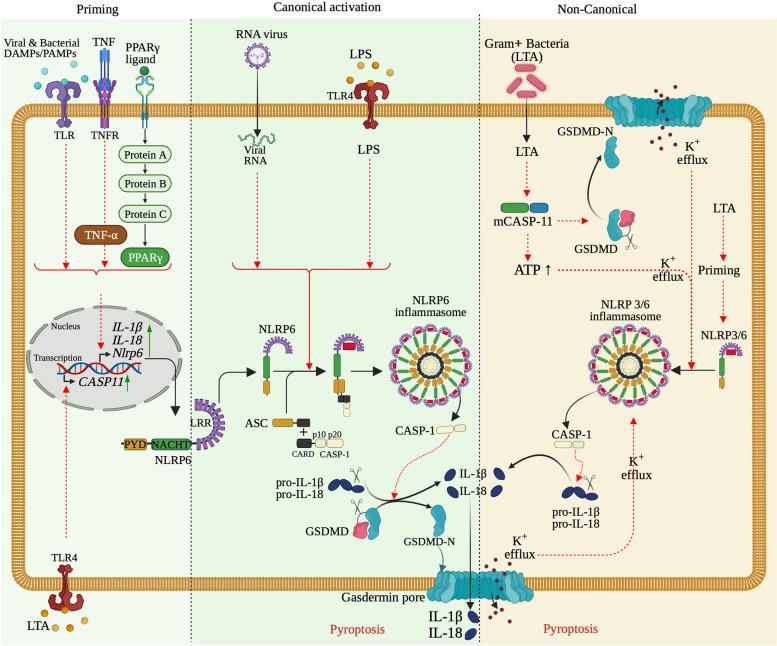
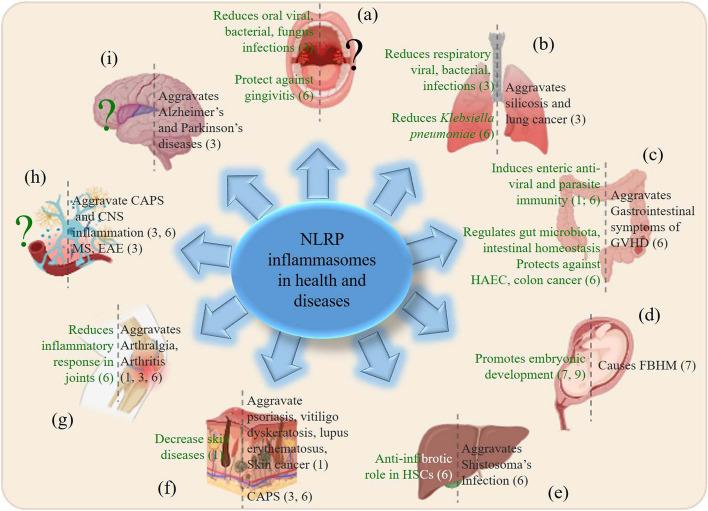
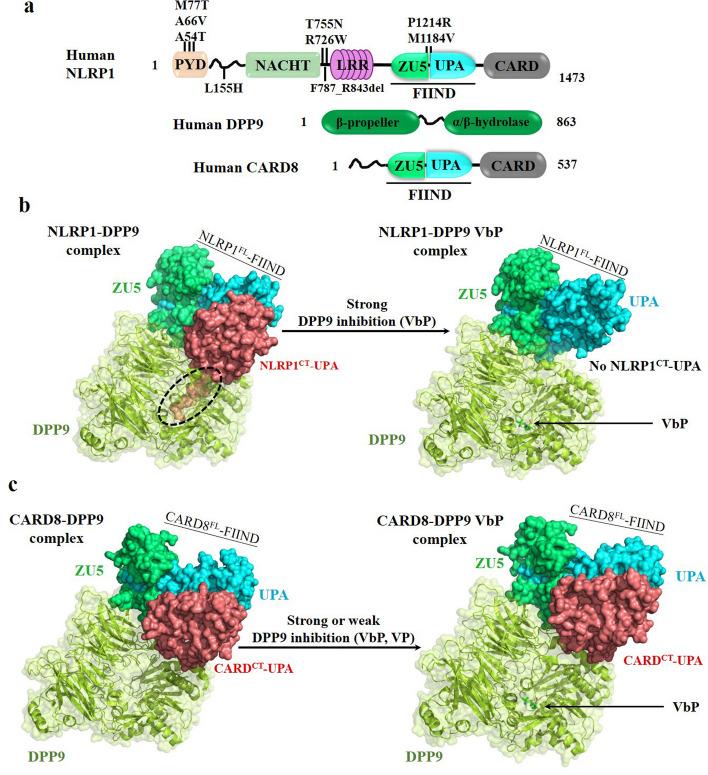
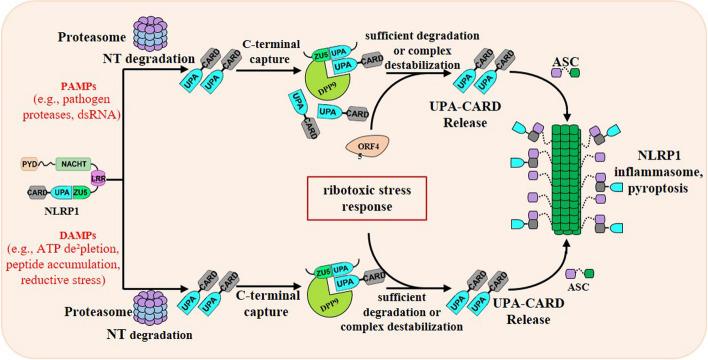
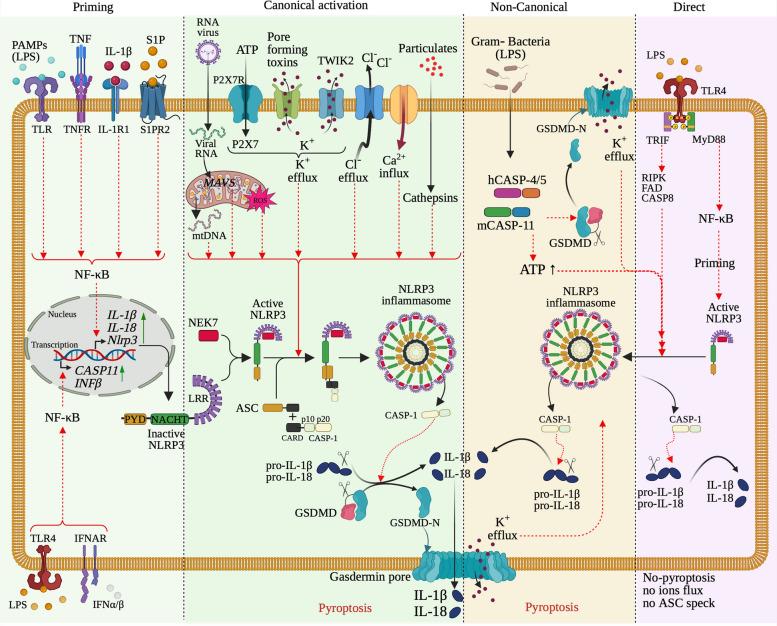
NLRP inflammasomes are a group of cytosolic multiprotein oligomer pattern recognition receptors (PRRs) involved in the recognition of pathogen-associated molecular patterns (PAMPs) and danger-associated molecular patterns (DAMPs) produced by infected cells. They regulate innate immunity by triggering a protective inflammatory response. However, despite their protective role, aberrant NLPR inflammasome activation and gain-of-function mutations in NLRP sensor proteins are involved in occurrence and enhancement of non-communicating autoimmune, auto-inflammatory, and neurodegenerative diseases. In the last few years, significant advances have been achieved in the understanding of the NLRP inflammasome physiological functions and their molecular mechanisms of activation, as well as therapeutics that target NLRP inflammasome activity in inflammatory diseases. Here, we provide the latest research progress on NLRP inflammasomes, including NLRP1, CARD8, NLRP3, NLRP6, NLRP7, NLRP2, NLRP9, NLRP10, and NLRP12 regarding their structural and assembling features, signaling transduction and molecular activation mechanisms. Importantly, we highlight the mechanisms associated with NLRP inflammasome dysregulation involved in numerous human auto-inflammatory, autoimmune, and neurodegenerative diseases. Overall, we summarize the latest discoveries in NLRP biology, their forming inflammasomes, and their role in health and diseases, and provide therapeutic strategies and perspectives for future studies about NLRP inflammasomes.
NLRP炎性小体是一组胞质多蛋白寡聚体模式识别受体(PRR),参与识别感染细胞产生的病原体相关分子模式(PAMP)和危险相关分子模式(DAMP)。它们通过触发保护性炎症反应来调节固有免疫。然而,尽管它们具有保护作用,但NLRP炎性小体的异常激活以及NLRP传感蛋白的功能获得性突变却与非传染性自身免疫性、自身炎症性和神经退行性疾病的发生及加重有关。在过去几年中,在理解NLRP炎性小体的生理功能及其激活的分子机制,以及针对炎性疾病中NLRP炎性小体活性的治疗方法方面取得了重大进展。在此,我们提供了关于NLRP炎性小体的最新研究进展,包括NLRP1、CARD8、NLRP3、NLRP6、NLRP7、NLRP2、NLRP9、NLRP10和NLRP12的结构和组装特征、信号转导及分子激活机制。重要的是,我们强调了与NLRP炎性小体失调相关的机制,这些机制涉及多种人类自身炎症性、自身免疫性和神经退行性疾病。总体而言,我们总结了NLRP生物学的最新发现、它们形成的炎性小体及其在健康和疾病中的作用,并为未来关于NLRP炎性小体的研究提供了治疗策略和展望。

 Zotero 插件