
心脏移植受者中嵌合抗原受体T细胞疗法成功治疗难治性移植后淋巴细胞增生性疾病
Successful Treatment of Refractory Post-Transplant Lymphoproliferative Disorder With Chimeric Antigen Receptor T-Cell Therapy in a Heart Transplant Recipient.
作者信息
Hickmann Katherine, Sweeney Ryan, Peterson Chelsea, Faringer Kathleen, Riley Madeline, Bunker Mark, Hadi Azam, Khan Cyrus, Samhouri Yazan
机构信息
Drexel University College of Medicine, Philadelphia, PA, USA.
Department of Internal Medicine, Allegheny Health Network, Pittsburgh, PA, USA.
出版信息
J Hematol. 2024 Apr;13(1-2):34-38. doi: 10.14740/jh1211. Epub 2024 Apr 9.
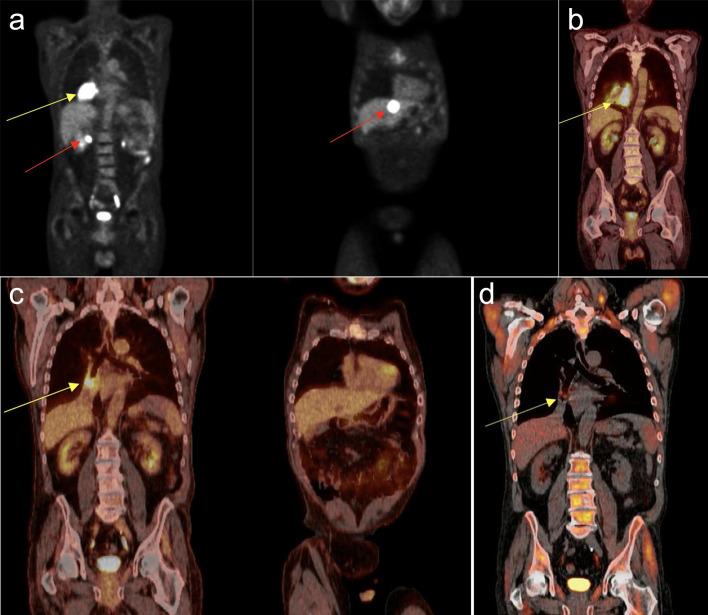
Post-transplant lymphoproliferative disorders (PTLDs) are opportunistic malignancies that complicate the success of hematopoietic stem cell or solid organ transplantation. These disorders often arise post-transplant due to the immunosuppression required for minimizing the risk of rejection of donor tissue. First-line treatment of these disorders includes limiting immunosuppression when permissible. Subsequent treatment includes the use of monoclonal anti-CD20 antibody (rituximab), and/or combination chemotherapy. Chimeric antigen receptor (CAR) T-cell therapy has revolutionized the treatment paradigm in many lymphoid malignancies. It is not approved for PTLD due to exclusion of PTLD patients from pivotal clinical trials. Also, its utilization post-transplant can be complex and multidisciplinary care is of utmost importance for successful administration of a potentially curative treatment. We present a 68-year-old patient with history of heart transplant for non-ischemic cardiomyopathy, diagnosed with PTLD that was refractory to treatment using current guidelines until successfully receiving CAR T-cell therapy.
移植后淋巴细胞增生性疾病(PTLDs)是一种机会性恶性肿瘤,会影响造血干细胞移植或实体器官移植的成功。这些疾病通常在移植后出现,因为需要进行免疫抑制以降低供体组织排斥反应的风险。这些疾病的一线治疗包括在允许的情况下限制免疫抑制。后续治疗包括使用单克隆抗CD20抗体(利妥昔单抗)和/或联合化疗。嵌合抗原受体(CAR)T细胞疗法彻底改变了许多淋巴恶性肿瘤的治疗模式。由于关键临床试验排除了PTLD患者,该疗法未被批准用于PTLD。此外,移植后使用该疗法可能很复杂,多学科护理对于成功实施潜在的治愈性治疗至关重要。我们报告了一名68岁的患者,有非缺血性心肌病心脏移植病史,被诊断为PTLD,按照当前指南治疗无效,直到成功接受CAR T细胞疗法。

 Zotero 插件