
免疫球蛋白和血清蛋白会损害恶性腹水中抗肿瘤自然杀伤细胞的效应功能。
Immunoglobulins and serum proteins impair anti-tumor NK cell effector functions in malignant ascites.
作者信息
Hrvat Antonio, Benders Sonja, Kimmig Rainer, Brandau Sven, Mallmann-Gottschalk Nina
机构信息
Experimental and Translational Research, Department of Otorhinolaryngology, University Hospital Essen, Essen, Germany.
Department for Trauma Surgery and Orthopedics, St. Joseph Hospital Kupferdreh, Essen, Germany.
出版信息
Front Immunol. 2024 Apr 5;15:1360615. doi: 10.3389/fimmu.2024.1360615. eCollection 2024.
INTRODUCTION
Malignant ascites indicates ovarian cancer progression and predicts poor clinical outcome. Various ascites components induce an immunosuppressive crosstalk between tumor and immune cells, which is poorly understood. In our previous study, imbalanced electrolytes, particularly high sodium content in malignant ascites, have been identified as a main immunosuppressive mechanism that impaired NK and T-cell activity.
METHODS
In the present study, we explored the role of high concentrations of ascites proteins and immunoglobulins on antitumoral NK effector functions. To this end, a coculture system consisting of healthy donor NK cells and ovarian cancer cells was used. The anti-EGFR antibody Cetuximab was added to induce antibody-dependent cellular cytotoxicity (ADCC). NK activity was assessed in the presence of different patient ascites samples and immunoglobulins that were isolated from ascites.
RESULTS
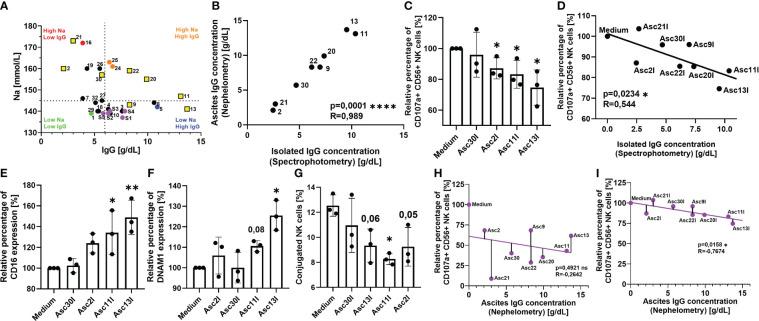
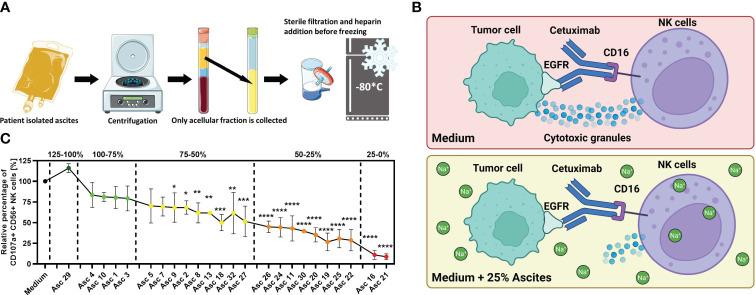
Overall high protein concentration in ascites impaired NK cell degranulation, conjugation to tumor cells, and intracellular calcium signaling. Immunoglobulins isolated from ascites samples competitively interfered with NK ADCC and inhibited the conjugation to target cells. Furthermore, downregulation of regulatory surface markers CD16 and DNAM-1 on NK cells was prevented by ascites-derived immunoglobulins during NK cell activation.
CONCLUSION
Our data show that high protein concentrations in biological fluids are able to suppress antitumoral activity of NK cells independent from the mechanism mediated by imbalanced electrolytes. The competitive interference between immunoglobulins of ascites and specific therapeutic antibodies could diminish the efficacy of antibody-based therapies and should be considered in antibody-based immunotherapies.
引言
恶性腹水提示卵巢癌进展,并预示临床预后不良。多种腹水成分可诱导肿瘤细胞与免疫细胞之间发生免疫抑制性串扰,对此人们了解甚少。在我们之前的研究中,已确定电解质失衡,尤其是恶性腹水中的高钠含量,是损害自然杀伤(NK)细胞和T细胞活性的主要免疫抑制机制。
方法
在本研究中,我们探讨了高浓度腹水蛋白和免疫球蛋白对NK细胞抗肿瘤效应功能的作用。为此,使用了由健康供体NK细胞和卵巢癌细胞组成的共培养系统。添加抗表皮生长因子受体(EGFR)抗体西妥昔单抗以诱导抗体依赖性细胞毒性(ADCC)。在存在不同患者腹水样本和从腹水中分离出的免疫球蛋白的情况下评估NK活性。
结果
腹水中总体高蛋白浓度损害了NK细胞脱颗粒、与肿瘤细胞结合以及细胞内钙信号传导。从腹水样本中分离出的免疫球蛋白竞争性干扰NK细胞的ADCC,并抑制与靶细胞的结合。此外,在NK细胞激活过程中,腹水来源的免疫球蛋白可防止NK细胞表面调节性标志物CD16和DNAX辅助分子-1(DNAM-1)下调。
结论
我们的数据表明,生物体液中的高蛋白浓度能够独立于电解质失衡介导的机制来抑制NK细胞的抗肿瘤活性。腹水免疫球蛋白与特异性治疗性抗体之间的竞争性干扰可能会降低基于抗体的治疗效果,在基于抗体的免疫治疗中应予以考虑。


 Zotero 插件