
常见避孕药及其混合物的促前脂肪生成作用的分子评估。
Molecular Assessment of Proadipogenic Effects for Common-Use Contraceptives and Their Mixtures.
机构信息
Institute of Environmental Health Sciences and Department of Pharmacology, Wayne State University, Detroit, MI 48202, USA.
出版信息
Endocrinology. 2024 Apr 29;165(6). doi: 10.1210/endocr/bqae050.
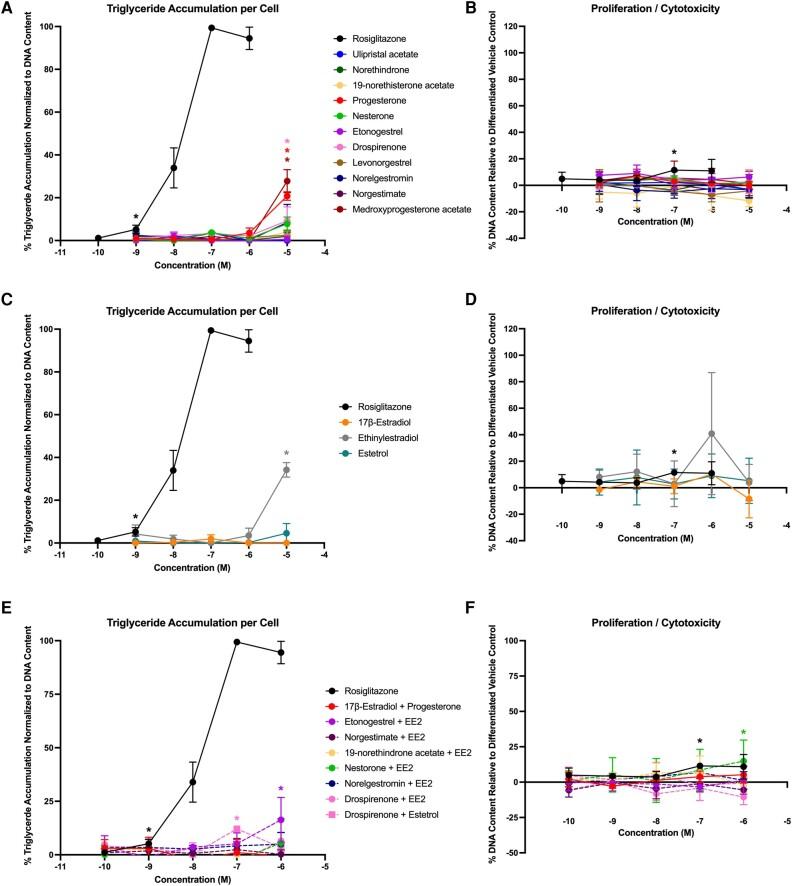
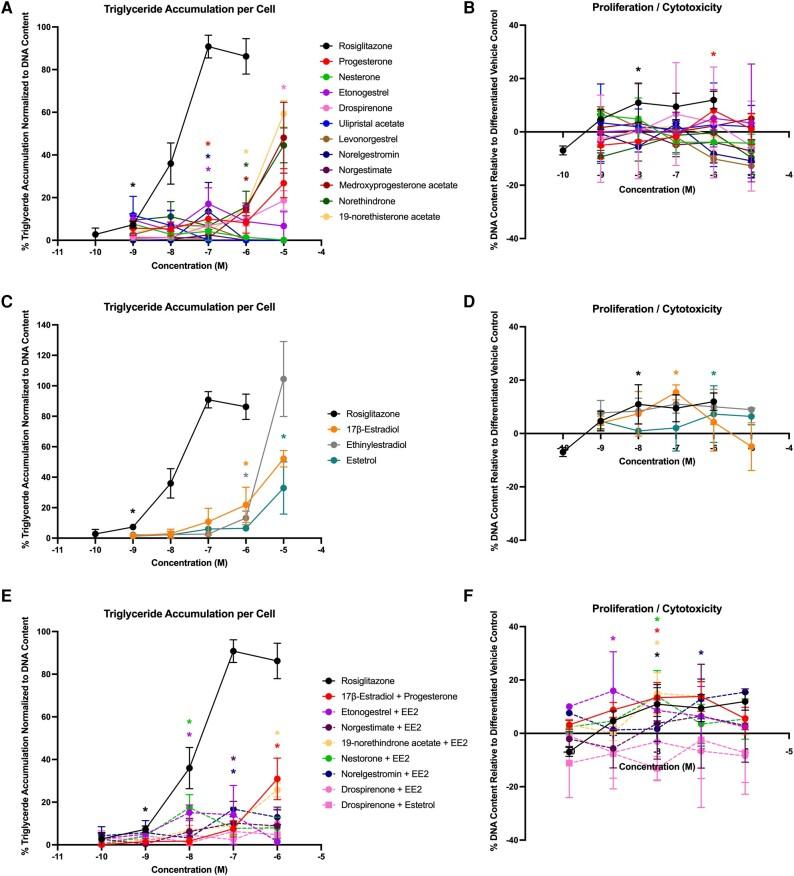
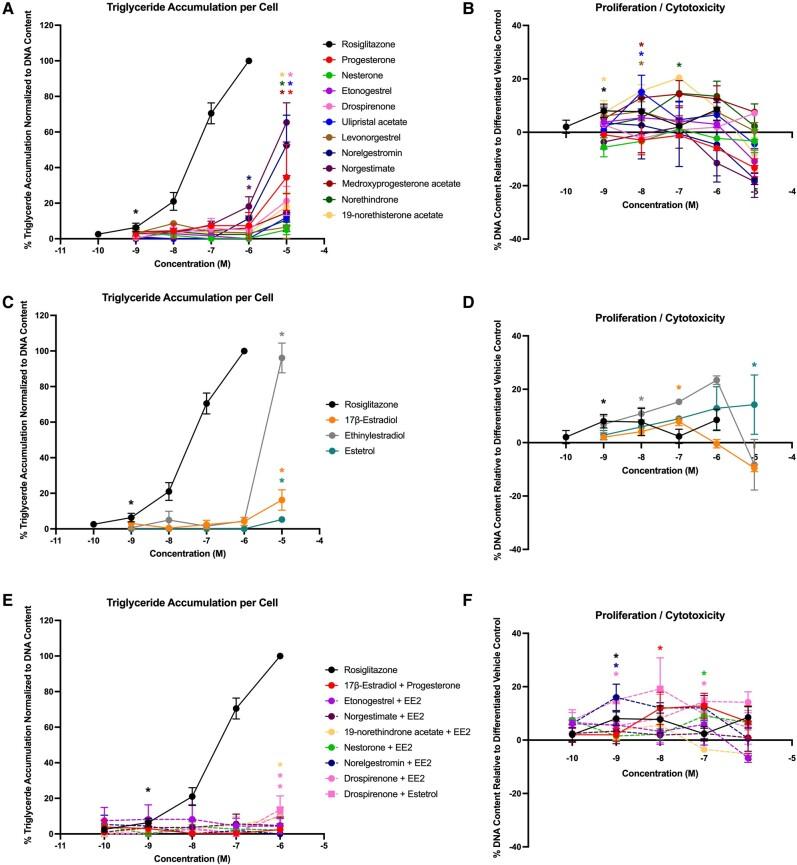
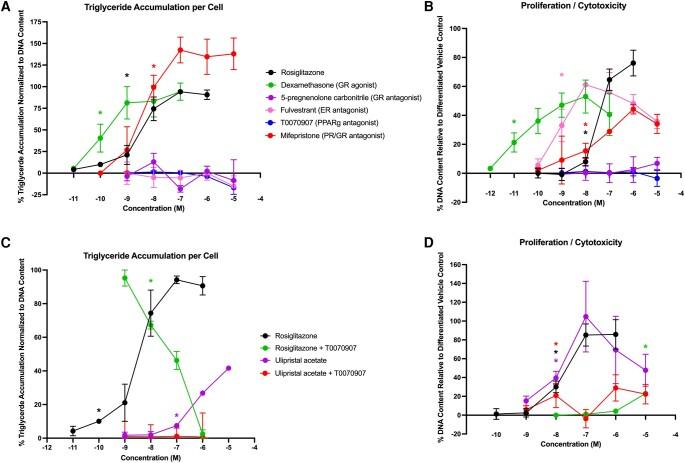
Hormonal contraceptives are widely prescribed due to their effectiveness and convenience and have become an integral part of family planning strategies worldwide. In the United States, approximately 65% of reproductive-aged women are estimated to be using contraceptive options, with approximately 33% using one or a combination of hormonal contraceptives. While these methods have undeniably contributed to improved reproductive health, recent studies have raised concerns regarding their potential effect on metabolic health. Despite widespread anecdotal reports, epidemiological research has been mixed as to whether hormonal contraceptives contribute to metabolic health effects. As such, the goals of this study were to assess the adipogenic activity of common hormonal contraceptive chemicals and their mixtures. Five different models of adipogenesis were used to provide a rigorous assessment of metabolism-disrupting effects. Interestingly, every individual contraceptive (both estrogens and progestins) and each mixture promoted significant adipogenesis (eg, triglyceride accumulation and/or preadipocyte proliferation). These effects appeared to be mediated in part through estrogen receptor signaling, particularly for the contraceptive mixtures, as cotreatment with fulvestrant acted to inhibit contraceptive-mediated proadipogenic effects on triglyceride accumulation. In conclusion, this research provides valuable insights into the complex interactions between hormonal contraceptives and adipocyte development. The results suggest that both progestins and estrogens within these contraceptives can influence adipogenesis, and the specific effects may vary based on the receptor disruption profiles. Further research is warranted to establish translation of these findings to in vivo models and to further assess causal mechanisms underlying these effects.
激素避孕药由于其有效性和便利性而被广泛开处方,已成为全球计划生育策略的重要组成部分。在美国,估计有 65%的育龄妇女正在使用避孕选择,其中约有 33%的人使用一种或多种激素避孕药。虽然这些方法无疑有助于改善生殖健康,但最近的研究引起了人们对它们对代谢健康潜在影响的关注。尽管有广泛的传闻报告,但流行病学研究对于激素避孕药是否会对代谢健康产生影响存在分歧。因此,这项研究的目的是评估常见激素避孕药化学物质及其混合物的成脂活性。使用了五种不同的成脂模型来对代谢干扰效应进行严格评估。有趣的是,每种单独的避孕药(雌激素和孕激素)和每种混合物都促进了明显的成脂作用(例如,甘油三酯积累和/或前脂肪细胞增殖)。这些效应似乎部分是通过雌激素受体信号传导介导的,特别是对于避孕混合物,因为用氟维司群共同处理可抑制避孕药介导的甘油三酯积累的促前脂生成作用。总之,这项研究提供了关于激素避孕药与脂肪细胞发育之间复杂相互作用的有价值的见解。结果表明,这些避孕药中的孕激素和雌激素都可以影响成脂作用,并且具体影响可能取决于受体阻断谱。需要进一步研究将这些发现转化为体内模型,并进一步评估这些作用的因果机制。





 Zotero 插件