
干细胞移植后肠道移植相关微血管病的内镜表现
Endoscopic manifestation of intestinal transplant-associated microangiopathy after stem cell transplantation.
作者信息
Iwamuro Masaya, Ennishi Daisuke, Fujii Nobuharu, Matsuoka Ken-Ichi, Tanaka Takehiro, Inokuchi Toshihiro, Hiraoka Sakiko, Otsuka Motoyuki
机构信息
Department of Gastroenterology and Hepatology, Okayama University Graduate School of Medicine, Dentistry, and Pharmaceutical Sciences, 2-5- 1 Shikata-cho, Kita-ku, 700-8558, Okayama, Okayama, Japan.
Department of Hematology and Oncology, Okayama University Graduate School of Medicine, Dentistry, and Pharmaceutical Sciences, 700-8558, Okayama, Japan.
出版信息
BMC Gastroenterol. 2024 Apr 22;24(1):140. doi: 10.1186/s12876-024-03221-y.
BACKGROUND
Endoscopic features of intestinal transplant-associated microangiopathy (iTAM) have not been comprehensively investigated. This study aimed to examine the endoscopic characteristics of patients diagnosed with iTAM.
METHODS
This retrospective analysis included 14 patients pathologically diagnosed with iTAM after stem cell transplantation for hematolymphoid neoplasms (n = 13) or thalassemia (n = 1). The sex, age at diagnosis, endoscopic features, and prognosis of each patient were assessed. Serological markers for diagnosing transplant-associated thrombotic microangiopathy were also evaluated.
RESULTS
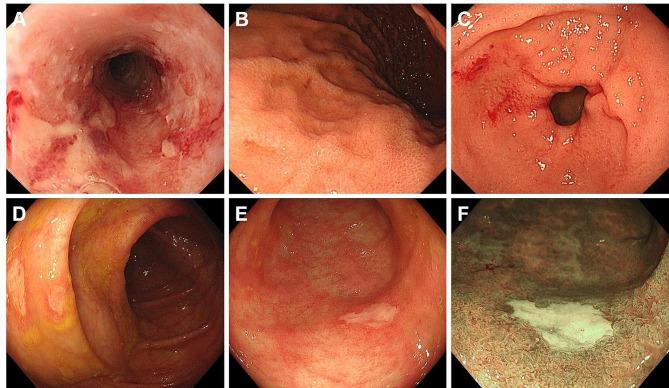
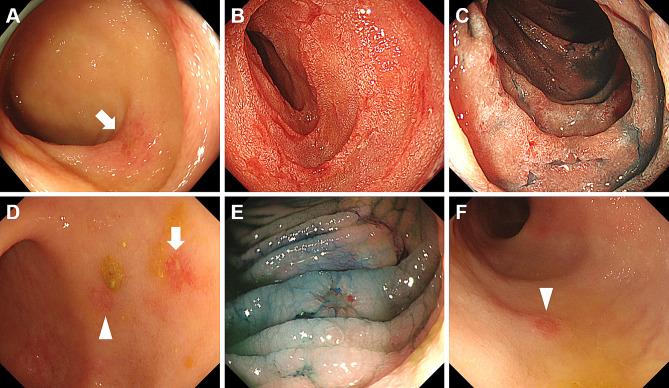
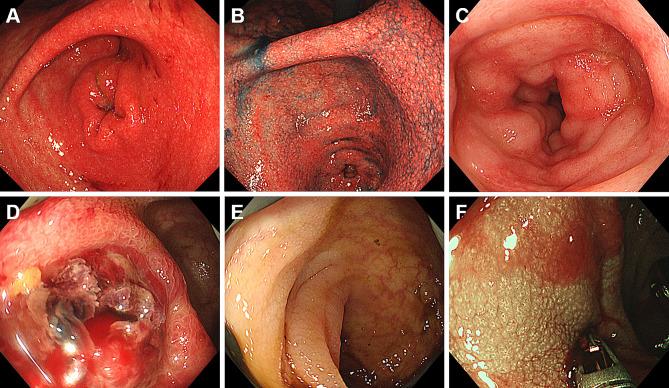
The mean age at the time of iTAM diagnosis was 40.2 years. Patients diagnosed based on the pathognomonic pathological changes of iTAM presented with diverse symptoms at the times of endoscopic examinations, including diarrhea (n = 10), abdominal pain (n = 5), nausea (n = 4), appetite loss (n = 2), bloody stools (n = 2), abdominal discomfort (n = 1), and vomiting (n = 1). At the final follow-up, six patients survived, while eight patients succumbed, with a median time of 100.5 days (range: 52-247) post-diagnosis. Endoscopic manifestations included erythematous mucosa (n = 14), erosions (n = 13), ulcers (n = 9), mucosal edema (n = 9), granular mucosa (n = 9), and villous atrophy (n = 4). Erosions and/or ulcers were primarily observed in the colon (10/14, 71%), followed by the ileum (9/13, 69%), stomach (4/10, 40%), cecum (5/14, 36%), duodenum (3/10, 30%), rectum (4/14, 29%), and esophagus (1/10, 10%). Cytomegalovirus infection (n = 4) and graft-versus-host disease (n = 2) coexisted within the gastrointestinal tract. Patients had de novo prolonged or progressive thrombocytopenia (6/14, 43%), decreased hemoglobin concentration (4/14, 29%), reduced serum haptoglobin level (3/14, 21%), and a sudden and persistent increase in lactate dehydrogenase level (2/14, 14%). Peripheral blood samples from 12 patients were evaluated for schistocytes, with none exceeding 4%.
CONCLUSIONS
This study provides a comprehensive exploration of the endoscopic characteristics of iTAM. Notably, all patients exhibited erythematous mucosa throughout the gastrointestinal tract, accompanied by prevalent manifestations, such as erosions (93%), ulcers (64%), mucosal edema (64%), granular mucosa (64%), and villous atrophy (29%). Because of the low positivity for serological markers of transplant-associated thrombotic microangiopathy in patients with iTAM, endoscopic evaluation and biopsy of these lesions are crucial, even in the absence of these serological features.
背景
肠道移植相关微血管病(iTAM)的内镜特征尚未得到全面研究。本研究旨在探讨诊断为iTAM的患者的内镜特征。
方法
这项回顾性分析纳入了14例经病理诊断为iTAM的患者,这些患者因血液淋巴系统肿瘤(n = 13)或地中海贫血(n = 1)接受干细胞移植。评估了每位患者的性别、诊断时年龄、内镜特征和预后。还评估了用于诊断移植相关血栓性微血管病的血清学标志物。
结果
iTAM诊断时的平均年龄为40.2岁。基于iTAM的特征性病理变化诊断的患者在内镜检查时出现多种症状,包括腹泻(n = 10)、腹痛(n = 5)、恶心(n = 4)、食欲减退(n = 2)、便血(n = 2)、腹部不适(n = 1)和呕吐(n = 1)。在最后一次随访时,6例患者存活,8例患者死亡,诊断后的中位时间为100.5天(范围:52 - 247天)。内镜表现包括黏膜红斑(n = 14)、糜烂(n = 13)、溃疡(n = 9)、黏膜水肿(n = 9)、颗粒状黏膜(n = 9)和绒毛萎缩(n = 4)。糜烂和/或溃疡主要见于结肠(10/14,71%),其次是回肠(9/13,69%)、胃(4/10,40%)、盲肠(5/14,36%)、十二指肠(3/10,30%)、直肠(4/14,29%)和食管(1/10,10%)。胃肠道内存在巨细胞病毒感染(n = 4)和移植物抗宿主病(n = 2)。患者出现新发的持续性或进行性血小板减少(6/14,43%)、血红蛋白浓度降低(4/14,29%)、血清触珠蛋白水平降低(3/14,21%)以及乳酸脱氢酶水平突然持续升高(2/14,14%)。对12例患者的外周血样本进行了裂体细胞评估,均未超过4%。
结论
本研究全面探讨了iTAM的内镜特征。值得注意的是,所有患者胃肠道均出现黏膜红斑,并伴有糜烂(93%)、溃疡(64%)、黏膜水肿(64%)、颗粒状黏膜(64%)和绒毛萎缩(29%)等常见表现。由于iTAM患者移植相关血栓性微血管病血清学标志物的阳性率较低,即使没有这些血清学特征,对这些病变进行内镜评估和活检也至关重要。


 Zotero 插件