
携带胚系致病性 CHEK2 变异的个体中垂体腺瘤的患病率增加。
Increased Prevalence of Germline Pathogenic CHEK2 Variants in Individuals With Pituitary Adenomas.
机构信息
Endocrine & Metabolic Unit, Royal Adelaide Hospital, Adelaide, SA 5000, Australia.
South Australian Adult Genetics Unit, Royal Adelaide Hospital, Adelaide, SA 5000, Australia.
出版信息
J Clin Endocrinol Metab. 2024 Oct 15;109(11):2720-2728. doi: 10.1210/clinem/dgae268.
CONTEXT
CHEK2 is a cell cycle checkpoint regulator gene with a long-established role as a clinically relevant, moderate risk breast cancer predisposition gene, with greater risk ascribed to truncating variants than missense variants.
OBJECTIVE
To assess the rate and pathogenicity of CHEK2 variants amongst individuals with pituitary adenomas (PAs).
METHODS
We assessed 165 individuals with PAs for CHEK2 variants. The study population comprised a primary cohort of 29 individuals who underwent germline and tumor whole-exome sequencing, and a second, independent cohort of 136 individuals who had a targeted next-generation sequencing panel performed on both germline and tumor DNA (n = 52) or germline DNA alone (n = 84).
RESULTS
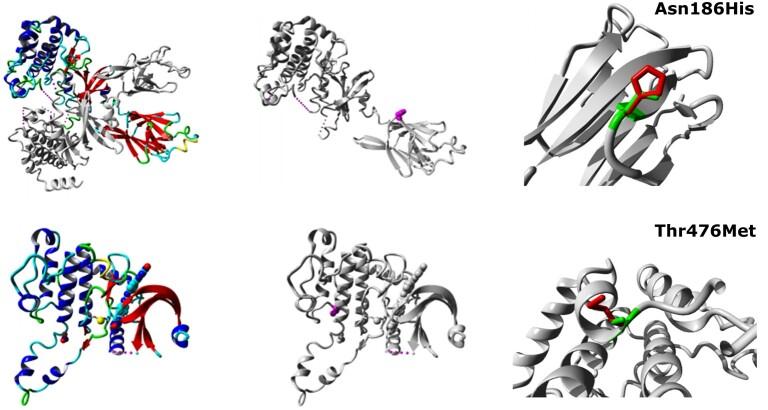
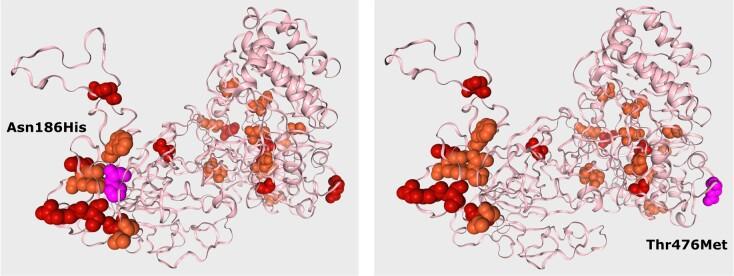
We identified rare, coding, nonsynonymous germline CHEK2 variants amongst 3 of 29 (10.3%) patients in our primary cohort, and in 5 of 165 (3.0%) patients overall, with affected patients having a range of PA types (prolactinoma, thyrotropinoma, somatotropinoma, and nonfunctioning PA). No somatic variants were identified. Two variants were definitive null variants (c.1100delC, c.444 + 1G > A), classified as pathogenic. Two variants were missense variants (p.Asn186His, p.Thr476Met), classified as likely pathogenic. Even when considering the null variants only, the rate of CHEK2 variants was higher in our cohort compared to national control data (1.8% vs 0.5%; P = .049).
CONCLUSION
This is the first study to suggest a role for the breast cancer predisposition gene, CHEK2, in pituitary tumorigenesis, with pathogenic/likely pathogenic variants found in 3% of patients with PAs. As PAs are relatively common and typically lack classic autosomal dominant family histories, risk alleles-such as these variants found in CHEK2-might be a significant contributor to PA risk in the general population.
背景
CHEK2 是细胞周期检查点调节基因,作为一种具有临床相关性的中度风险乳腺癌易感性基因,其作用已得到长期确立,截断变异比错义变异赋予更大的风险。
目的
评估 CHEK2 变异在垂体腺瘤(PA)患者中的发生率和致病性。
方法
我们评估了 165 例 PA 患者的 CHEK2 变异情况。研究人群包括 29 例接受种系和肿瘤全外显子组测序的原发性队列,以及另外 136 例接受种系和肿瘤 DNA 靶向下一代测序的独立队列(n=52)或仅种系 DNA(n=84)。
结果
我们在原发性队列的 29 例患者中发现了 3 例(10.3%)罕见的、编码的、非同义的种系 CHEK2 变异,在 165 例患者中发现了 5 例(3.0%),受影响的患者有多种 PA 类型(泌乳素瘤、促甲状腺素瘤、生长激素瘤和无功能 PA)。未发现体细胞变异。两个变异是明确的无功能变异(c.1100delC,c.444+1G>A),被归类为致病性。两个变异是错义变异(p.Asn186His,p.Thr476Met),被归类为可能致病性。即使只考虑无功能变异,我们的队列中 CHEK2 变异的发生率也高于全国对照数据(1.8%对 0.5%;P=0.049)。
结论
这是第一项表明乳腺癌易感性基因 CHEK2 在垂体肿瘤发生中的作用的研究,在 3%的 PA 患者中发现了致病性/可能致病性的变异。由于 PA 相对常见,且通常缺乏经典的常染色体显性家族史,风险等位基因,如 CHEK2 中的这些变异,可能是一般人群中 PA 风险的重要因素。

 Zotero 插件