
中国癌症患者的经济毒性及其危险因素:一项全国性多中心研究。
Financial toxicity and its risk factors among patients with cancer in China: A nationwide multisite study.
作者信息
Xu Binbin, So Winnie K W, Choi Kai Chow, Huang Yu, Liu Mei, Qiu Lanxiang, Tan Jianghong, Tao Hua, Yan Keli, Yang Fei
机构信息
School of Nursing, Hunan University of Chinese Medicine, Changsha, China.
The Nethersole School of Nursing, The Chinese University of Hong Kong, Hong Kong SAR, China.
出版信息
Asia Pac J Oncol Nurs. 2024 Mar 15;11(5):100443. doi: 10.1016/j.apjon.2024.100443. eCollection 2024 May.
OBJECTIVE
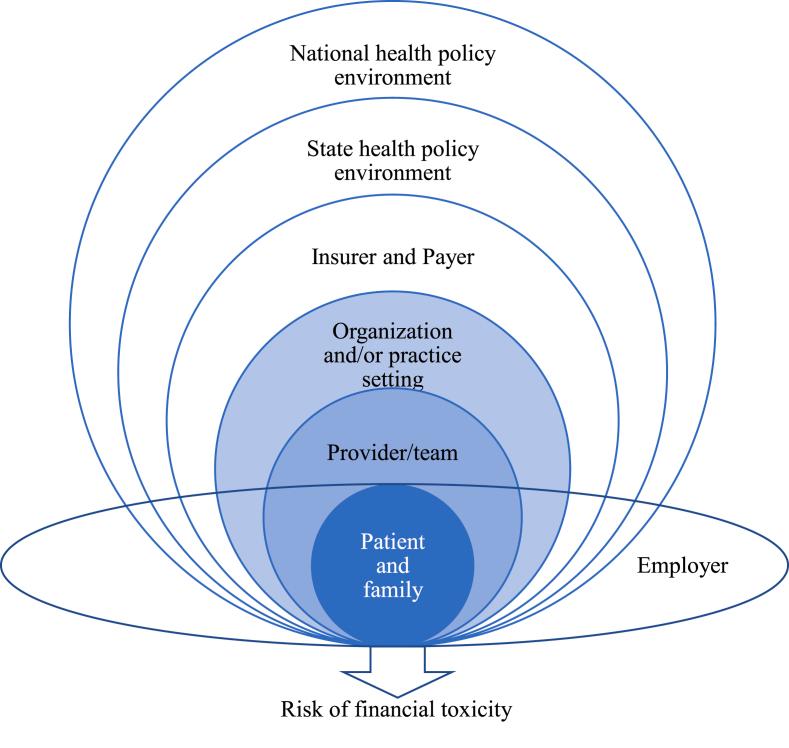
We assessed financial toxicity (FT) among Chinese patients with cancer and investigated associated risk factors guided by a multilevel conceptual framework.
METHODS
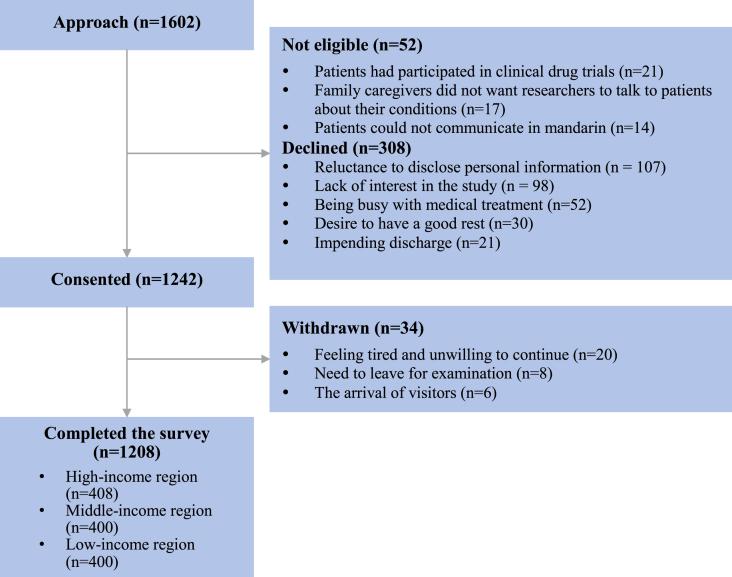
Applying multistage stratified sampling, we selected six tertiary and six secondary hospitals across three economically diverse provinces in China. From February to October 2022, 1208 patients with cancer participated. FT was measured using the COmprehensive Score for financial Toxicity (COST), with 28 potential risk factors identified at multilevel. Multiple regression analysis was used for risk factor identification.
RESULTS
FT prevalence was 82.6% (95% confidence interval [CI]: 80.5%, 84.8%), with high FT (COST score ≤ 18.5) observed in 40.9% of participants (95% CI: 38.1%, 43.7%). Significant risk factors included younger age at cancer diagnosis, unmarried status, low annual household income, negative impact of cancer on participants' or family caregiver's work, advanced cancer stage, longer hospital stay for cancer treatment or treatment-related side effects, high perceived stress, poor emotional/informational support, lack of social medical insurance or having urban and rural resident basic medical insurance, lack of commercial medical insurance, tertiary hospital treatment, and inadequate cost discussions with healthcare providers (all < 0.05).
CONCLUSIONS
Cancer-related FT is prevalent in China, contributing to disparities in cancer care access and health-related outcomes. The risk factors associated with cancer-related FT encompasses multilevel, including patient/family, provider/practice, and payer/policy levels. There is an urgent need for collective efforts by patients, healthcare providers, policymakers, and insurers to safeguard the financial security and well-being of individuals affected by cancer, promoting health equities in the realm of cancer care.
目的
我们评估了中国癌症患者的经济毒性(FT),并在一个多层次概念框架的指导下调查了相关风险因素。
方法
采用多阶段分层抽样,我们在中国三个经济差异较大的省份选取了6家三级医院和6家二级医院。2022年2月至10月,1208例癌症患者参与研究。使用经济毒性综合评分(COST)来衡量FT,在多个层面识别出28个潜在风险因素。采用多元回归分析进行风险因素识别。
结果
FT患病率为82.6%(95%置信区间[CI]:80.5%,84.8%),40.9%的参与者(95%CI:38.1%,43.7%)观察到高FT(COST评分≤18.5)。显著风险因素包括癌症诊断时年龄较小、未婚状态、家庭年收入低、癌症对参与者或家庭照顾者工作的负面影响、癌症晚期、癌症治疗或治疗相关副作用导致的住院时间延长、高感知压力、情感/信息支持不足、缺乏社会医疗保险或拥有城乡居民基本医疗保险、缺乏商业医疗保险、在三级医院治疗以及与医疗服务提供者的费用讨论不足(均P<0.05)。
结论
癌症相关的FT在中国普遍存在,导致癌症护理可及性和健康相关结果的差异。与癌症相关的FT相关的风险因素包括多个层面,包括患者/家庭、提供者/机构和支付者/政策层面。患者、医疗服务提供者、政策制定者和保险公司迫切需要共同努力,保障受癌症影响个体的经济安全和福祉,促进癌症护理领域的健康公平。

 Zotero 插件