
SWI/SNF 染色质重塑复合物:代谢的关键调节因子。
The SWI/SNF chromatin remodeling complex: a critical regulator of metabolism.
机构信息
Stowers Institute of Medical Research, 1000 E 50th Street, Kansas City, MO 64118, U.S.A.
出版信息
Biochem Soc Trans. 2024 Jun 26;52(3):1327-1337. doi: 10.1042/BST20231141.
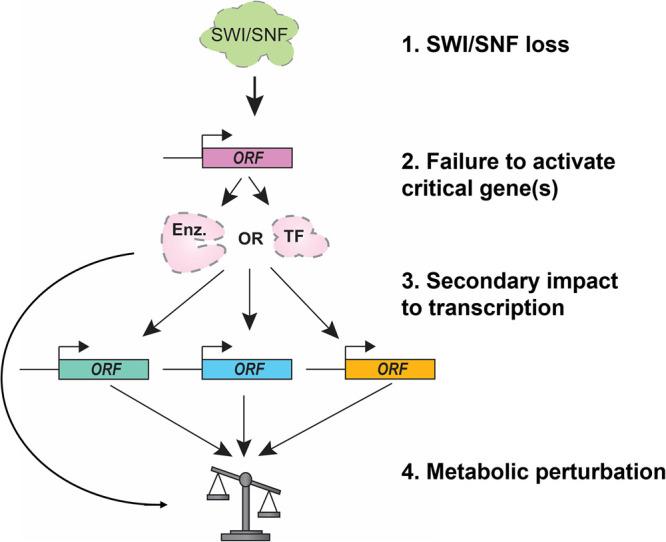
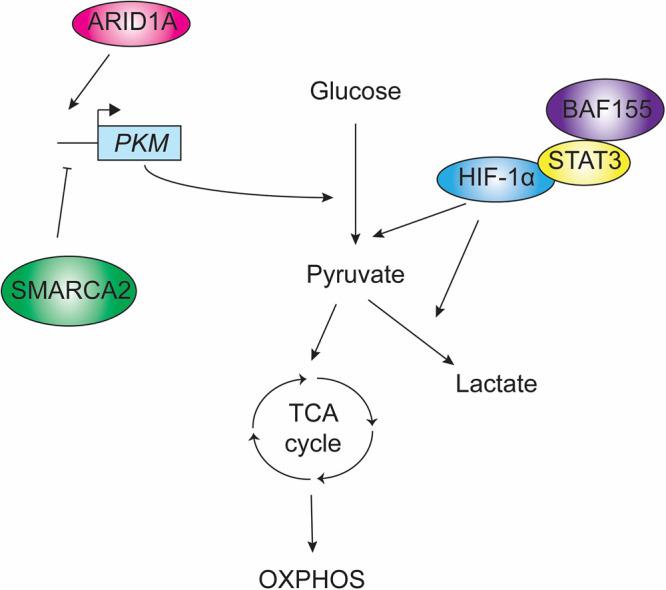
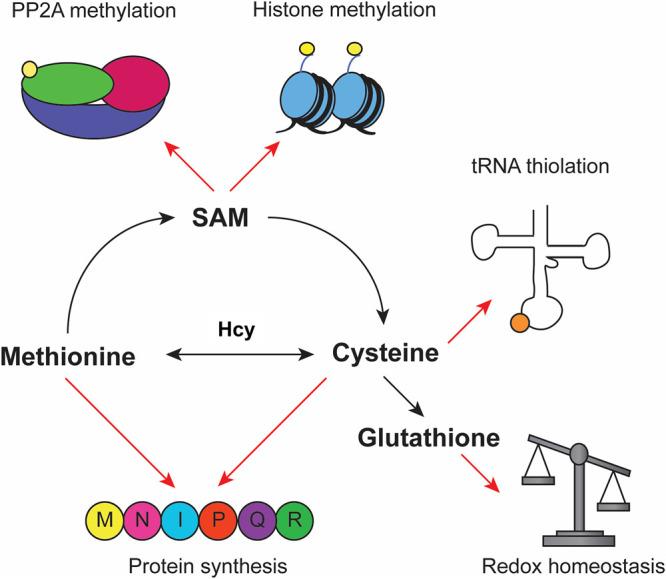
The close relationship between chromatin and metabolism has been well-studied in recent years. Many metabolites have been found to be cofactors used to modify chromatin, and these modifications can in turn affect gene transcription. One chromatin-associated factor responsible for regulating transcription is the SWI/SNF complex, an ATP-dependent chromatin remodeler conserved throughout eukaryotes. SWI/SNF was originally described in yeast as regulating genes involved in carbon source metabolism and mating type switching, and its mammalian counterpart has been extensively studied for its role in diseases such as cancer. The yeast SWI/SNF complex is closely associated with activation of stress response genes, many of which have metabolic functions. It is now recognized that this is a conserved function of the complex, and recent work has shown that mammalian SWI/SNF is also a key regulator of metabolic transcription. Emerging evidence suggests that loss of SWI/SNF introduces vulnerabilities to cells due to this metabolic influence, and that this may present opportunities for treatment of SWI/SNF-deficient cancers.
近年来,染色质与代谢之间的密切关系已经得到了深入研究。许多代谢物已被发现是用于修饰染色质的辅因子,而这些修饰又可以反过来影响基因转录。负责调节转录的一个与染色质相关的因子是 SWI/SNF 复合物,它是一种在真核生物中保守的依赖于 ATP 的染色质重塑因子。SWI/SNF 最初在酵母中被描述为调节与碳源代谢和交配型转换相关的基因,其在癌症等疾病中的作用已被广泛研究。酵母 SWI/SNF 复合物与应激反应基因的激活密切相关,其中许多基因具有代谢功能。现在人们已经认识到,这是该复合物的一个保守功能,最近的研究表明,哺乳动物 SWI/SNF 也是代谢转录的关键调节剂。新出现的证据表明,由于这种代谢影响,SWI/SNF 的缺失会给细胞带来脆弱性,这可能为治疗 SWI/SNF 缺陷型癌症提供机会。

 Zotero 插件