
基于代谢组学的生物标志物验证流程中的挑战。
Challenges in the Metabolomics-Based Biomarker Validation Pipeline.
作者信息
Li Shenghan, Looby Nikita, Chandran Vinod, Kulasingam Vathany
机构信息
Division of Rheumatology, Psoriatic Arthritis Program, Schroeder Arthritis Program, University Health Network, Toronto, ON M5T 0S8, Canada.
Department of Laboratory Medicine and Pathobiology, University of Toronto, Toronto, ON M5S 1A1, Canada.
出版信息
Metabolites. 2024 Apr 3;14(4):200. doi: 10.3390/metabo14040200.
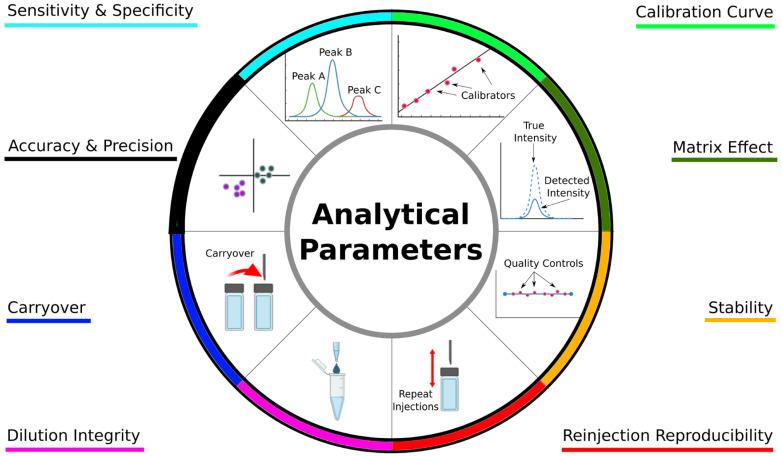
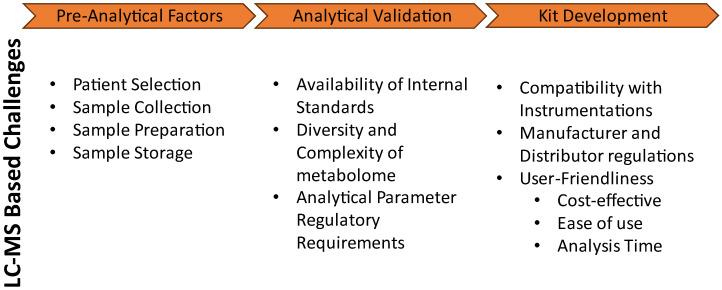
As end-products of the intersection between the genome and environmental influences, metabolites represent a promising approach to the discovery of novel biomarkers for diseases. However, many potential biomarker candidates identified by metabolomics studies fail to progress beyond analytical validation for routine implementation in clinics. Awareness of the challenges present can facilitate the development and advancement of innovative strategies that allow improved and more efficient applications of metabolite-based markers in clinical settings. This minireview provides a comprehensive summary of the pre-analytical factors, required analytical validation studies, and kit development challenges that must be resolved before the successful translation of novel metabolite biomarkers originating from research. We discuss the necessity for strict protocols for sample collection, storage, and the regulatory requirements to be fulfilled for a bioanalytical method to be considered as analytically validated. We focus especially on the blood as a biological matrix and liquid chromatography coupled with tandem mass spectrometry as the analytical platform for biomarker validation. Furthermore, we examine the challenges of developing a commercially viable metabolomics kit for distribution. To bridge the gap between the research lab and clinical implementation and utility of relevant metabolites, the understanding of the translational challenges for a biomarker panel is crucial for more efficient development of metabolomics-based precision medicine.
作为基因组与环境影响相互作用的终产物,代谢物是发现疾病新型生物标志物的一种有前景的方法。然而,代谢组学研究鉴定出的许多潜在生物标志物候选物在临床常规应用的分析验证阶段之后就无法继续推进。认识到存在的挑战有助于开发和推进创新策略,从而在临床环境中更好、更有效地应用基于代谢物的标志物。本综述对源自研究的新型代谢物生物标志物成功转化之前必须解决的分析前因素、所需的分析验证研究以及试剂盒开发挑战进行了全面总结。我们讨论了严格的样本采集、储存方案的必要性,以及生物分析方法被视为经过分析验证所需满足的监管要求。我们特别关注作为生物基质的血液以及作为生物标志物验证分析平台的液相色谱-串联质谱联用。此外,我们审视了开发用于分发的具有商业可行性的代谢组学试剂盒所面临的挑战。为了弥合研究实验室与相关代谢物的临床应用及效用之间的差距,了解生物标志物组合的转化挑战对于更高效地开发基于代谢组学的精准医学至关重要。
 Zotero 插件