
肿瘤中的DNA损伤反应并非增殖刺激,而是需要支持性医疗护理的DNA修复作用。
DNA Damage Responses in Tumors Are Not Proliferative Stimuli, but Rather They Are DNA Repair Actions Requiring Supportive Medical Care.
作者信息
Suba Zsuzsanna
机构信息
Department of Molecular Pathology, National Institute of Oncology, Ráth György Str. 7-9, H-1122 Budapest, Hungary.
出版信息
Cancers (Basel). 2024 Apr 19;16(8):1573. doi: 10.3390/cancers16081573.
BACKGROUND
In tumors, somatic mutagenesis presumably drives the DNA damage response (DDR) via altered regulatory pathways, increasing genomic instability and proliferative activity. These considerations led to the standard therapeutic strategy against cancer: the disruption of mutation-activated DNA repair pathways of tumors.
PURPOSE
Justifying that cancer cells are not enemies to be killed, but rather that they are ill human cells which have the remnants of physiologic regulatory pathways.
RESULTS
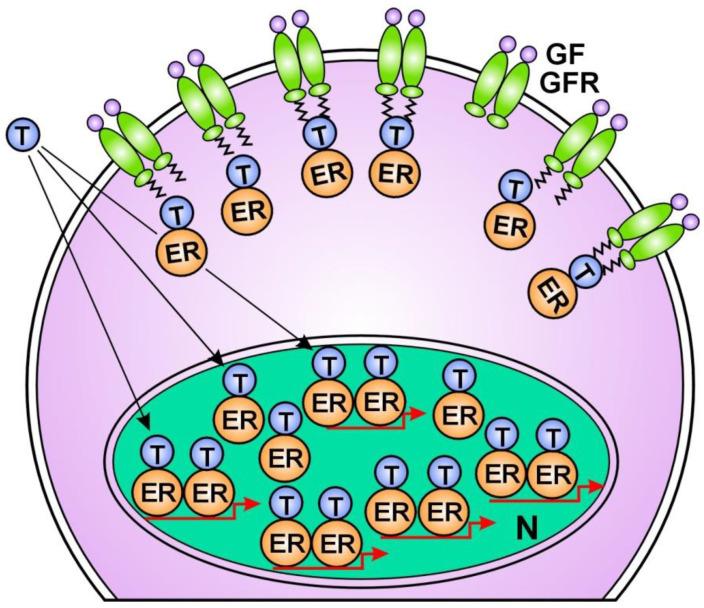
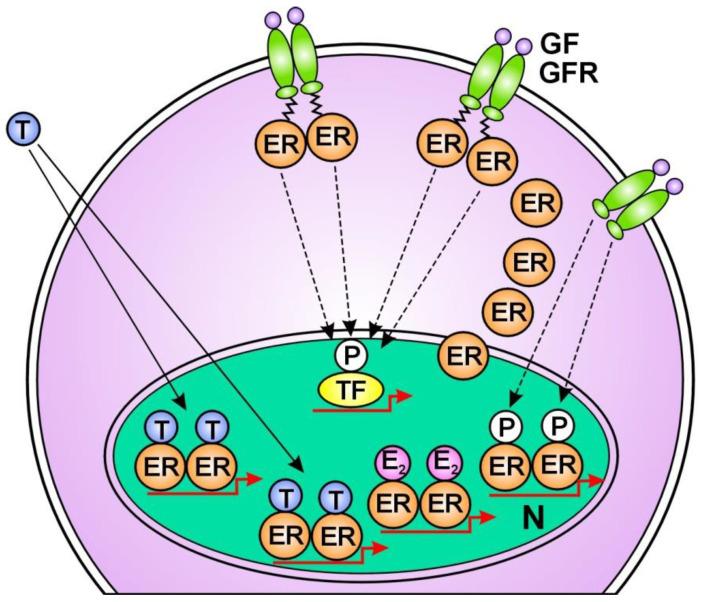
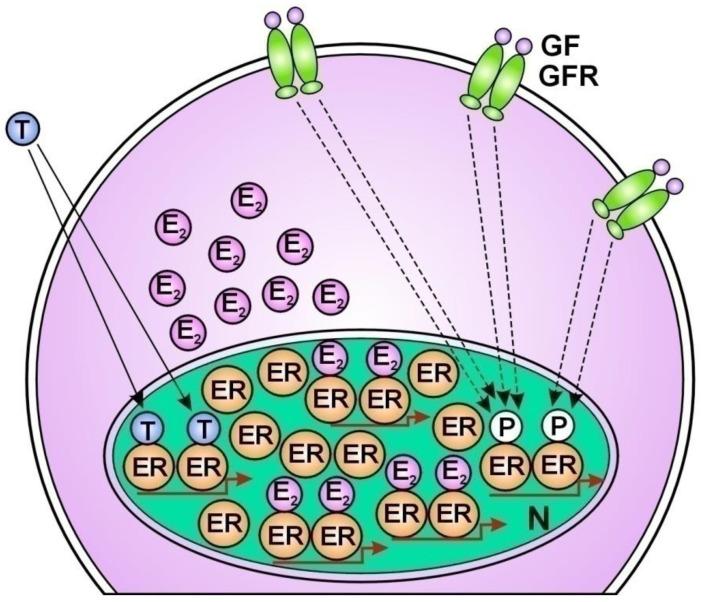
- Genomic instability and cancer development may be originated from a flaw in estrogen signaling rather than excessive estrogen signaling; 2. Healthy cells with genomic instability exhibit somatic mutations, helping DNA restitution; 3. Somatic mutations in tumor cells aim for the restoration of DNA damage, rather than further genomic derangement; 4. In tumors, estrogen signaling drives the pathways of DNA stabilization, leading to apoptotic death; 5. In peritumoral cellular infiltration, the genomic damage of the tumor induces inflammatory cytokine secretion and increased estrogen synthesis. In the inflammatory cells, an increased growth factor receptor (GFR) signaling confers the unliganded activation of estrogen receptors (ERs); 6. In breast cancer cells responsive to genotoxic therapy, constitutive mutations help the upregulation of estrogen signaling and consequential apoptosis. In breast tumors non-responsive to genotoxic therapy, the possibilities for ER activation via either liganded or unliganded pathways are exhausted, leading to farther genomic instability and unrestrained proliferation.
CONCLUSIONS
Understanding the real character and behavior of human tumors at the molecular level suggests that we should learn the genome repairing methods of tumors and follow them by supportive therapy, rather than provoking additional genomic damages.
背景
在肿瘤中,体细胞突变可能通过改变调控途径驱动DNA损伤反应(DDR),增加基因组不稳定性和增殖活性。这些考虑因素促成了针对癌症的标准治疗策略:破坏肿瘤中突变激活的DNA修复途径。
目的
证明癌细胞不是要被杀死的敌人,而是具有生理调控途径残余的患病人体细胞。
结果
- 基因组不稳定性和癌症发展可能源于雌激素信号传导缺陷而非雌激素信号传导过度;2. 具有基因组不稳定性的健康细胞表现出体细胞突变,有助于DNA修复;3. 肿瘤细胞中的体细胞突变旨在修复DNA损伤,而非进一步导致基因组紊乱;4. 在肿瘤中,雌激素信号传导驱动DNA稳定途径,导致凋亡死亡;5. 在肿瘤周围细胞浸润中,肿瘤的基因组损伤诱导炎性细胞因子分泌并增加雌激素合成。在炎性细胞中,生长因子受体(GFR)信号传导增强赋予雌激素受体(ERs)非配体激活;6. 在对基因毒性疗法有反应的乳腺癌细胞中,组成性突变有助于上调雌激素信号传导并导致凋亡。在对基因毒性疗法无反应的乳腺肿瘤中,通过配体或非配体途径激活ER的可能性已耗尽,导致更远的基因组不稳定和不受控制的增殖。
结论
在分子水平上了解人类肿瘤的真实特征和行为表明,我们应该学习肿瘤的基因组修复方法并通过支持性疗法加以遵循,而不是引发额外的基因组损伤。
 Zotero 插件