
钾动力学对血液透析治疗中心肌细胞搏动的影响。
The Impact of Potassium Dynamics on Cardiomyocyte Beating in Hemodialysis Treatment.
作者信息
Hamada Hiroyuki, Tomo Tadashi, Kim Sung-Teh, Yamashita Akihiro C
机构信息
Department of Bioscience and Biotechnology, Faculty of Agriculture, Kyushu University, 744 Motooka, Nishi-ku, Fukuoka-City 819-0395, Japan.
Clinical Engineering Research Center, Faculty of Medicine, Oita University, 1-1 Idai-Gaoka, Hasama-Machi, Yufu-City 879-5593, Japan.
出版信息
J Clin Med. 2024 Apr 15;13(8):2289. doi: 10.3390/jcm13082289.
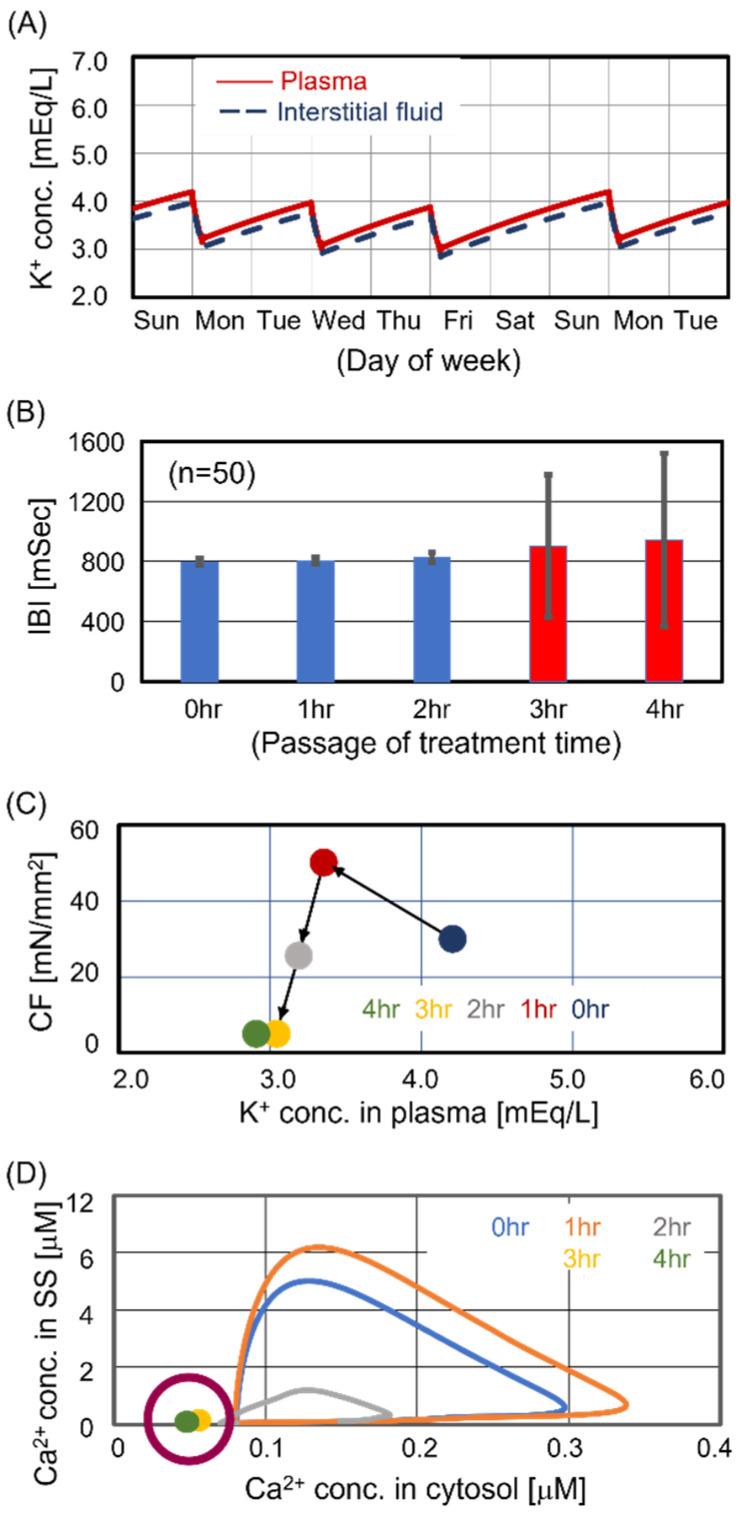
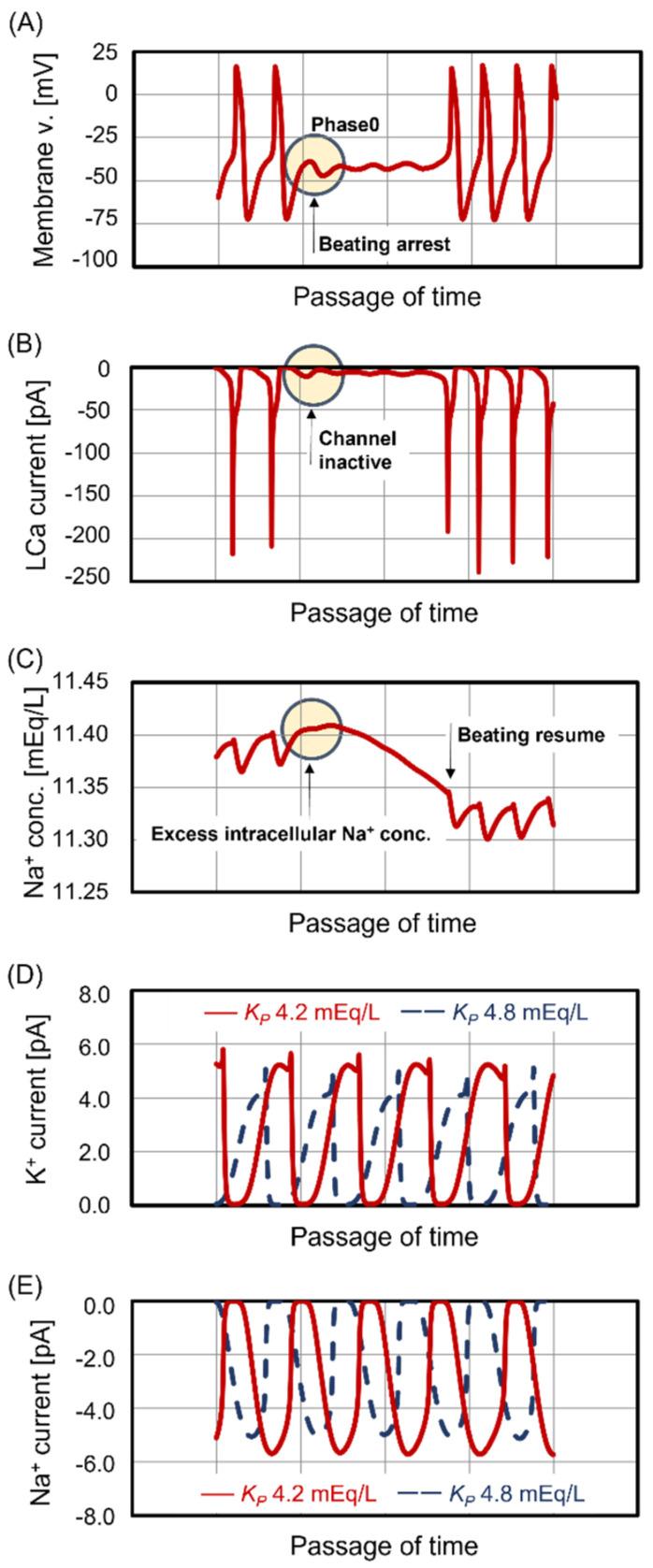
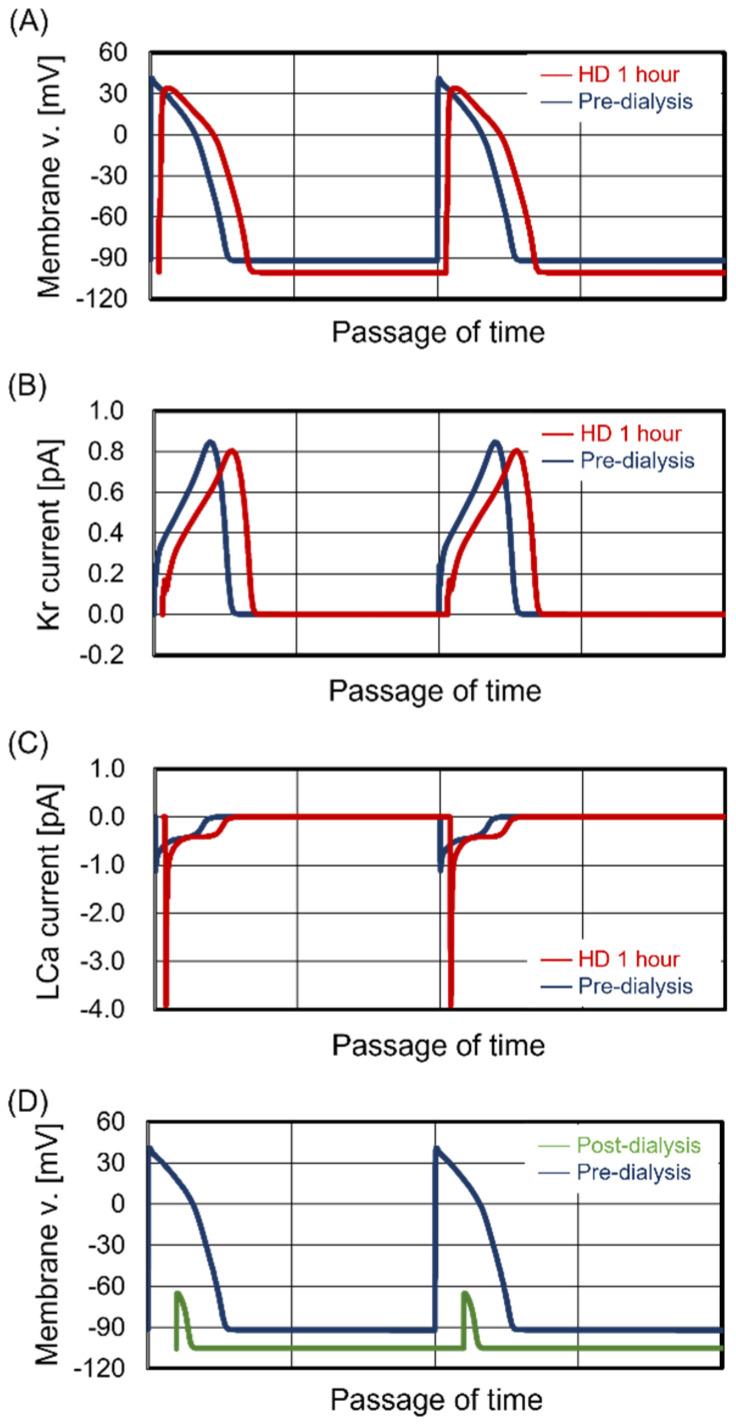
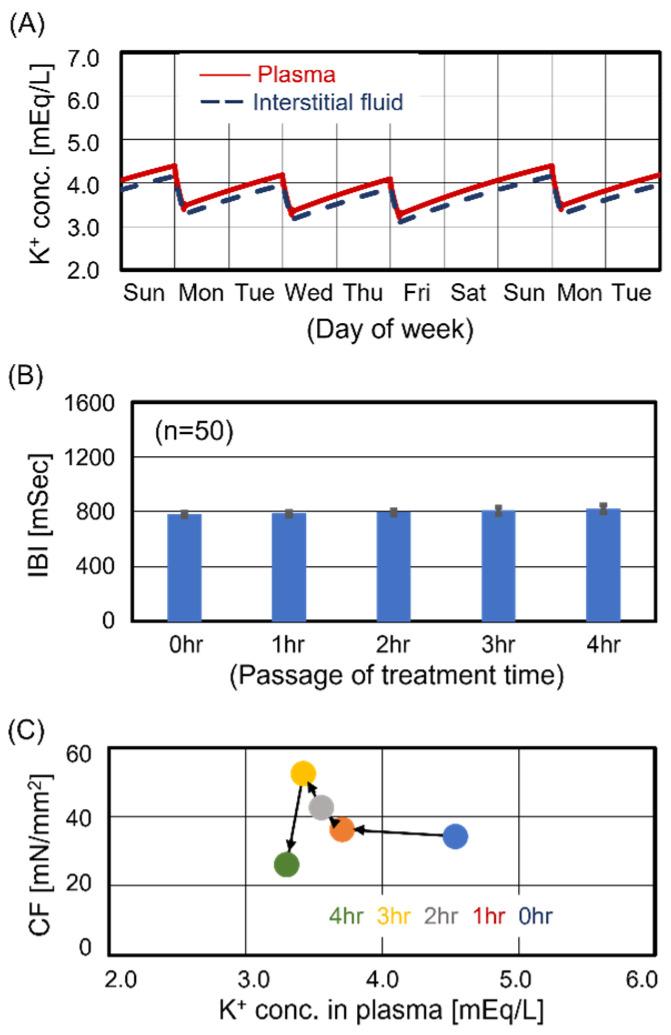
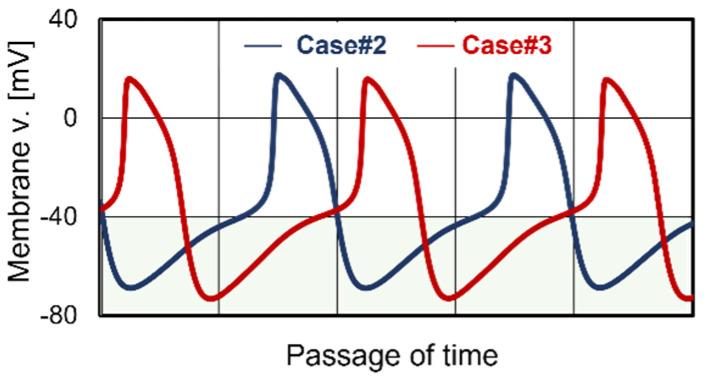
: Observational studies of intermittent hemodialysis therapy have reported that the excess decrease in K concentration in plasma (KP) during treatment is associated with the destabilization of cardiac function. Elucidating the mechanism by which the decrease in KP impairs myocardial excitation is indispensable for a deeper understanding of prescription design. : In this study, by using an electrophysiological mathematical model, we investigated the relationship between KP dynamics and cardiomyocyte excitability for the first time. : The excess decrease in KP during treatment destabilized cardiomyocyte excitability through the following events: (1) a decrease in KP led to the prolongation of the depolarization phase of ventricular cells due to the reduced potassium efflux rate of the Kr channel, temporarily enhancing contraction force; (2) an excess decrease in KP activated the transport of K and Na through the funny channel in sinoatrial nodal cells, disrupting automaticity; (3) the excess decrease in KP also resulted in a significant decrease in the resting membrane potential of ventricular cells, causing contractile dysfunction. Avoiding an excess decrease in KP during treatment contributed to the maintenance of cardiomyocyte excitability. : The results of these mathematical analyses showed that it is necessary to implement personal prescription or optimal control of K concentration in dialysis fluid based on predialysis KP from the perspective of regulatory science in dialysis treatment.
间歇性血液透析治疗的观察性研究报告称,治疗期间血浆钾浓度(KP)过度下降与心脏功能不稳定有关。阐明KP下降损害心肌兴奋的机制对于深入理解处方设计不可或缺。
在本研究中,我们首次使用电生理数学模型研究了KP动态与心肌细胞兴奋性之间的关系。
治疗期间KP过度下降通过以下事件使心肌细胞兴奋性不稳定:(1)KP下降导致心室细胞去极化期延长,原因是Kr通道的钾外流速率降低,暂时增强收缩力;(2)KP过度下降激活了窦房结细胞中通过“funny”通道的钾和钠转运,扰乱了自律性;(3)KP过度下降还导致心室细胞静息膜电位显著降低,导致收缩功能障碍。避免治疗期间KP过度下降有助于维持心肌细胞兴奋性。
这些数学分析结果表明,从透析治疗监管科学的角度来看,有必要根据透析前的KP实施个性化处方或对透析液中的钾浓度进行优化控制。


 Zotero 插件