
金纳米颗粒联合激光照射治疗局限性前列腺癌的进展
A Step Forward for the Treatment of Localized Prostate Cancer Using Gold Nanoparticles Combined with Laser Irradiation.
作者信息
Pinho Sara, Ferreira-Gonçalves Tânia, Lopes Joana, Amaral Mariana Neves, Viana Ana S, Coelho João M P, Gaspar Maria Manuela, Reis Catarina Pinto
机构信息
Research Institute for Medicines, iMed.ULisboa-Faculty of Pharmacy, Universidade de Lisboa, Av. Professor Gama Pinto, 1649-003 Lisboa, Portugal.
Instituto de Biofísica e Engenharia Biomédica (IBEB), Faculdade de Ciências, Universidade de Lisboa, Campo Grande, 1749-016 Lisboa, Portugal.
出版信息
Int J Mol Sci. 2024 Apr 19;25(8):4488. doi: 10.3390/ijms25084488.
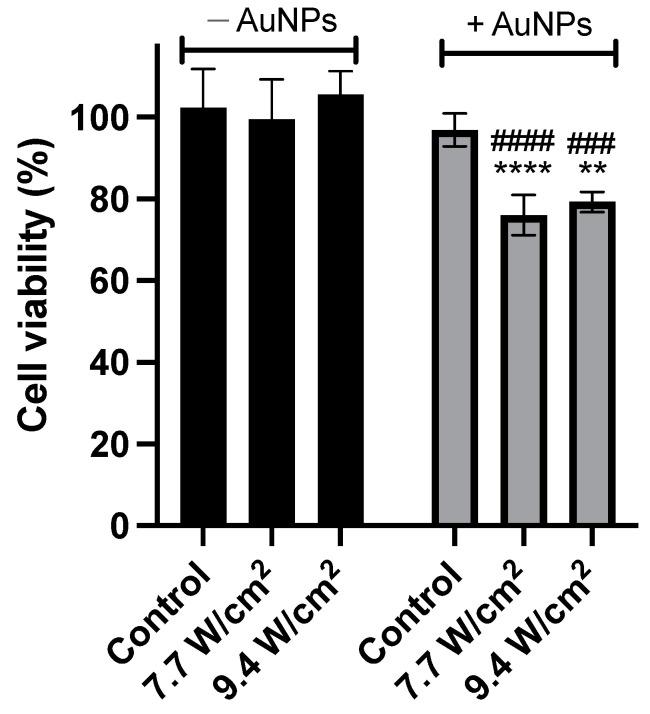
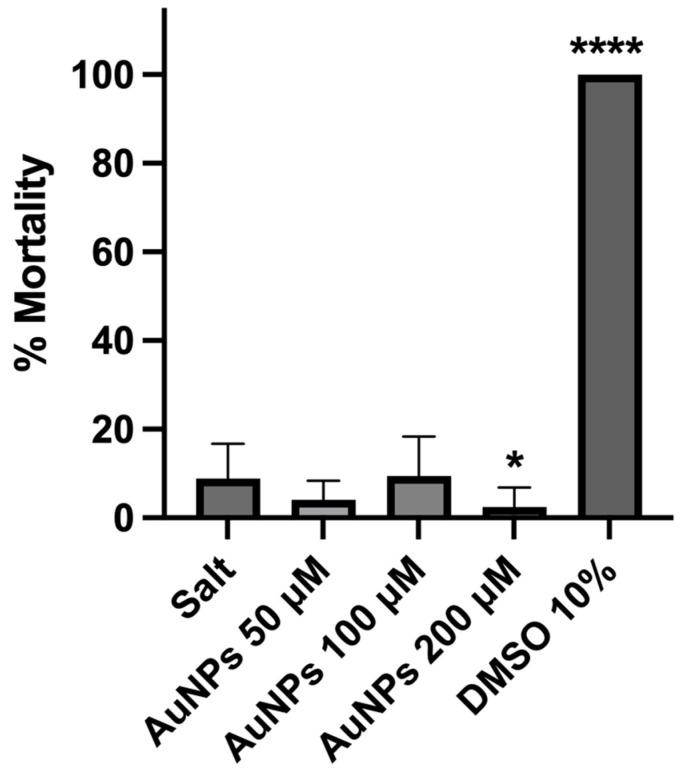
Prostate cancer (PCA) is the second most common cancer diagnosis in men and the fifth leading cause of death worldwide. The conventional treatments available are beneficial to only a few patients and, in those, some present adverse side effects that eventually affect the quality of life of most patients. Thus, there is an urgent need for effective, less invasive and targeted specific treatments for PCA. Photothermal therapy (PTT) is a minimally invasive therapy that provides a localized effect for tumour cell ablation by activating photothermal agents (PTA) that mediate the conversion of the light beam's energy into heat at the site. As tumours are unable to easily dissipate heat, they become more susceptible to temperature increases. In the PTT field, gold nanoparticles (AuNPs) have been attracting interest as PTA. The aim of this study was to formulate AuNPs capable of remaining retained in the tumour and subsequently generating heat at the tumour site. AuNPs were synthesized and characterized in terms of size, polydispersity index (PdI), zeta potential (ZP), morphology and the surface plasmon resonance (SPR). The safety of AuNPs and their efficacy were assessed using in vitro models. A preliminary in vivo safety assessment of AuNPs with a mean size lower than 200 nm was confirmed. The morphology was spherical-like and the SPR band showed good absorbance at the laser wavelength. Without laser, AuNPs proved to be safe both in vitro (>70% viability) and in vivo. In addition, with laser irradiation, they proved to be relatively effective in PCA cells. Overall, the formulation appears to be promising for use in PTT.
前列腺癌(PCA)是男性中第二常见的癌症诊断类型,也是全球第五大死因。现有的传统治疗方法仅对少数患者有益,而且在这些患者中,一些会出现不良副作用,最终影响大多数患者的生活质量。因此,迫切需要针对PCA的有效、侵入性较小且靶向性的特异性治疗方法。光热疗法(PTT)是一种微创治疗方法,通过激活光热剂(PTA)来实现对肿瘤细胞的局部消融,这些光热剂可在局部将光束能量转化为热量。由于肿瘤不易散热,它们更容易受到温度升高的影响。在PTT领域,金纳米颗粒(AuNPs)作为光热剂一直备受关注。本研究的目的是制备能够保留在肿瘤中并随后在肿瘤部位产生热量的AuNPs。对合成的AuNPs进行了尺寸、多分散指数(PdI)、zeta电位(ZP)、形态和表面等离子体共振(SPR)等方面的表征。使用体外模型评估了AuNPs的安全性及其疗效。证实了平均尺寸低于200 nm的AuNPs的初步体内安全性评估。其形态呈球形,SPR带在激光波长处显示出良好的吸光度。在无激光的情况下,AuNPs在体外(存活率>70%)和体内均被证明是安全的。此外,在激光照射下,它们在PCA细胞中被证明相对有效。总体而言,该制剂在PTT中的应用前景似乎很广阔。




 Zotero 插件