
应用田口方法改进挤出真空成型质量的关键参数。
Applying the Taguchi Method to Improve Key Parameters of Extrusion Vacuum-Forming Quality.
作者信息
Chen Dyi-Cheng, Chen Der-Fa, Huang Shih-Ming
机构信息
Department of Industrial Education and Technology, National Changhua University of Education, No. 1, Jin-De Road, Changhua City 500, Taiwan.
Department of Mechanical Engineering, Wu Feng University, No. 117, Section 2, Jianguo Road, Minxiong 621303, Taiwan.
出版信息
Polymers (Basel). 2024 Apr 16;16(8):1113. doi: 10.3390/polym16081113.
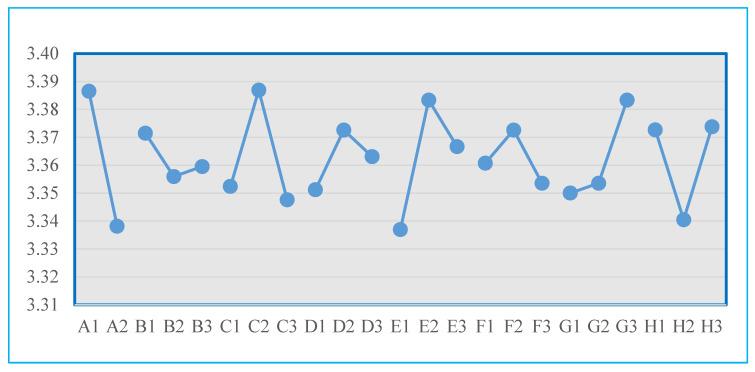
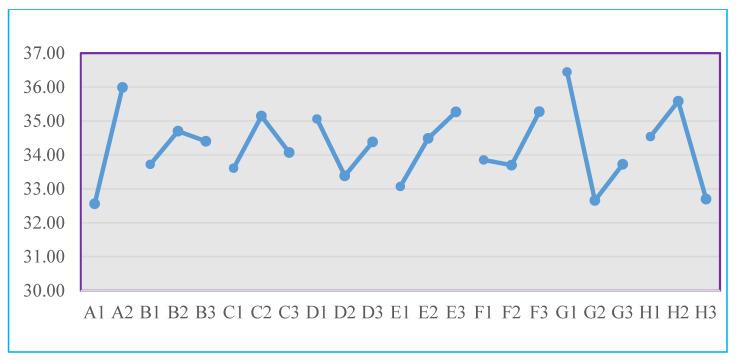
This research investigates the control of thickness and weight in plastic extrusion vacuum-thermoforming products to identify optimal key parameters for cost reduction and energy savings. The initial step involves identifying crucial influencing factors. In this step, the Delphi technique was employed through a questionnaire administered to a panel of expert scholars to ensure minimal error and maximal reliability in determining key influencing factors. Consensus was sought to establish appropriateness and consistency. Subsequently, the Taguchi method was applied for quality design and planning of the extrusion vacuum-forming process. The experimental design parameters were selected using an L (2 × 3) orthogonal array, and the desired quality characteristics were determined. Comparative analysis of quantitative production data from two consecutive experiments was conducted, and based on F-values and contribution analysis, the combination of control factors maximizing the Signal-to-Noise (S/N) ratio was identified. The objective is to seek optimal parameters for improving the quality of the plastic polypropylene (PP cup lid) manufacturing process, reducing process variability, and identifying the most robust production conditions. Through multiple actual production prediction experiments, it was determined that five control factors, "polypropylene new material ratio," "T-die lips adjustment thickness", "mirror wheel temperature stability", "molding vacuum pressure time", and "forming mold area design", contribute to the maximization of the S/N ratio, i.e., minimizing variability. Statistical validation confirms a significant improvement in product quality and weight control. Noteworthily, the quality control model and experimental design parameters established in this study are also applicable to other plastic products and bio-based materials, such as PET, HIPS, and biodegradable PLA lids with added calcium carbonate. The results of the experimental production demonstrate its ability to consistently control product weight within the range of 3.4 ± 0.1 g, approaching the specified tolerance limits. This capability results in approximately 2.6% cost savings in product weight, contributing significantly to achieving a company's KPI goals for environmental conservation, energy efficiency, and operational cost reduction. Therefore, the findings of this study represent a substantial and tangible contribution.
本研究调查塑料挤出真空热成型产品的厚度和重量控制,以确定降低成本和节约能源的最佳关键参数。第一步是确定关键影响因素。在这一步中,通过向专家学者小组发放问卷采用德尔菲技术,以确保在确定关键影响因素时误差最小且可靠性最高。寻求共识以建立适当性和一致性。随后,田口方法被应用于挤出真空成型工艺的质量设计和规划。使用L(2×3)正交表选择实验设计参数,并确定所需的质量特性。对两个连续实验的定量生产数据进行了比较分析,并基于F值和贡献率分析,确定了使信噪比最大化的控制因素组合。目标是寻求优化参数,以提高塑料聚丙烯(PP杯盖)制造工艺的质量,降低工艺变异性,并确定最稳健的生产条件。通过多次实际生产预测实验,确定了“聚丙烯新材料比例”、“T型模唇调节厚度”、“镜面轮温度稳定性”、“成型真空压力时间”和“成型模具面积设计”这五个控制因素有助于使信噪比最大化,即最小化变异性。统计验证证实了产品质量和重量控制有显著改善。值得注意的是,本研究建立的质量控制模型和实验设计参数也适用于其他塑料制品和生物基材料,如PET、HIPS以及添加碳酸钙的可生物降解PLA盖子。实验生产结果表明其能够将产品重量始终控制在3.4±0.1克范围内,接近规定的公差极限。这种能力使产品重量成本节约约2.6%,对实现公司在环境保护、能源效率和运营成本降低方面的关键绩效指标目标有重大贡献。因此,本研究的结果具有重大而切实的贡献。


 Zotero 插件