
术后认知功能障碍与阿尔茨海默病的相关性进展及潜在治疗药物探索
Progress in the correlation of postoperative cognitive dysfunction and Alzheimer's disease and the potential therapeutic drug exploration.
作者信息
Chen Dong-Qin, Fang Xu, Zhu Zhao-Qiong
机构信息
Department of Anesthesiology Affiliated Hospital of Zunyi Medical University Zunyi China.
College of Anesthesiology Zunyi Medical University Zunyi China.
出版信息
Ibrain. 2022 May 19;9(4):446-462. doi: 10.1002/ibra.12040. eCollection 2023 Winter.
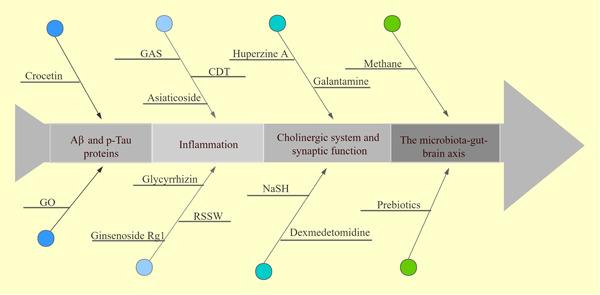
Postoperative cognitive dysfunction (POCD) is a decrease in mental capacity that can occur days to weeks after a medical procedure and may become permanent and rarely lasts for a longer period of time. With the continuous development of research, various viewpoints in academic circles have undergone subtle changes, and the role of anesthesia depth and anesthesia type seems to be gradually weakened; Alzheimer's disease (AD) is a latent and progressive neurodegenerative disease in the elderly. The protein hypothesis and the synaptic hypothesis are well-known reasons. These changes will also lead to the occurrence of an inflammatory cascade. The exact etiology and pathogenesis need to be studied. The reasonable biological mechanism affecting brain protein deposition, neuroinflammation, and acetylcholine-like effect has a certain relationship between AD and POCD. Whereas there is still further uncertainty about the mechanism and treatment, and it is elusive whether POCD is a link in the continuous progress of AD or a separate entity, which has doubts about the diagnosis and treatment of the disease. Therefore, this review is based on the current common clinical characteristics of AD and POCD, and pathophysiological research, to search for their common points and explore the direction and new strategies for future treatment.
术后认知功能障碍(POCD)是指在医疗手术后数天至数周内出现的智力下降,可能会变为永久性,且很少持续更长时间。随着研究的不断发展,学术界的各种观点发生了微妙变化,麻醉深度和麻醉类型的作用似乎在逐渐减弱;阿尔茨海默病(AD)是老年人中一种潜在的、进行性的神经退行性疾病。蛋白质假说和突触假说是其广为人知的病因。这些变化也会导致炎症级联反应的发生。确切的病因和发病机制有待研究。影响脑蛋白沉积、神经炎症和类乙酰胆碱效应的合理生物学机制在AD和POCD之间存在一定关联。然而,关于其机制和治疗仍存在进一步不确定性,POCD究竟是AD持续进展过程中的一个环节还是一个独立的实体尚难以捉摸,这给疾病的诊断和治疗带来了疑问。因此,本综述基于AD和POCD当前常见的临床特征以及病理生理学研究,寻找它们的共同点,并探索未来治疗的方向和新策略。

 Zotero 插件