
从肠道到大脑:具有神经认知效应的酚类化合物的漫长旅程。
From the gut to the brain: the long journey of phenolic compounds with neurocognitive effects.
作者信息
Domínguez-López Inés, López-Yerena Anallely, Vallverdú-Queralt Anna, Pallàs Mercè, Lamuela-Raventós Rosa M, Pérez Maria
机构信息
Polyphenol Research Group, Department of Nutrition, Food Science, and Gastronomy, XIA, Faculty of Pharmacy and Food Sciences, Institute of Nutrition and Food Safety (INSA-UB), University of Barcelona, Barcelona, Spain.
CIBER Physiopathology of Obesity and Nutrition (CIBEROBN), Institute of Health Carlos III, Madrid, Spain.
出版信息
Nutr Rev. 2025 Feb 1;83(2):e533-e546. doi: 10.1093/nutrit/nuae034.
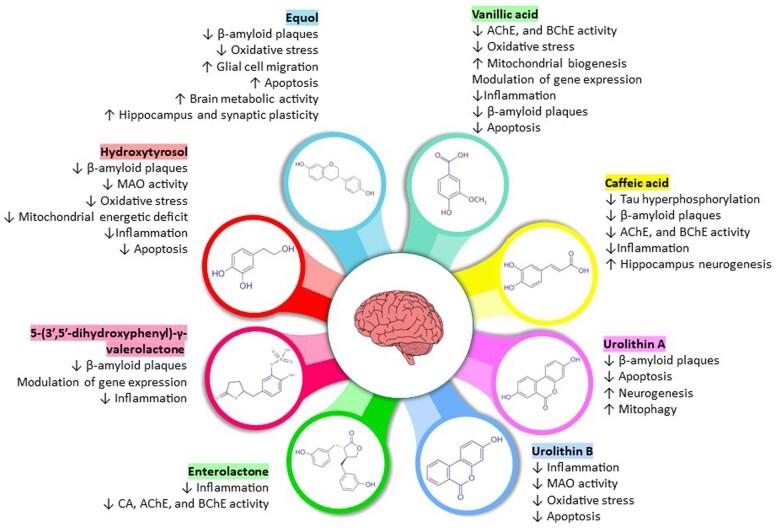
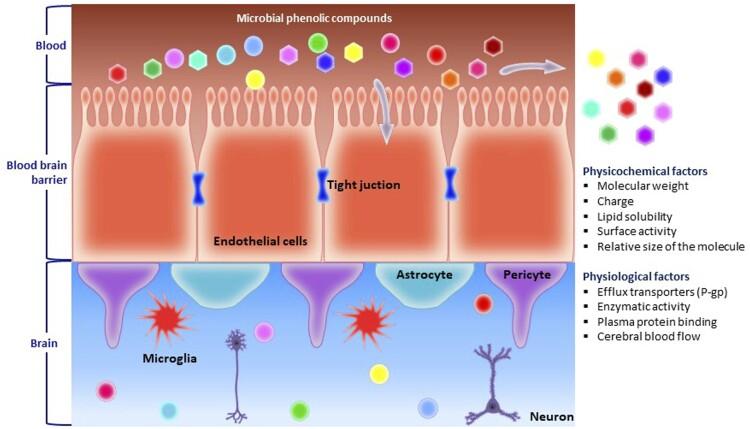
The human gut microbiota is a complex community of micro-organisms that play a crucial role in maintaining overall health. Recent research has shown that gut microbes also have a profound impact on brain function and cognition, leading to the concept of the gut-brain axis. One way in which the gut microbiota can influence the brain is through the bioconversion of polyphenols to other bioactive molecules. Phenolic compounds are a group of natural plant metabolites widely available in the human diet, which have anti-inflammatory and other positive effects on health. Recent studies have also suggested that some gut microbiota-derived phenolic metabolites may have neurocognitive effects, such as improving memory and cognitive function. The specific mechanisms involved are still being studied, but it is believed that phenolic metabolites may modulate neurotransmitter signaling, reduce inflammation, and enhance neural plasticity. Therefore, to exert a protective effect on neurocognition, dietary polyphenols or their metabolites must reach the brain, or act indirectly by producing an increase in bioactive molecules such as neurotransmitters. Once ingested, phenolic compounds are subjected to various processes (eg, metabolization by gut microbiota, absorption, distribution) before they cross the blood-brain barrier, perhaps the most challenging stage of their trajectory. Understanding the role of phenolic compounds in the gut-brain axis has important implications for the development of new therapeutic strategies for neurological and psychiatric disorders. By targeting the gut microbiota and its production of phenolic metabolites, it may be possible to improve brain function and prevent cognitive decline. In this article, the current state of knowledge on the endogenous generation of phenolic metabolites by the gut microbiota and how these compounds can reach the brain and exert neurocognitive effects was reviewed.
人类肠道微生物群是一个复杂的微生物群落,在维持整体健康方面发挥着关键作用。最近的研究表明,肠道微生物对大脑功能和认知也有深远影响,由此产生了肠-脑轴的概念。肠道微生物群影响大脑的一种方式是通过将多酚生物转化为其他生物活性分子。酚类化合物是人类饮食中广泛存在的一类天然植物代谢产物,对健康具有抗炎等积极作用。最近的研究还表明,一些肠道微生物衍生的酚类代谢产物可能具有神经认知作用,如改善记忆和认知功能。具体涉及的机制仍在研究中,但据信酚类代谢产物可能调节神经递质信号传导、减轻炎症并增强神经可塑性。因此,为了对神经认知发挥保护作用,膳食多酚或其代谢产物必须到达大脑,或者通过增加神经递质等生物活性分子间接发挥作用。一旦摄入,酚类化合物在穿过血脑屏障之前会经历各种过程(例如,被肠道微生物群代谢、吸收、分布),这可能是它们行程中最具挑战性的阶段。了解酚类化合物在肠-脑轴中的作用对于开发神经和精神疾病的新治疗策略具有重要意义。通过针对肠道微生物群及其酚类代谢产物的产生,有可能改善大脑功能并预防认知能力下降。本文综述了关于肠道微生物群内源性生成酚类代谢产物以及这些化合物如何到达大脑并发挥神经认知作用的当前知识状态。
 Zotero 插件