
先天性异常在埃塞俄比亚的流行情况及相关因素:一项系统评价和荟萃分析。
Prevalence and associated factors of congenital anomalies in Ethiopia: A systematic review and meta-analysis.
机构信息
Department of Human Anatomy, School of Medicine, College of Health and Medical Sciences, Haramaya University, Harar, Oromia, Ethiopia.
出版信息
PLoS One. 2024 Apr 30;19(4):e0302393. doi: 10.1371/journal.pone.0302393. eCollection 2024.
BACKGROUND
Congenital anomalies represent a significant contributor to infant mortality, morbidity, and enduring disability. With this in mind, the present investigation endeavour to ascertain the pooled prevalence of congenital anomalies and associated determinants among neonates in Ethiopia.
METHOD
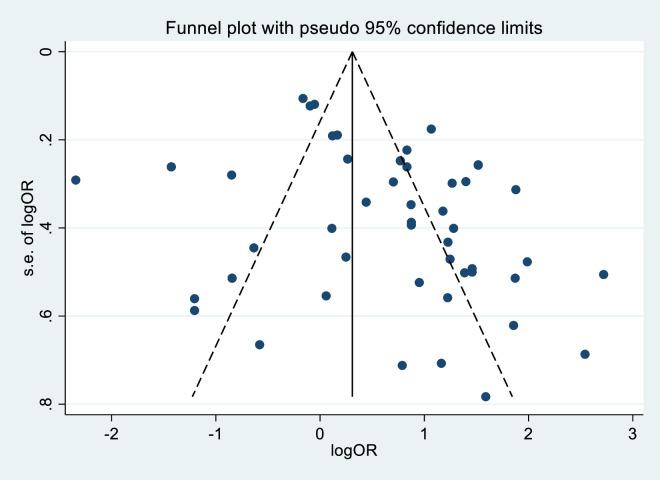
PubMed, Google Scholar, CINAHAL, Hinari, and Global Health databases were systematically searched. Joanna Briggs Institute (JBI) assessment checklist was used to assess quality of included studies. Data were extracted from database and exported to stataMP-17 for analysis. Pooled prevalence was determined using DerSimonian-Laird random effects model. The degree of heterogeneity and Publication bias were assessed using I2 statistics and Eggers test, respectively. Study protocol was registered under PROSPERO ID CRD42021229140.
RESULT
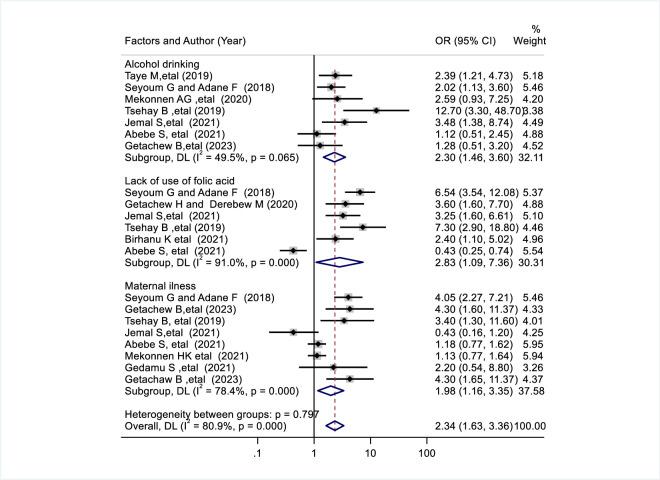
A total of 18 studies with 519,327 participants were included in the study. Pooled prevalence of congenital anomalies in Ethiopia was 2% (95% CI: 0.02, 0.03%). Among affected newborns neural tube defect (48%) was the most common congenital anomaly in Ethiopia, followed by orofacial cleft (19%). Risk factors such as alcohol consumption (pooled OR: 2.28, 95% CI: 1.54, 3.38), lack of folic acid supplement (pooled OR: 2.83, 95% CI: 1.09-7.36), medication during pregnancy (pooled OR: 2.58, 95% CI: 1.03-6.47), khat (Catha edulis) chewing (pooled OR: 2.44, 95% CI: 1.61-3.71), exposure to pesticides (pooled OR: 4.45, 95% CI: 2.44-8.09) and maternal illness (pooled OR:1.79, 95% CI: 1.03, 3.10) had statistically significant association with congenital anomalies in Ethiopia.
CONCLUSION
In this review, prevalence of congenital anomalies in Ethiopia was high with considerable regional variation. The most common type of congenital anomaly in Ethiopia was neural tube defects, followed by oro-facial cleft. Alcohol consumption, inadequate intake of folic acid, khat chewing, maternal diseases, exposure to pesticides, and use of medication during pregnancy were identified as potential contributors to congenital abnormalities in Ethiopia.
背景
先天性异常是导致婴儿死亡、发病和长期残疾的重要原因。有鉴于此,本研究旨在确定埃塞俄比亚新生儿先天性异常的综合患病率及其相关决定因素。
方法
系统检索了 PubMed、Google Scholar、CINAHAL、Hinari 和全球卫生数据库。采用 Joanna Briggs 研究所(JBI)评估检查表评估纳入研究的质量。从数据库中提取数据并导出到 stataMP-17 进行分析。采用 DerSimonian-Laird 随机效应模型确定汇总患病率。使用 I2 统计量和 Eggers 检验评估异质性和发表偏倚的程度。研究方案在 PROSPERO ID CRD42021229140 下注册。
结果
共纳入 18 项研究,涉及 519327 名参与者。埃塞俄比亚先天性异常的综合患病率为 2%(95%CI:0.02,0.03%)。在受影响的新生儿中,神经管缺陷(48%)是埃塞俄比亚最常见的先天性异常,其次是口腔颌面裂(19%)。酒精摄入(汇总 OR:2.28,95%CI:1.54,3.38)、缺乏叶酸补充剂(汇总 OR:2.83,95%CI:1.09-7.36)、妊娠期间用药(汇总 OR:2.58,95%CI:1.03-6.47)、咀嚼恰特草(汇总 OR:2.44,95%CI:1.61-3.71)、接触杀虫剂(汇总 OR:4.45,95%CI:2.44-8.09)和母亲患病(汇总 OR:1.79,95%CI:1.03,3.10)等风险因素与埃塞俄比亚先天性异常具有统计学显著关联。
结论
在本综述中,埃塞俄比亚先天性异常的患病率较高,且存在较大的地区差异。埃塞俄比亚最常见的先天性异常类型是神经管缺陷,其次是口腔颌面裂。酒精摄入、叶酸摄入不足、咀嚼恰特草、母亲疾病、接触杀虫剂和妊娠期间用药被确定为埃塞俄比亚先天性异常的潜在原因。




 Zotero 插件