
丹麦成年人慢性病群组。
Clusters from chronic conditions in the Danish adult population.
机构信息
Department of Applied Mathematics and Computer Science, Technical University of Denmark, Lyngby, Denmark.
Innovation and Research Centre for Multimorbidity, Slagelse Hospital, Slagelse, Denmark.
出版信息
PLoS One. 2024 Apr 30;19(4):e0302535. doi: 10.1371/journal.pone.0302535. eCollection 2024.
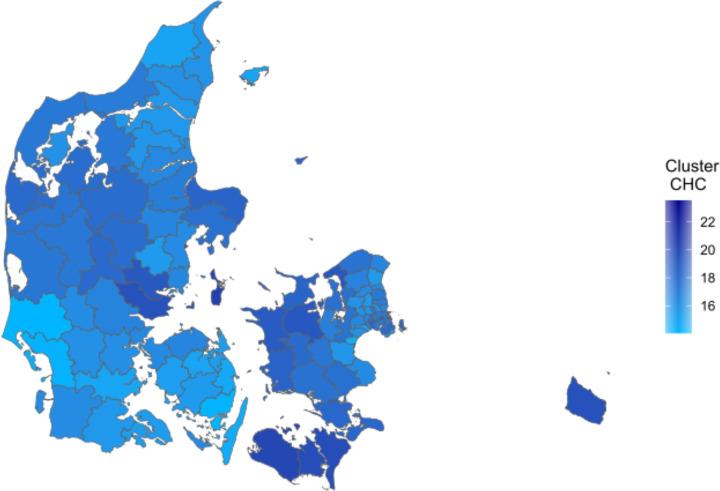
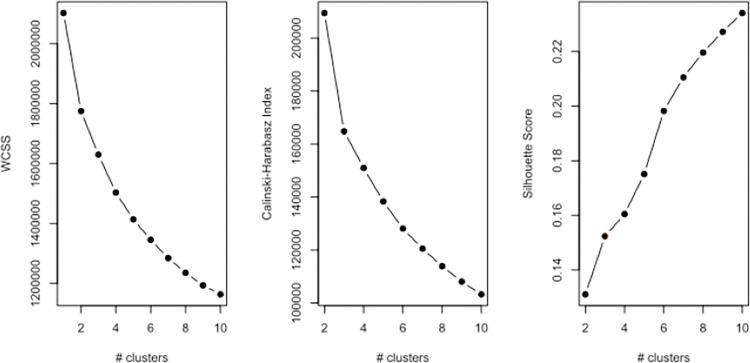
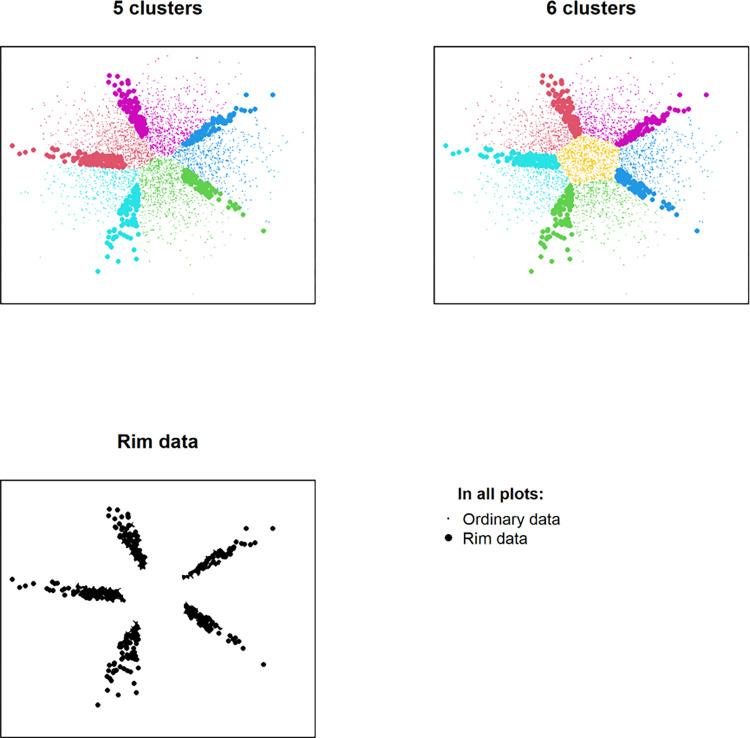
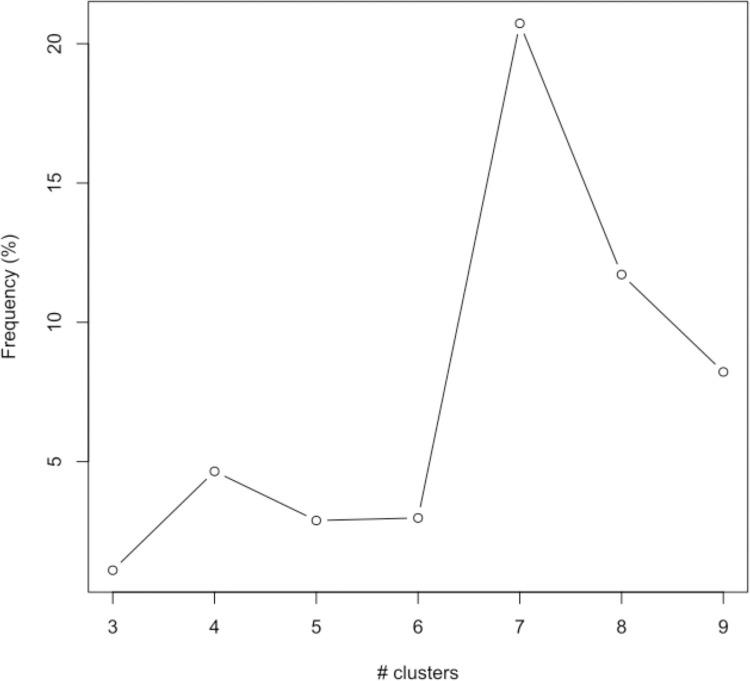
Multimorbidity, the presence of 2 or more chronic conditions in a person at the same time, is an increasing public health concern, which affects individuals through reduced health related quality of life, and society through increased need for healthcare services. Yet the structure of chronic conditions in individuals with multimorbidity, viewed as a population, is largely unmapped. We use algorithmic diagnoses and the K-means algorithm to cluster the entire 2015 Danish multimorbidity population into 5 clusters. The study introduces the concept of rim data as an additional tool for determining the number of clusters. We label the 5 clusters the Allergies, Chronic Heart Conditions, Diabetes, Hypercholesterolemia, and Musculoskeletal and Psychiatric Conditions clusters, and demonstrate that for 99.32% of the population, the cluster allocation can be determined from the diagnoses of 4-5 conditions. Clusters are characterized through most prevalent conditions, absent conditions, over- or under-represented conditions, and co-occurrence of conditions. Clusters are further characterized through socioeconomic variables and healthcare service utilizations. Additionally, geographical variations throughout Denmark are studied at the regional and municipality level. We find that subdivision into municipality levels suggests that the Allergies cluster frequency is positively associated with socioeconomic status, while the subdivision suggests that frequencies for clusters Diabetes and Hypercholesterolemia are negatively correlated with socioeconomic status. We detect no indication of association to socioeconomic status for the Chronic Heart Conditions cluster and the Musculoskeletal and Psychiatric Conditions cluster. Additional spatial variation is revealed, some of which may be related to urban/rural populations. Our work constitutes a step in the process of characterizing multimorbidity populations, leading to increased comprehension of the nature of multimorbidity, and towards potential applications to individual-based care, prevention, the development of clinical guidelines, and population management.
多发病,即一个人同时患有两种或多种慢性疾病,是一个日益受到关注的公共卫生问题。它会降低患者的生活质量,同时也会增加社会对医疗服务的需求。然而,多发病患者的慢性疾病结构在人群中还没有得到充分的描述。我们使用算法诊断和 K-均值算法将整个 2015 年丹麦多发病人群聚类为 5 个簇。本研究引入了 rim 数据的概念,作为确定聚类数量的额外工具。我们将这 5 个簇标记为过敏、慢性心脏疾病、糖尿病、高胆固醇血症、肌肉骨骼和精神疾病簇,并证明对于 99.32%的人群,簇分配可以通过 4-5 种疾病的诊断来确定。通过最常见的疾病、缺失的疾病、过度或不足的疾病以及疾病的共同发生情况来描述簇。簇还通过社会经济变量和医疗保健服务利用情况进一步进行描述。此外,我们还在地区和市政级别上研究了丹麦各地的地理差异。我们发现,细分到市政级别表明,过敏簇的频率与社会经济地位呈正相关,而细分表明,糖尿病和高胆固醇血症簇的频率与社会经济地位呈负相关。我们没有发现慢性心脏疾病簇和肌肉骨骼和精神疾病簇与社会经济地位有关的迹象。我们还发现了一些其他的空间差异,其中一些可能与城市/农村人口有关。我们的工作是对多发病人群进行特征描述的一个步骤,有助于提高对多发病本质的理解,并为基于个体的护理、预防、临床指南的制定和人口管理提供潜在的应用。

 Zotero 插件