
单侧踝足矫形器支撑下行走的比较生物力学分析。
Walking with unilateral ankle-foot unloading: a comparative biomechanical analysis of three assistive devices.
机构信息
Faculty of Mechanical Engineering, Technion Israel Institute of Technology, Haifa, Israel.
School of Public Health, Faculty of Medicine, Tel Aviv University, Tel Aviv, Israel.
出版信息
J Neuroeng Rehabil. 2024 Apr 30;21(1):67. doi: 10.1186/s12984-024-01333-w.
BACKGROUND
Foot and ankle unloading is essential in various clinical contexts, including ulcers, tendon ruptures, and fractures. Choosing the right assistive device is crucial for functionality and recovery. Yet, research on the impact of devices beyond crutches, particularly ankle-foot orthoses (AFOs) designed to unload the ankle and foot, is limited. This study investigates the effects of three types of devices-forearm crutches, knee crutch, and AFO-on biomechanical, metabolic, and subjective parameters during walking with unilateral ankle-foot unloading.
METHODS
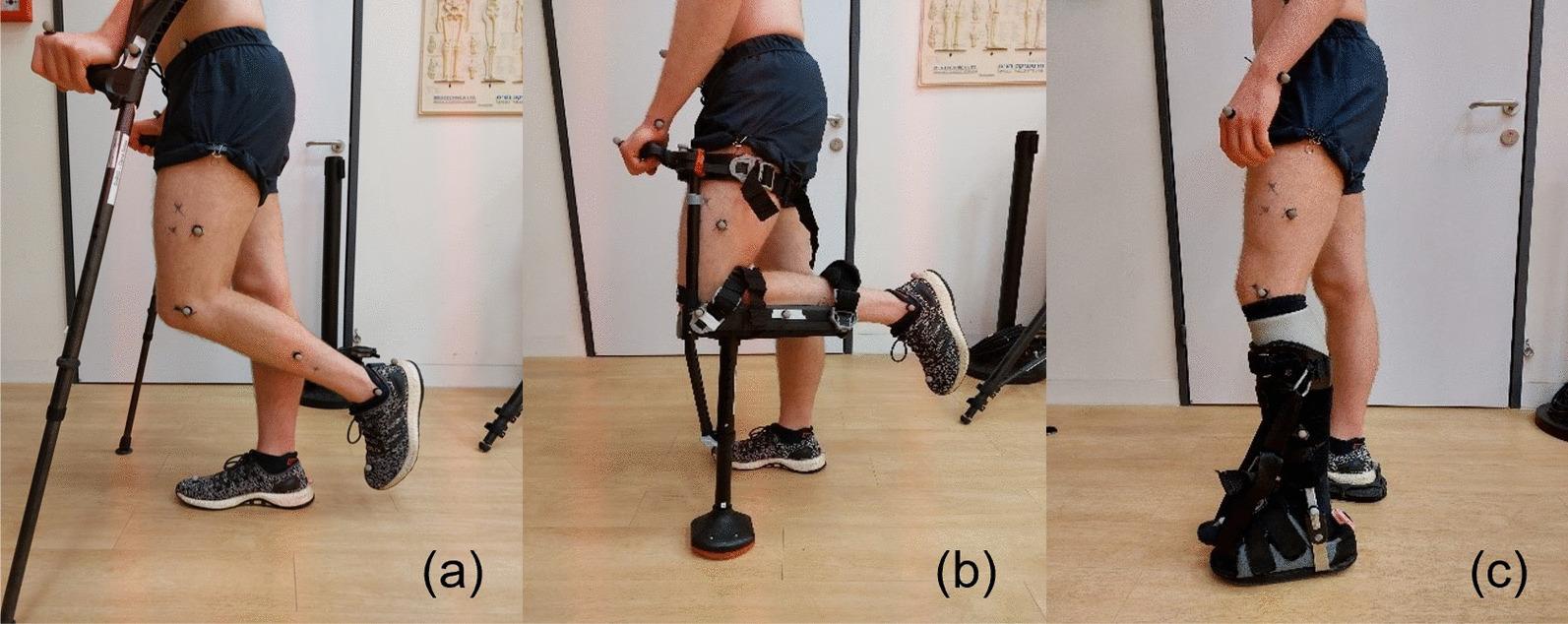
Twenty healthy participants walked at a self-selected speed in four conditions: unassisted able-bodied gait, and using three unloading devices, namely forearm crutches, iWalk knee crutch, and ZeroG AFO. Comprehensive measurements, including motion capture, force plates, and metabolic system, were used to assess various spatiotemporal, kinematic, kinetic, and metabolic parameters. Additionally, participants provided subjective feedback through questionnaires. The conditions were compared using a within-subject crossover study design with repeated measures ANOVA.
RESULTS
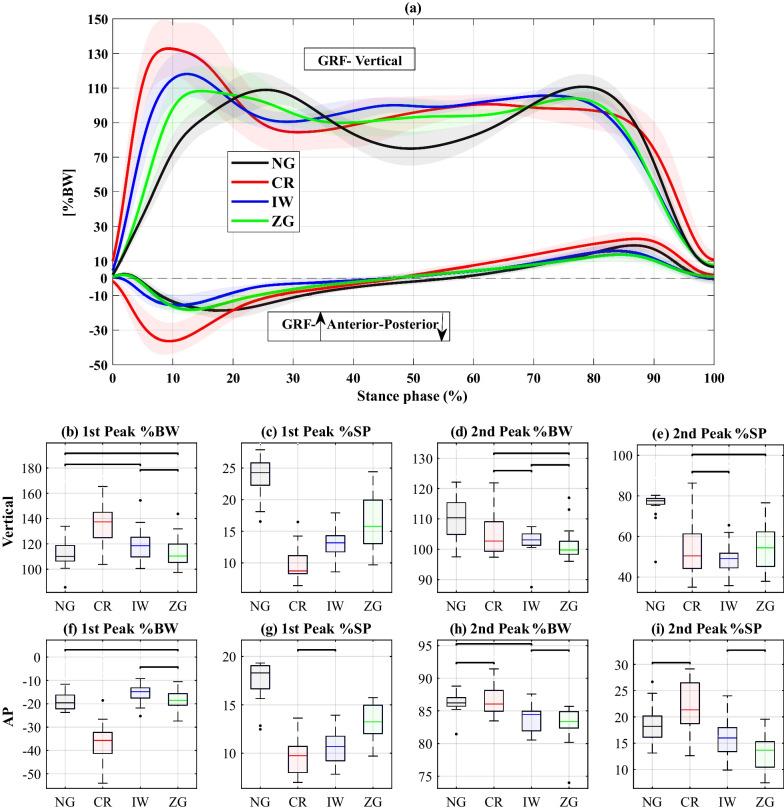
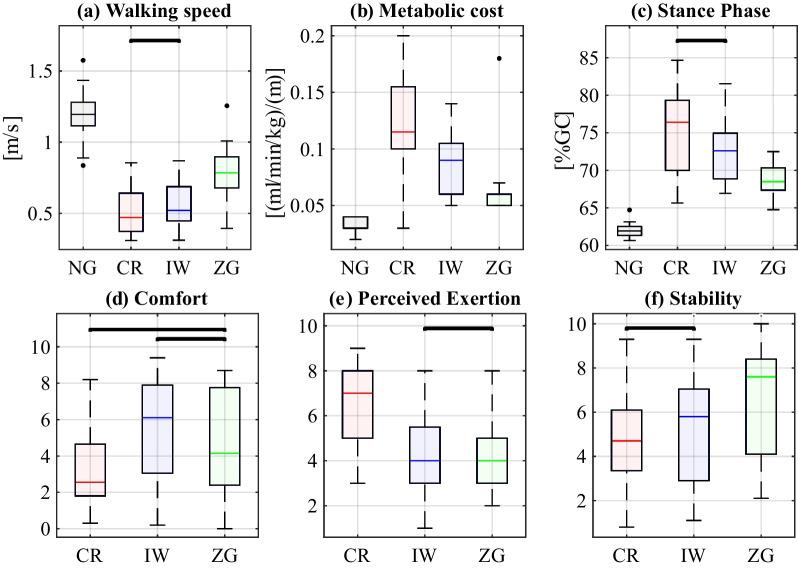
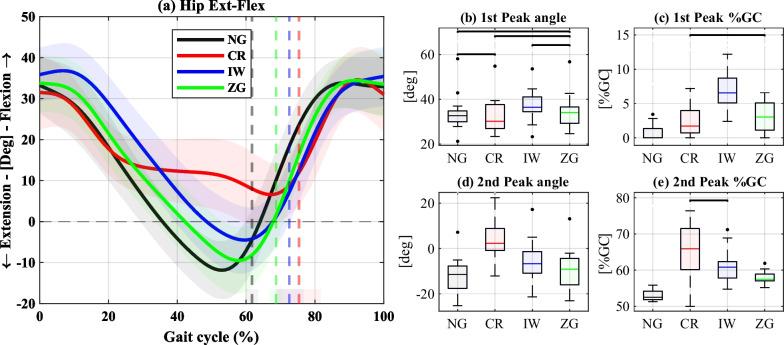
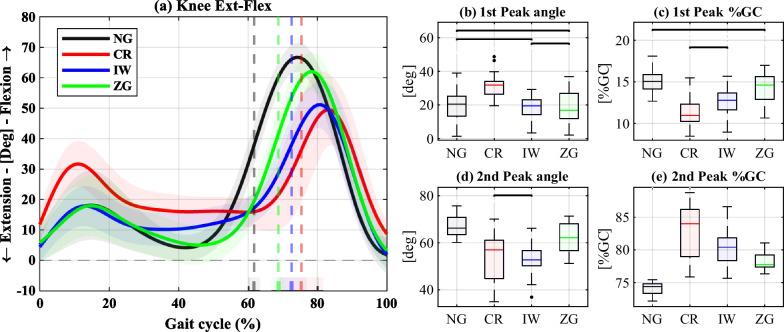
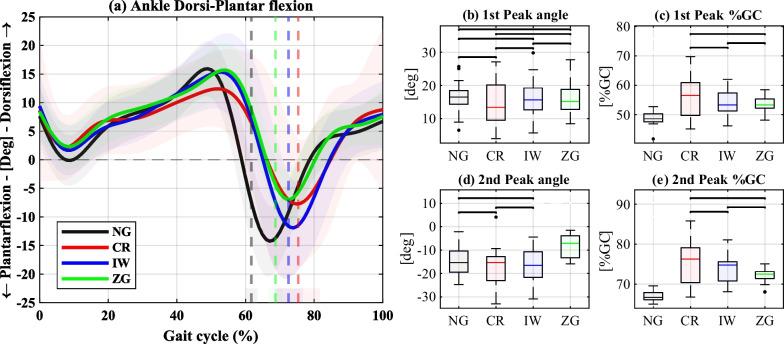
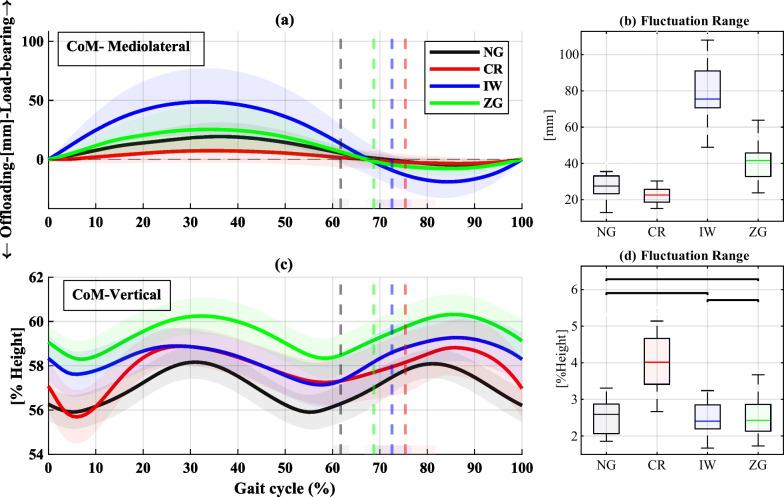
Significant differences were found between the three devices and able-bodied gait. Among the devices, ZeroG exhibited significantly faster walking speed and lower metabolic cost. For the weight-bearing leg, ZeroG exhibited the shortest stance phase, lowest braking forces, and hip and knee angles most similar to normal gait. However, ankle plantarflexion after push-off using ZeroG was most different from normal gait. IWalk and crutches caused significantly larger center-of-mass mediolateral and vertical fluctuations, respectively. Participants rated the ZeroG as the most stable, but more participants complained it caused excessive pressure and pain. Crutches were rated with the highest perceived exertion and lowest comfort, whereas no significant differences between ZeroG and iWalk were found for these parameters.
CONCLUSIONS
Significant differences among the devices were identified across all measurements, aligning with previous studies for crutches and iWalk. ZeroG demonstrated favorable performance in most aspects, highlighting the potential of AFOs in enhancing gait rehabilitation when unloading is necessary. However, poor comfort and atypical sound-side ankle kinematics were evident with ZeroG. These findings can assist clinicians in making educated decisions about prescribing ankle-foot unloading devices and guide the design of improved devices that overcome the limitations of existing solutions.
背景
在各种临床情况下,包括溃疡、肌腱断裂和骨折,脚部和踝关节的减压是至关重要的。选择合适的辅助设备对于功能和康复至关重要。然而,除了拐杖以外的设备的影响,特别是旨在减轻脚踝和足部负担的踝足矫形器(AFO)的研究是有限的。本研究调查了三种设备-前臂拐杖、膝部拐杖和 AFO-在单侧踝足减压步行时对生物力学、代谢和主观参数的影响。
方法
20 名健康参与者以自我选择的速度在四种情况下行走:正常的有能力的步态,以及使用三种减压设备,即前臂拐杖、iWalk 膝部拐杖和 ZeroG AFO。使用运动捕捉、力板和代谢系统进行全面测量,以评估各种时空、运动学、动力学和代谢参数。此外,参与者通过问卷调查提供了主观反馈。使用重复测量的方差分析进行了基于个体的交叉研究设计,比较了这些条件。
结果
在三种设备和正常的有能力的步态之间发现了显著的差异。在三种设备中,ZeroG 表现出最快的步行速度和最低的代谢成本。对于承重腿,ZeroG 表现出最短的站立阶段、最低的制动力,以及最接近正常步态的髋关节和膝关节角度。然而,ZeroG 后蹬时的踝关节跖屈与正常步态最不同。iWalk 和拐杖分别导致了更大的质心前后和垂直波动。参与者认为 ZeroG 最稳定,但更多的参与者抱怨它导致了过度的压力和疼痛。拐杖被评为最费力和最不舒服的,而 ZeroG 和 iWalk 之间在这些参数上没有发现显著差异。
结论
在所有测量中,都发现了设备之间的显著差异,与之前关于拐杖和 iWalk 的研究一致。ZeroG 在大多数方面表现出良好的性能,突出了 AFO 在需要减压时增强步态康复的潜力。然而,ZeroG 存在舒适性差和非典型的足侧踝关节运动学的问题。这些发现可以帮助临床医生做出关于处方踝足减压设备的明智决策,并指导设计出克服现有解决方案局限性的改进设备。
 Zotero 插件