
不同生长模式受试者下颌第三磨牙方向及磨牙后间隙与牙弓长度差异的相关性
Correlation of mandibular third molar orientation and available retromolar space with arch length discrepancy in subjects with different growth pattern.
作者信息
Verma Sneh Lata, Tikku Tripti, Khanna Rohit, Srivastava Kamna, Maurya Rana Pratap, Rai Priyanka
机构信息
Department of Orthodontics, Babu Banarasi Das College of Dental Sciences (BBDCODS), Lucknow, Uttar Pradesh, India.
出版信息
Natl J Maxillofac Surg. 2024 Jan-Apr;15(1):106-115. doi: 10.4103/njms.njms_63_22. Epub 2024 Mar 19.
AIM AND OBJECTIVE
To evaluate, compare, and correlate the mandibular third molar orientation and available retromolar space with arch length discrepancy in subjects with skeletal class II malocclusion and different growth pattern.
MATERIAL AND METHOD
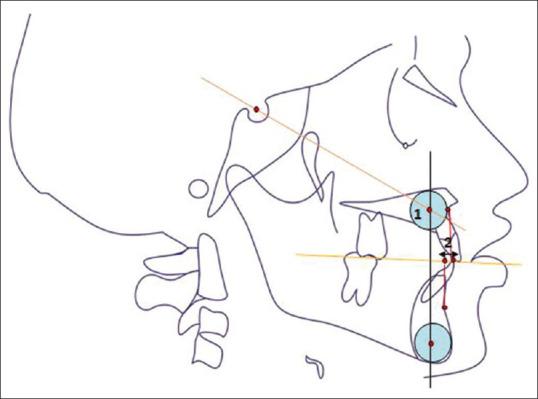
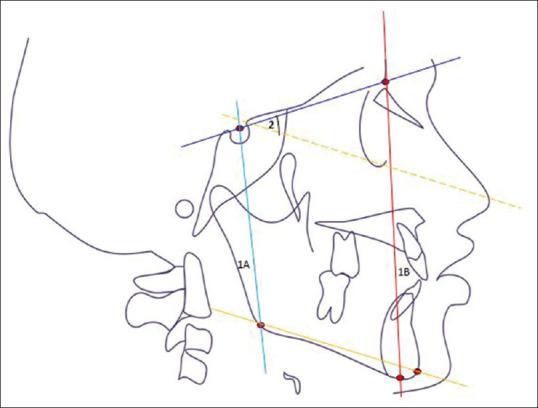
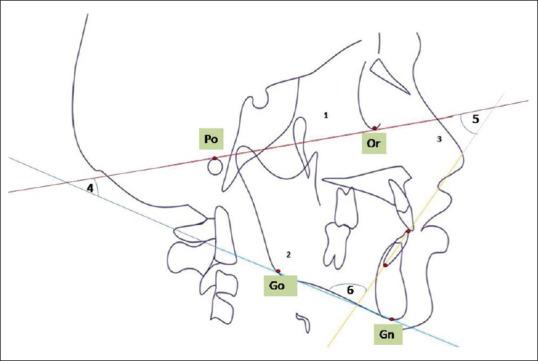
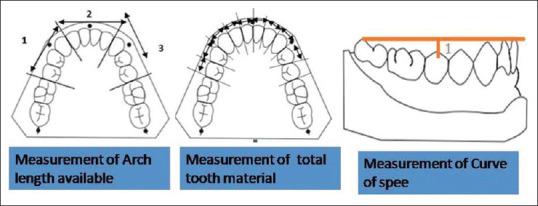
A total of 250 patients (age >18 yrs) having skeletal class II malocclusion (based on YEN angle and WITS appraisal) were divided into two groups. Both the groups (Group I with erupted mandibular third molars {N = 150} and Group II with impacted mandibular third molars {N = 100}) were subdivided into subgroups IA (n = 71), IB (n = 19), IC (n = 71) and Group IIA (n = 54), IIB (n = 30) and IIC (n = 16) for normo-, hypo- and hyperdivergent growth patterns, respectively (based on Jarabak ratio and Sn-Go-Gn angle). Four parameters, that is, retromolar space, width of third molar, third molar angulation, and mandibular incisor angulation were measured on orthopantomogram whereas arch length discrepancy was calculated with the help of lateral cephalogram and study model. Intragroup, intergroup comparisons (using unpaired Student's 't' test), and Pearson's correlation coefficient for assessed parameters were obtained.
RESULT
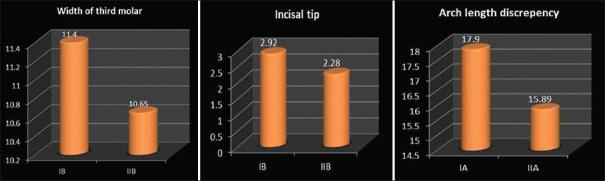
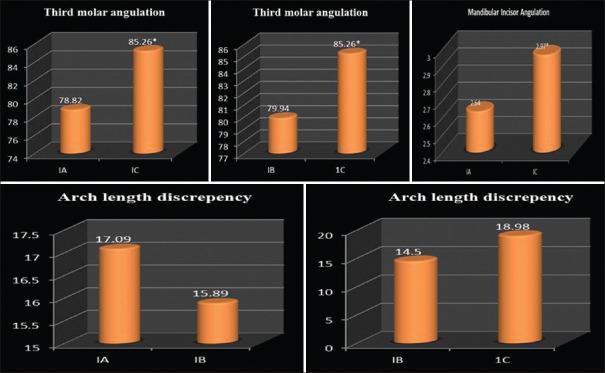
Third molar angulation and retromolar space were significantly higher in Group I than in Group II (hyperdivergent pattern of Group II had highest value). The width of third molar was less than retromolar space in Group II and vice versa for Group I. Mandibular incisor angulation and arch length discrepancy were more in Group II than in Group I, but difference was statistically nonsignificant. Strong positive correlation was observed for mandibular third molar angulation and available retromolar space in normo- and hyperdivergent growth patterns.
CONCLUSION
Lack of retromolar space along with increased amount of arch length discrepancy and mandibular incisor angulation is responsible for increased chances of third molar impaction in some subjects with class II malocclusion.
目的
评估、比较并关联骨骼Ⅱ类错牙合畸形且生长模式不同的受试者下颌第三磨牙的方向、磨牙后间隙与牙弓长度差异。
材料与方法
选取250例年龄大于18岁的骨骼Ⅱ类错牙合畸形患者(基于YEN角和WITS评估),分为两组。两组(第一组为下颌第三磨牙已萌出者{N = 150},第二组为下颌第三磨牙阻生者{N = 100})又分别根据生长模式正常、生长不足和生长过度(基于Jarabak比率和Sn - Go - Gn角)细分为亚组IA(n = 71)、IB(n = 19)、IC(n = 71)以及亚组IIA(n = 54)、IIB(n = 30)和IIC(n = 16)。在曲面断层片上测量四个参数,即磨牙后间隙、第三磨牙宽度、第三磨牙角度和下颌切牙角度,而牙弓长度差异借助头颅侧位片和研究模型进行计算。获得组内、组间比较结果(采用成组t检验)以及评估参数的Pearson相关系数。
结果
第一组的第三磨牙角度和磨牙后间隙显著高于第二组(第二组生长过度模式的值最高)。第二组中第三磨牙宽度小于磨牙后间隙,而第一组情况相反。第二组的下颌切牙角度和牙弓长度差异大于第一组,但差异无统计学意义。在生长模式正常和生长过度的情况下,观察到下颌第三磨牙角度与可用磨牙后间隙之间存在强正相关。
结论
磨牙后间隙不足以及牙弓长度差异和下颌切牙角度增加是导致一些Ⅱ类错牙合畸形受试者第三磨牙阻生几率增加的原因。





 Zotero 插件