
非 2 型严重哮喘的研究进展:从分子认识到新的治疗策略。
Advances in non-type 2 severe asthma: from molecular insights to novel treatment strategies.
机构信息
Jiangsu Provincial Key Laboratory of Critical Care Medicine and Department of Critical Care Medicine, Zhongda Hospital, School of Medicine, Southeast University, Nanjing, China.
Department of Biochemistry and Molecular Biology, School of Medicine, Southeast University, Nanjing, China.
出版信息
Eur Respir J. 2024 Aug 15;64(2). doi: 10.1183/13993003.00826-2023. Print 2024 Aug.
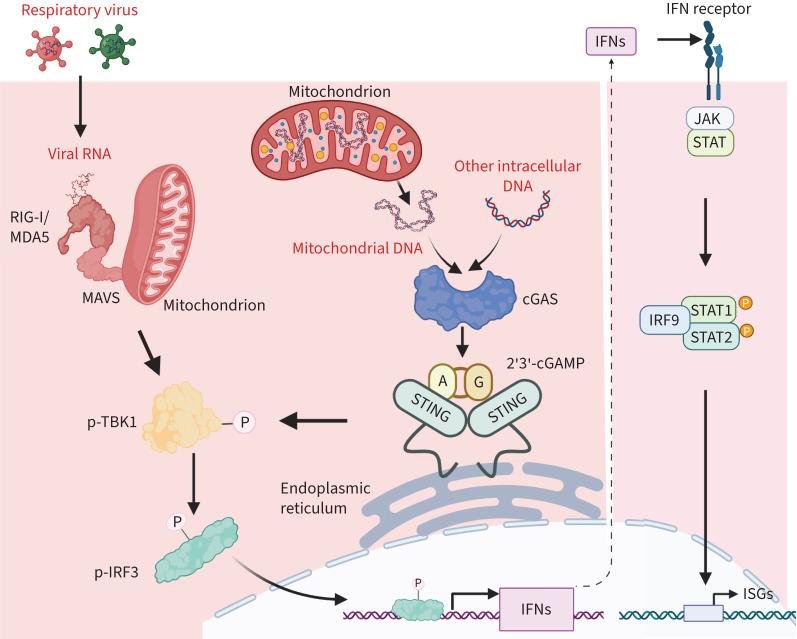
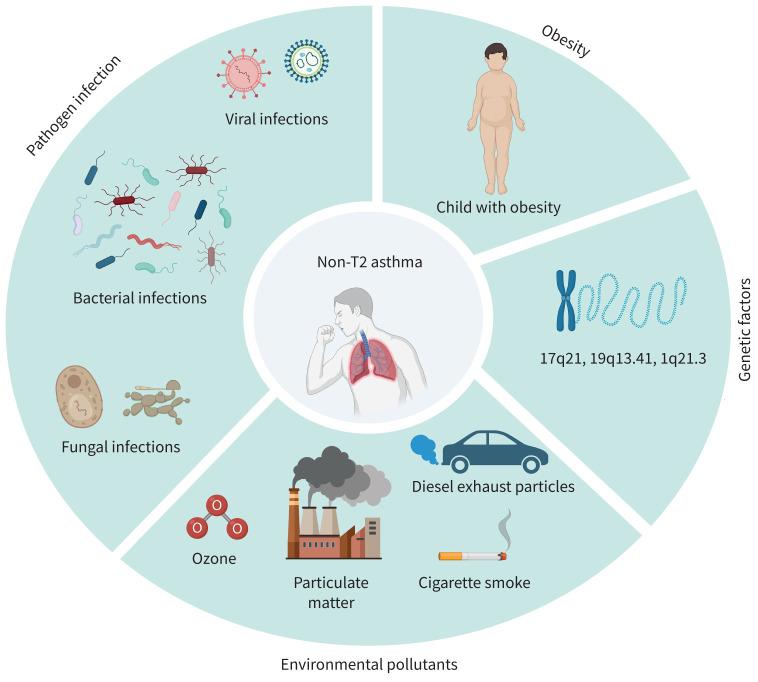
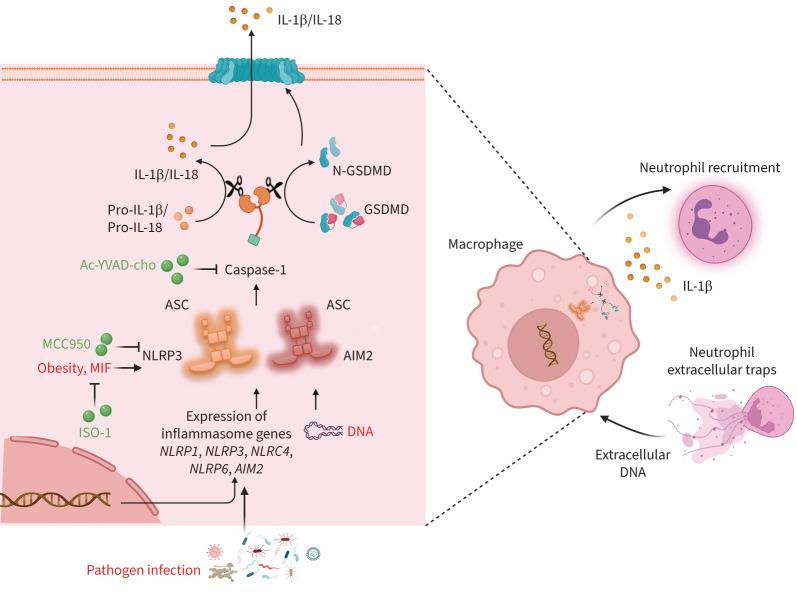
Asthma is a prevalent pulmonary disease that affects more than 300 million people worldwide and imposes a substantial economic burden. While medication can effectively control symptoms in some patients, severe asthma attacks, driven by airway inflammation induced by environmental and infectious exposures, continue to be a major cause of asthma-related mortality. Heterogeneous phenotypes of asthma include type 2 (T2) and non-T2 asthma. Non-T2 asthma is often observed in patients with severe and/or steroid-resistant asthma. This review covers the molecular mechanisms, clinical phenotypes, causes and promising treatments of non-T2 severe asthma. Specifically, we discuss the signalling pathways for non-T2 asthma including the activation of inflammasomes, interferon responses and interleukin-17 pathways, and their contributions to the subtypes, progression and severity of non-T2 asthma. Understanding the molecular mechanisms and genetic determinants underlying non-T2 asthma could form the basis for precision medicine in severe asthma treatment.
哮喘是一种常见的肺部疾病,影响着全球超过 3 亿人,给经济带来了巨大负担。尽管药物可以有效控制部分患者的症状,但由环境和感染暴露引起的气道炎症导致的严重哮喘发作仍是哮喘相关死亡的主要原因。哮喘的异质性表型包括 2 型(T2)和非 T2 哮喘。非 T2 哮喘常发生于严重和/或类固醇耐药性哮喘患者中。本文综述了非 T2 严重哮喘的分子机制、临床表型、病因和有前途的治疗方法。具体而言,我们讨论了非 T2 哮喘的信号通路,包括炎性小体的激活、干扰素反应和白细胞介素 17 通路,及其对非 T2 哮喘的亚型、进展和严重程度的影响。了解非 T2 哮喘的分子机制和遗传决定因素可能为严重哮喘治疗的精准医学奠定基础。
 Zotero 插件